

When a patient in a nursing home is switched from one blood thinner to another without their doctor’s direct order, it’s not a mistake-it’s institutional formulary policy in action. These lists of approved drugs aren’t just internal guidelines; they’re legally mandated systems that determine which medications can be swapped, when, and by whom. In Florida, and increasingly across the U.S., hospitals and clinics use formularies to cut costs, reduce errors, and standardize care. But behind the efficiency lies a complex web of rules, trade-offs, and real-world consequences for patients and providers.
What Exactly Is an Institutional Formulary?
An institutional formulary is a living list of drugs approved for use within a hospital, clinic, or long-term care facility. It’s not a static catalog-it’s a dynamic tool updated regularly based on clinical evidence, cost, and safety data. Unlike insurance formularies that decide what a plan will pay for, institutional formularies govern what pharmacists can substitute at the point of care-often without needing to re-contact the prescribing doctor.
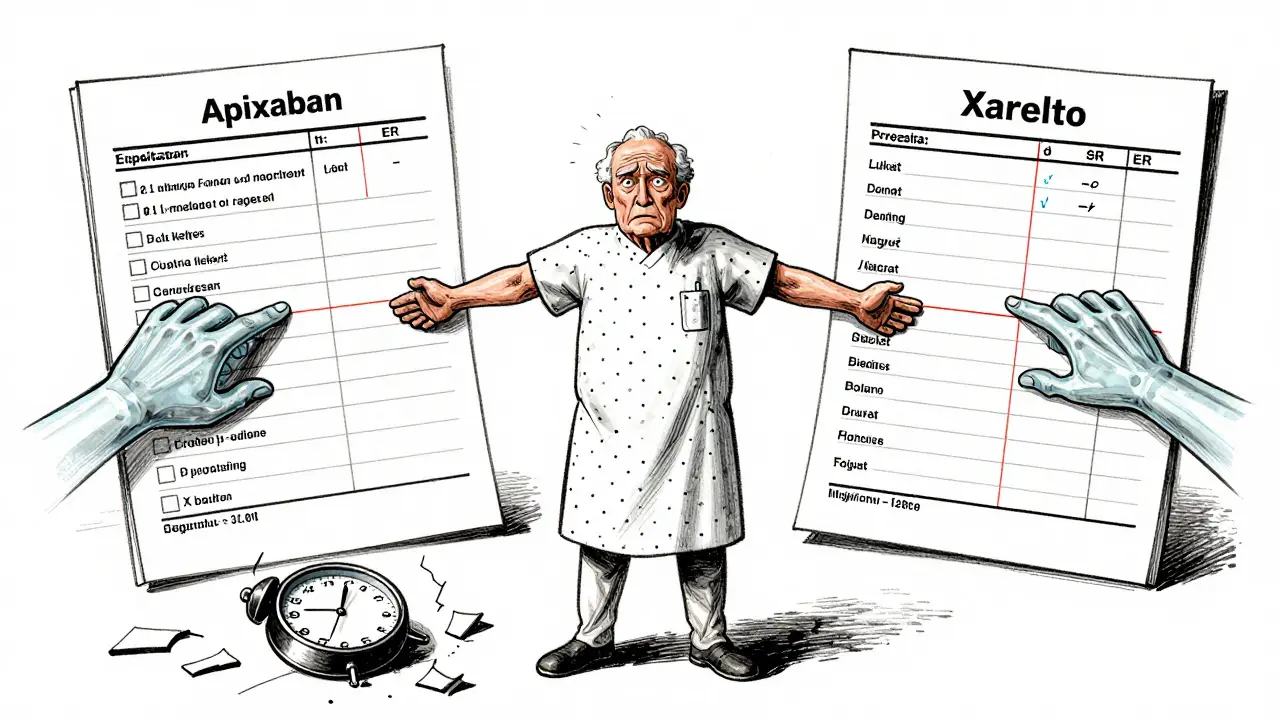
Under Florida Statute 400.143 (2025), this isn’t optional. Facilities must have a formal committee made up of the medical director, nursing director, and a certified consultant pharmacist. This team writes the rules: which drugs are preferred, when substitutions are allowed, how to notify prescribers, and how to track outcomes. The law defines therapeutic substitution as replacing a prescribed drug with a different one that’s expected to work the same way-like switching from brand-name Xarelto to generic apixaban.
These formularies are built on tiers. Cheaper, equally effective drugs-usually generics-go on Tier 1. More expensive or newer options land on Tier 3 or 4, where patients pay more out of pocket. The goal? Keep costs down without sacrificing safety. Studies show well-run formularies can reduce adverse drug events by 15% to 30%, according to the American Journal of Health-System Pharmacy.
How Substitution Policies Work in Practice
Let’s say a patient arrives at a nursing home on warfarin. The facility’s formulary lists apixaban as the preferred anticoagulant because it doesn’t require frequent blood tests and has fewer food interactions. The pharmacist, following protocol, can swap the drug without waiting for the doctor’s approval-provided the patient’s condition is stable and the substitution is documented.
This process isn’t automatic. Every facility must have written guidelines approved by their committee. They must also monitor substitutions quarterly. That means tracking: How many swaps happened? Did patients have more falls? Did their kidney function change? Did they get readmitted?
In one Tampa nursing home, staff found seven dangerous drug interactions in the first year of monitoring-interactions they’d never have caught without the formal review process. That’s the upside.
But the downside? Confusion. A patient might get switched to apixaban in the nursing home, then be sent back to the hospital where the formulary still prefers Xarelto. The hospital team switches them back. The patient, confused, takes both pills. That’s not rare. One hospital pharmacist on Reddit described a case where a patient ended up on three different anticoagulants in six weeks because each facility had its own rules.
Formularies vs. Insurance Formularies: Key Differences
People often mix up institutional formularies with insurance formularies. They’re not the same.
Insurance formularies are about coverage. If your plan doesn’t list a drug, you pay full price-or get denied. These are managed by pharmacy benefit managers (PBMs), who negotiate discounts with drug makers in exchange for placing their products on preferred tiers.
Institutional formularies are about clinical control. They’re designed for a single facility’s patient population. The goal isn’t to save money for an insurer-it’s to reduce errors, improve outcomes, and standardize care within that building. A hospital might choose a slightly more expensive drug if it’s safer for elderly patients with kidney issues, even if a cheaper alternative exists.
Also, institutional formularies can override insurance rules. A drug might be on your insurance’s non-preferred list, but if your hospital’s formulary includes it and your doctor writes for it, you’ll still get it-just possibly at a higher cost to you.
Who Decides What Goes on the List?
It’s not one person. It’s a committee. And under Florida law, that committee must include:
- The medical director
- The director of nursing services
- A consultant pharmacist certified under Florida Statute 465.0125
These aren’t figureheads. They’re decision-makers. The pharmacist brings drug knowledge-the pharmacokinetics, the drug interactions, the cost data. The doctor weighs clinical effectiveness and patient outcomes. The nursing director knows what’s practical at the bedside. Can nurses safely administer this? Will it be confused with another pill?
They review new drugs every quarter. They look at real-world data: How many patients had side effects? Did the drug reduce hospital readmissions? Is there a generic version now that’s just as safe?
Some formularies even include input from patients or family advocates, though it’s rare. AARP points out that most patients in long-term care don’t even know they’ve been switched to a different drug. That’s a gap in informed consent.

The Real Costs: Bureaucracy, Confusion, and Delays
Yes, formularies save money. But they also create friction.
Doctors report spending hours filling out prior authorization forms just to get a non-formulary drug approved. One American Medical Association survey found 78% of physicians are frustrated by bureaucratic delays when treating complex cases-like a cancer patient needing a niche drug not on the formulary.
Electronic health record (EHR) systems often don’t talk to formulary databases. So a pharmacist might flag a substitution, but the doctor’s order screen doesn’t show the alternative. That leads to delays-or worse, missed substitutions.
A 2024 survey by Florida’s Agency for Health Care Administration found 68% of facilities had major EHR integration issues when launching formularies. Fixing it took weeks of work with vendors to build alerts and override protocols.
And then there’s the time. Facilities spend 20 to 30 hours per quarter just on formulary maintenance-reviewing data, updating documents, training staff. For small clinics, that’s a full-time job.
Who Benefits? Who Gets Left Behind?
The system works best for stable, long-term patients-especially in nursing homes. Consistent medication management reduces errors. Fewer hospital visits. Lower costs.
But it’s less effective for acute care. A patient in the ER with sudden heart failure doesn’t need a committee vote on which beta-blocker to use. Speed matters. Formularies can slow that down.
Patients with rare conditions or complex needs often suffer the most. If your drug isn’t on the formulary, getting it approved can take days. In some cases, it means waiting until you’re sicker-just to qualify for an exception.
And while formularies reduce overall drug spending, they don’t always lower patient costs. A generic on Tier 1 might still cost $50 a month if the facility doesn’t negotiate bulk pricing. The savings often go to the hospital or insurer, not the patient.
What’s Changing in 2025 and Beyond?
Florida’s Statute 400.143 was updated in January 2025 to require stricter monitoring of therapeutic substitutions. But it’s not just Florida.
The Centers for Medicare & Medicaid Services (CMS) announced in March 2024 that institutional formulary compliance will be part of Nursing Home Compare ratings starting in Q3 2025. That means facilities with poor substitution tracking could lose funding or face public shaming.
Meanwhile, the American Society of Health-System Pharmacists now recommends bi-monthly monitoring-not quarterly. More frequent reviews mean faster adjustments.
And the future? AI. By 2026, Gartner predicts 80% of healthcare systems will use AI-driven formularies that adjust in real time based on patient outcomes. Imagine a system that sees a spike in kidney issues after a certain drug swap-and automatically flags it for review before the next patient gets it.
Some hospitals are even starting to use pharmacogenomic data-testing patients’ genes to predict how they’ll respond to a drug. If your DNA shows you metabolize clopidogrel poorly, the formulary could auto-swap you to prasugrel before you even start.
What Patients and Families Should Know
If you or a loved one is in a hospital or nursing home, here’s what you need to do:
- Ask: “Is this the same drug I was on before?” Don’t assume.
- Ask: “Was this change approved by my doctor?”
- Ask for a printed list of all current medications-and compare it to what you brought in.
- Keep your own list. Don’t rely on the facility’s records.
- If you notice confusion or side effects after a drug change, speak up immediately.
Therapeutic substitution isn’t bad. It can save lives. But it’s not magic. It’s a system-and like any system, it works best when people understand it and demand transparency.
How Facilities Can Improve Their Formulary Systems
For hospitals and clinics running formularies, here’s what works:
- Integrate formulary rules directly into the EHR. Don’t make staff toggle between systems.
- Train nursing staff-not just pharmacists. They’re the ones catching errors at the bedside.
- Make substitution logs public within the facility. Transparency builds trust.
- Include patient advocates in committee meetings. Their voices matter.
- Review formulary policies every six months-not just annually.
Use the AMCP’s Formulary Management Toolkit. It’s free. And 85% of hospital pharmacy directors say it’s essential.
And remember: The goal isn’t just to save money. It’s to give patients the right drug, at the right time, with the fewest risks.
What is therapeutic substitution in a hospital setting?
Therapeutic substitution is when a pharmacist replaces a prescribed drug with a different one that’s expected to have the same clinical effect-like switching from brand-name Xarelto to generic apixaban. It’s allowed under institutional formulary rules without needing a new doctor’s order, as long as the patient’s condition is stable and the change follows facility guidelines.
Are institutional formularies the same as insurance formularies?
No. Insurance formularies determine what drugs a plan will pay for and how much the patient pays out of pocket. Institutional formularies control which drugs can be swapped within a hospital or clinic, based on clinical safety and cost-effectiveness for that facility’s patients. One is about coverage; the other is about clinical practice.
Can a pharmacist change my medication without my doctor’s permission?
Yes, under institutional formulary rules, a pharmacist can substitute a drug with another that’s therapeutically equivalent-without contacting the prescriber-provided the facility’s policy allows it and the patient’s condition is stable. But the change must be documented, and the doctor must be notified afterward.
Why do some hospitals refuse to use generic drugs?
They don’t refuse generics-they prioritize safety over cost. Sometimes, a brand-name drug is kept on the formulary because it’s more predictable for elderly patients, has fewer interactions, or works better in specific conditions. The formulary committee makes these decisions based on clinical evidence, not just price.
How often are institutional formularies updated?
By law in Florida, formularies must be reviewed quarterly for compliance and outcomes. Best practice now is bi-monthly review, especially as new drugs and data emerge. Written policies must be updated at least once a year, but changes can happen faster if safety issues arise.
Do patients have a right to know if their medication was switched?
Legally, facilities must document substitutions and notify prescribers-but they’re not always required to inform patients directly. Patient advocacy groups argue this is a gap in informed consent. Patients should always ask about changes and request written confirmation of their current medications.
What happens if a drug isn’t on the formulary?
A prescriber can still order a non-formulary drug, but they usually need to complete a prior authorization form explaining why the formulary alternatives won’t work. This can delay treatment by hours or days. In emergencies, drugs can be given immediately with paperwork filed later.
What Comes Next for Institutional Formularies?
The future is smarter, not just stricter. AI will soon predict which substitutions will work best for individual patients based on their history, genetics, and real-time vitals. Formularies won’t just be lists-they’ll be adaptive systems.
But technology alone won’t fix the core issue: communication. Until patients, doctors, and pharmacists all speak the same language about drug changes, confusion will persist. The best formulary in the world won’t help if the person taking the pill doesn’t know what it is.
For now, the system works best when it’s transparent, evidence-based, and human-centered. Not just cost-driven.
jesse chen
December 26, 2025 AT 07:27This is such an important topic, and I'm so glad someone laid it out so clearly. I work in a nursing home, and we've had two patients end up on three different anticoagulants in six weeks-just like the Reddit post mentioned. It's terrifying. We're doing our best, but the EHR doesn't talk to the formulary database, and nurses aren't always trained on the nuances. We need better integration, and we need to tell patients what's happening. I'm not mad-I'm just tired of playing whack-a-mole with meds.
Joanne Smith
December 26, 2025 AT 14:56So let me get this straight-hospitals are now playing pharmacist, doctor, and insurance adjuster, all while pretending they’re not cutting corners? Cute. I love how ‘clinical safety’ becomes code for ‘we don’t wanna pay for the drug your oncologist actually prescribed.’ Meanwhile, the patient’s grandma gets switched from Xarelto to apixaban because it’s cheaper, then ends up in the ER with a bleed because her kidneys don’t metabolize it the same way. Efficiency? More like bureaucratic roulette.
Prasanthi Kontemukkala
December 26, 2025 AT 21:58I come from India where formularies are even more fragmented-sometimes even within the same hospital, different wards have different lists. But I really appreciate how this post highlights the human side. It’s not just about drugs-it’s about trust. When patients don’t know they’ve been switched, it breaks the bond between them and their care team. Maybe if families were included in the committee meetings, or if there was a simple one-pager given to every patient at discharge… we could make this less scary. Small steps matter.
Angela Spagnolo
December 27, 2025 AT 01:48i just want to say i had a relative in a nursing home and they switched her blood thinner without telling her or us and she got dizzy and fell and we had no idea why… it was chaos. the staff said it was ‘protocol’ but protocol shouldn’t mean silence. i’m not mad at the pharmacists, i’m mad at the system. we need better communication. like, real communication. not just ‘notified the prescriber’ but ‘told the patient and their family’
Sarah Holmes
December 27, 2025 AT 23:23Let’s be honest: this isn’t about patient safety. It’s about corporate cost control disguised as clinical excellence. The same institutions that push these formularies are the ones that charge $1,200 for a Band-Aid and $8,000 for a 15-minute ER visit. You don’t get to call yourself ‘evidence-based’ when your primary metric is profit margin. This is medical fascism dressed in white coats.
SHAKTI BHARDWAJ
December 29, 2025 AT 22:18YOU THINK THIS IS BAD? IN MY HOSPITAL THEY SWITCHED MY DAD FROM PLAVIX TO A GENERIC AND HE HAD A STROKE BECAUSE THE GENERIC WASN’T THE SAME. THE PHARMACIST SAID IT WAS THERAPEUTICALLY EQUIVALENT. LOL. THERAPEUTICALLY EQUIVALENT TO WHAT? TO A GRAVE? I’M SICK OF THIS. THEY’RE KILLING PEOPLE AND CALLING IT ‘EFFICIENCY.’
Matthew Ingersoll
December 29, 2025 AT 23:14Formularies aren’t perfect, but they’re necessary. The alternative is chaos-every doctor prescribing their favorite brand-name drug, no standardization, no safety checks. I’ve seen what happens when there’s no formulary: polypharmacy nightmares, overdoses, missed interactions. The system works when it’s transparent and updated. The problem isn’t the formulary-it’s the lack of training, integration, and patient communication. Fix those, and you fix the rest.
josue robert figueroa salazar
December 29, 2025 AT 23:29Doctors hate it. Pharmacists are overworked. Patients are confused. Everyone’s just trying to survive the paperwork. The system’s broken. Fix the EHR. Stop making nurses guess. And tell people what’s happening. That’s it. No more drama. Just do the work.
Bryan Woods
December 30, 2025 AT 19:45While institutional formularies are undoubtedly a complex mechanism, they represent a necessary evolution in healthcare delivery. The standardization of therapeutic protocols reduces variability in care, which, in turn, correlates with improved clinical outcomes. The challenge lies not in the existence of formularies, but in their implementation. A robust feedback loop between clinicians, pharmacists, and patients is essential to ensure that efficiency does not eclipse empathy.
Ryan Cheng
January 1, 2026 AT 17:53One thing I’ve learned working in rural clinics: formularies save lives when they’re done right. But they’re useless if the nurse doesn’t know the policy, the doctor doesn’t get the alert, and the patient doesn’t understand the change. We started printing little cards for patients: ‘Your med was switched from X to Y because it’s safer for you. Here’s why. Here’s who to call if you feel weird.’ It cut our call volume by 40%. Simple. Human. Effective. We need more of this.
Shreyash Gupta
January 1, 2026 AT 20:25lol why do we even have doctors if pharmacists can just swap meds? next they’ll be doing the surgery too. also i saw a guy take 3 blood thinners at once because of this. i’m not even joking. someone should sue someone. 🤡
Ellie Stretshberry
January 2, 2026 AT 16:35i just want to say my mom got switched and she didnt know and she was so scared and i had to call the hospital like 5 times and they kept saying its fine its just a different brand but its not the same and i wish they just told people
Zina Constantin
January 4, 2026 AT 14:54This is the future of healthcare-smart, adaptive, patient-centered. Imagine AI that knows your genetics, your history, your kidney function-and automatically adjusts your meds before you even walk in the door. That’s not sci-fi. That’s 2026. We’re not losing control-we’re gaining precision. The real enemy isn’t the formulary. It’s the resistance to progress.
Dan Alatepe
January 6, 2026 AT 10:39in nigeria we dont even have formularies. we just give whatever drug the rep brings. sometimes its expired. sometimes its fake. sometimes its the only thing left. so when i read this i feel like... we are so far behind. but also... maybe we are lucky? no bureaucracy, no delays, just survival. 🤷♂️💊
Jay Ara
January 7, 2026 AT 07:57the real issue is nobody listens to the nurses. they see the patients every day. they know who’s confused who’s tired who’s falling. if you want to fix formularies put the nurse on the committee not just the doc and the pharmacist. they’re the ones holding it all together