

When your liver gets damaged over and over again-whether from alcohol, hepatitis, or fatty liver disease-it doesn’t just heal. It scars. And once that scarring becomes widespread, it’s called cirrhosis. This isn’t a quick problem. It builds slowly, often without symptoms, until one day your body can’t keep up. By then, the damage is mostly permanent. But knowing what’s happening inside your liver can make all the difference between managing it and losing it.
What Cirrhosis Really Means
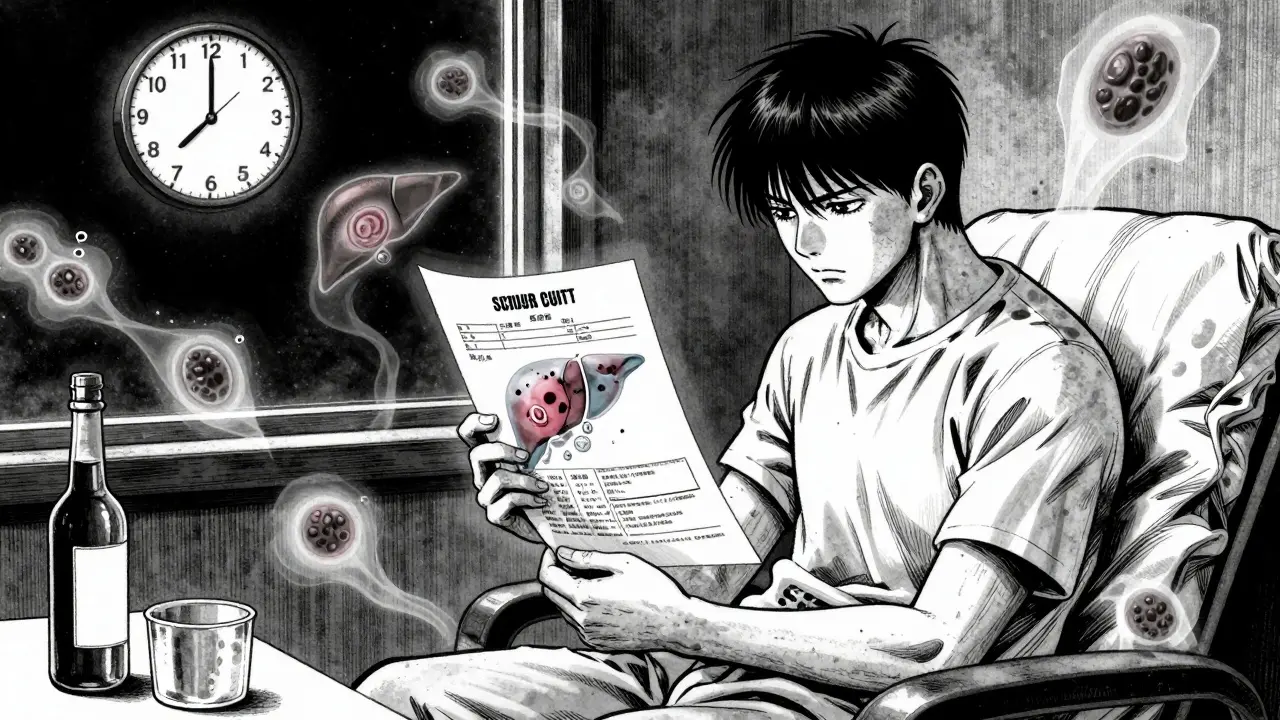
Cirrhosis isn’t a disease you catch. It’s the end result of years of liver injury. Think of your liver like a factory. It filters toxins, makes proteins, stores energy, and produces bile to digest food. When it’s healthy, it’s flexible and full of working cells. But when it’s damaged-say, from long-term alcohol use or untreated hepatitis C-it tries to repair itself. Instead of growing back normal tissue, it builds thick, stiff scar tissue. Over time, this scar tissue wraps around healthy liver cells in lumps called nodules, blocking blood flow and crushing the factory’s machinery.
The word "cirrhosis" comes from the Greek word for "tawny yellow," which is what a badly scarred liver looks like under a microscope. It’s not just about appearance, though. This scarring changes how your whole body works. Blood backs up because the liver’s veins get squeezed. Fluid leaks into your belly. Toxins build up in your brain. Your blood can’t clot properly. These aren’t side effects-they’re direct results of the scar tissue.
Compensated vs. Decompensated: Two Very Different Stages
Not all cirrhosis is the same. Doctors divide it into two stages: compensated and decompensated. In compensated cirrhosis, your liver is scarred, but it’s still doing enough of its job to keep you feeling okay. You might have no symptoms at all. Many people find out they have it during a routine blood test that shows high liver enzymes or low platelets. This stage can last years. Some people live decades with compensated cirrhosis if they stop drinking, lose weight, or get treated for hepatitis.
But when the liver can’t keep up anymore, it enters decompensated cirrhosis. That’s when things go downhill fast. You start seeing clear signs: your belly swells from fluid (ascites), your legs turn puffy, you get confused or forgetful (hepatic encephalopathy), or you vomit blood from burst veins in your esophagus. At this point, your liver is failing. The 5-year survival rate drops from 80-90% in compensated cases to just 20-50% in decompensated ones.
The big difference? Compensated cirrhosis can still be managed. Decompensated cirrhosis often needs a transplant.
How Doctors Measure the Damage
There’s no single test for cirrhosis. Doctors use a mix of tools. Blood work shows clues: high bilirubin (a toxin your liver should remove), low albumin (a protein it makes), and a long prothrombin time (meaning your blood takes too long to clot). Platelet counts often fall below 150,000 because the spleen swells from backed-up blood.
Imaging helps too. Ultrasound elastography measures how stiff your liver is. A reading over 12.5 kPa strongly suggests cirrhosis. Magnetic resonance elastography is even more accurate, hitting 90% precision in recent studies. In the past, a liver biopsy was the gold standard-pulling out a tiny piece of tissue to look under a microscope. Now, non-invasive tests are replacing it for most cases, though biopsies still happen when results are unclear.
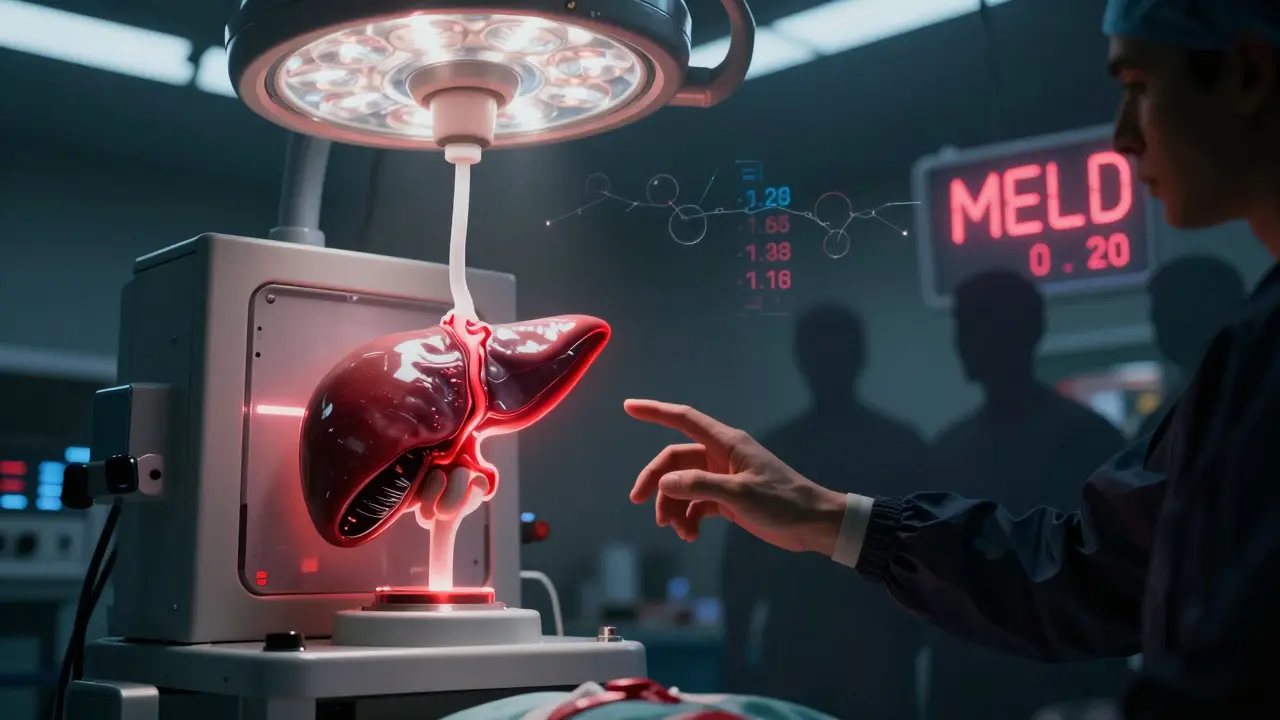
The real game-changer is the MELD score. It’s a number between 6 and 40, calculated from three blood values: bilirubin, creatinine, and INR. A MELD score above 15 means your risk of dying within three months without a transplant is high. This score doesn’t just help doctors-it decides who gets a liver next on the waiting list. Higher score? Higher priority. Since 2016, the MELD-Na version has also factored in sodium levels, making it even more precise.
What Causes Cirrhosis?
It’s not just alcohol. While heavy drinking was once the #1 cause, non-alcoholic fatty liver disease (NAFLD) has taken over. Today, about 24% of cirrhosis cases in the U.S. come from NAFLD, often linked to obesity, diabetes, or high cholesterol. Alcohol still causes about 20%, and hepatitis C (now treatable with antivirals) accounts for another 15%. Other causes include autoimmune liver disease, genetic conditions like hemochromatosis (too much iron), and bile duct disorders like primary biliary cholangitis.
The key point? Cirrhosis can be prevented-if you catch the cause early. Treating hepatitis C with modern drugs can stop cirrhosis before it starts. Losing 10% of your body weight can reverse early fatty liver. Cutting out alcohol? That’s the single most effective step for anyone with liver damage.
The Transplant Reality
If your liver fails, a transplant is the only cure. It’s not a simple fix. You have to be healthy enough to survive surgery, and you need to be on a waiting list. In the U.S., about 14,300 people were waiting for a liver in 2022, but only 8,780 transplants were done. That means about 12% of people on the list die each year before getting one.
Transplant success rates are high-over 80% survive five years. But it’s not a free pass. You’ll take anti-rejection drugs for life. Those drugs increase your risk of infections, kidney damage, and certain cancers. You’ll need regular blood tests, doctor visits, and lifestyle changes forever.
There’s good news on the horizon. New techniques like normothermic machine perfusion keep donor livers alive and healthier outside the body, making more organs usable. In 2023, one study showed this boosted transplantable livers by 22%. And researchers are testing lab-grown liver tissue and stem cell therapies. Early trials show patients with advanced cirrhosis dropping their MELD scores by 40% after receiving hepatocyte transplants-tiny liver cells injected into the body. It’s not a full organ replacement yet, but it’s a step.
Managing Cirrhosis Without a Transplant
Most people with cirrhosis won’t get a transplant. So how do you live with it? It’s not about fixing the scar tissue-because you can’t. It’s about stopping further damage and preventing complications.
- Stop alcohol completely. Even small amounts can accelerate damage.
- Watch your sodium. Less than 2,000 mg a day. That means no canned soups, processed meats, or salty snacks. Fluid retention is the #1 reason people end up in the hospital.
- Take prescribed meds. Diuretics for fluid, lactulose for brain fog, beta-blockers to prevent bleeding.
- Get vaccinated. Hepatitis A and B, flu, pneumonia-you’re at higher risk of infection.
- Monitor for warning signs. Confusion, yellow skin, sudden belly swelling, vomiting blood? Call your doctor immediately.
Many people benefit from a multidisciplinary liver clinic. These teams include hepatologists, dietitians, social workers, and addiction specialists. One Cleveland Clinic study found that patients in these programs had 40% fewer hospitalizations.
Why Early Detection Matters
Cirrhosis sneaks up. Most people don’t feel sick until it’s advanced. That’s why routine blood tests matter-especially if you have risk factors: obesity, diabetes, past hepatitis, heavy drinking, or a family history of liver disease.
Think of cirrhosis like a leaking roof. At first, you just see a small stain. If you fix it then, you save the whole house. If you wait until the ceiling collapses, you need to rebuild from scratch. That’s why catching liver damage early-even before cirrhosis-can prevent disaster.
What’s Next for Cirrhosis Treatment?
The future is moving away from one-size-fits-all care. Researchers are now testing drugs that target the actual scarring process. One drug, simtuzumab, showed a 30% reduction in fibrosis progression in NASH-related cirrhosis in 2023 trials. Others aim to block the signals that make liver cells turn into scar factories.
Doctors are also starting to use molecular signatures-not just MELD scores-to predict who will progress fastest. In the next five years, your cirrhosis care may be based on your unique liver biology, not just how high your bilirubin is.
But until then, the best tools we have are simple: stop drinking, eat less salt, get tested, and act before it’s too late.
Can cirrhosis be reversed?
Early fibrosis can sometimes be reversed if the cause is removed-like quitting alcohol or curing hepatitis C. But once cirrhosis sets in with widespread scarring and nodules, the damage is permanent. No medication can undo it. The goal then shifts to preventing complications and slowing further decline.
How do I know if I have cirrhosis?
Many people have no symptoms until late stages. Signs include fatigue, yellow skin, swollen belly or legs, confusion, easy bruising, or spider-like blood vessels on the skin. Diagnosis usually starts with blood tests showing abnormal liver enzymes, low platelets, or high bilirubin. Imaging like ultrasound elastography or MRI can confirm scarring. A doctor may order a biopsy if results are unclear.
Is liver transplant the only cure for cirrhosis?
Yes, for end-stage cirrhosis, a liver transplant is the only cure. All other treatments manage symptoms and slow progression, but they don’t remove the scar tissue. Transplant success rates are high, but you must be healthy enough for surgery and willing to take lifelong anti-rejection drugs.
What foods should I avoid with cirrhosis?
Avoid high-sodium foods: canned soups, deli meats, chips, soy sauce, and processed meals. Limit protein if you have hepatic encephalopathy (confusion or memory loss), as the liver can’t process it. Avoid raw shellfish-risk of serious infection. Alcohol is strictly forbidden. Focus on lean proteins, whole grains, vegetables, and low-sodium meals.
Can NAFLD turn into cirrhosis?
Yes. Non-alcoholic fatty liver disease (NAFLD) can progress to non-alcoholic steatohepatitis (NASH), which causes inflammation and scarring. About 20-30% of NASH cases develop cirrhosis over 10-20 years, especially if you’re overweight, diabetic, or have high cholesterol. Weight loss and better blood sugar control can stop or reverse early stages.
Final Thoughts
Cirrhosis is not a death sentence-but it’s a serious warning. It doesn’t happen overnight. It happens because something was ignored. The liver is quiet until it’s too late. But if you act early-stop drinking, lose weight, get tested-you can still protect it. And if it’s too far gone? Transplantation saves lives. The system is stretched thin, but science is catching up. What matters now is knowing the signs, asking the right questions, and never waiting for symptoms to show up.
Angie Datuin
February 7, 2026 AT 22:07My grandma had cirrhosis from years of drinking, and she never even knew something was wrong until she got really sick. It’s scary how quiet it is until it’s too late. I’m so glad this post laid it all out so clearly-no jargon, just facts. If more people understood this, maybe we’d catch it sooner.
Camille Hall
February 9, 2026 AT 07:55I work in primary care and see this all the time. People think "liver problems" = alcoholics. Nope. It’s the guy with type 2 diabetes and 30 extra pounds who drinks one beer a night. NAFLD is the silent epidemic. We need way more screening in routine bloodwork. Seriously, if your ALT’s up, don’t just shrug it off.
Ritteka Goyal
February 10, 2026 AT 14:08OMG this is so true!! In India we have so many people with fatty liver because of too much oil and sugar and no exercise!! And they just keep eating biryani and pizza and saying "I’m fine!!" Then one day they go to hospital and boom-liver gone!! We need to teach kids in schools about liver health!! Like how we teach brushing teeth!! My cousin died last year at 38 because he ignored his ALT levels!! 😭
Ashlyn Ellison
February 11, 2026 AT 21:25My mom’s MELD score hit 22 last year. We waited 11 months. It’s insane how long it takes. And the meds afterward? Crazy expensive. Insurance barely covers it. This post got it right-transplant isn’t a cure, it’s a whole new life.
Chelsea Cook
February 13, 2026 AT 04:38So let me get this straight-we have a body part that can regenerate, but we let people turn it into a brick wall by eating Cheetos and chugging whiskey? And then we call it a "medical crisis"? Bro. We know how to fix this. We just don’t want to.
Joshua Smith
February 14, 2026 AT 05:48I’ve been researching this since my brother got diagnosed. The part about elastography replacing biopsies blew my mind. I didn’t realize we could now measure liver stiffness with an ultrasound. That’s huge. Less invasive, faster, cheaper. Why isn’t this standard everywhere yet?
John Watts
February 15, 2026 AT 18:42As someone who moved from Nigeria to the US, I’ve seen how different cultures handle liver health. In my village, we used bitter leaf tea for detox. Not scientific, but people stayed healthy because they ate whole foods and walked everywhere. Here? We’re drowning in processed junk and calling it "convenient." We need to bring back real food culture.
Randy Harkins
February 16, 2026 AT 20:23This is so well written 💙 I’ve been living with compensated cirrhosis for 5 years now. Quit drinking, lost 40 lbs, and I’m stable. It’s not glamorous, but every day I choose my veggies over fries. It’s a quiet victory. If you’re reading this and have risk factors-please, get tested. You don’t need to wait to feel sick.
Tatiana Barbosa
February 18, 2026 AT 10:30Let’s talk MELD-Na. Bilirubin, creatinine, INR-those are the holy trinity. Sodium’s the new player. But here’s the kicker-most docs don’t explain it to patients. You’re just a number on a list. I’ve been on the list for 3 years. My score went from 18 to 27. No one told me what that meant until I looked it up myself. We need patient education, not just clinical protocols.
Ken Cooper
February 19, 2026 AT 06:04wait so if u stop drinking and lose weight can u actually reverse it? like for real? i thought once its cirrhosis its game over? my uncle did all that and his doc said his fibroscan improved? mind blown. so maybe its not all doom? idk just wondering
Sam Dickison
February 20, 2026 AT 23:32NAFLD progression is all about insulin resistance. It’s metabolic syndrome with a liver twist. We treat the diabetes, the hypertension, the lipids-and the liver improves. But nobody talks about it that way. It’s not "liver disease," it’s systemic. We’re treating symptoms, not the root.
Brett Pouser
February 21, 2026 AT 03:04My cousin got a liver transplant last year. He’s doing great now. But the anti-rejection drugs? He got diabetes from them. And kidney issues. And he’s scared of every cold. It’s a trade-off. No one tells you that part. You think transplant = happy ending. It’s more like a new chapter with a ton of fine print.
Karianne Jackson
February 22, 2026 AT 03:25My sister was diagnosed at 29. She cried for a week. Then she started a TikTok account. Now she has 150K followers. She’s teaching people about sodium. She’s a hero. Cirrhosis is scary-but silence is scarier.
Tom Forwood
February 23, 2026 AT 05:19Just got my elastography results. 14.2 kPa. Doc said "definite cirrhosis." I thought I was fine. I don’t drink. I eat salad. Turns out, my 20-year sugar habit did this. I’m scared. But now I know. That’s the first step. Thanks for this post.
John McDonald
February 23, 2026 AT 20:00My liver specialist said if I don’t lose 15% of my weight in 6 months, I’m off the transplant list. So I started walking 10K steps a day. I’m down 11 lbs. Not glamorous. But I’m alive. And I’m not done. If you’re reading this and you’re scared-start small. One step. One meal. One day.