
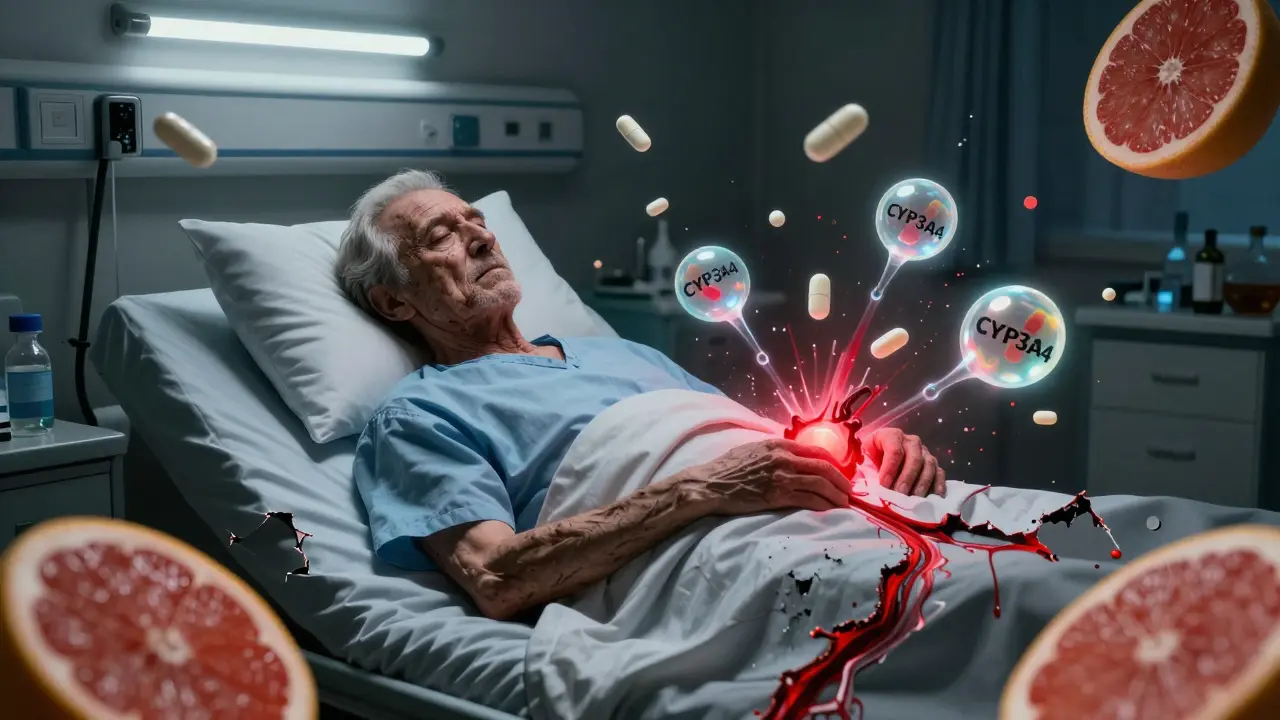
Every year, thousands of people end up in the hospital not because they got sick, but because their medications started working against them. It’s not rare. It’s not unusual. It’s drug interactions-and they’re one of the most hidden dangers in modern medicine.
What Exactly Is a Drug Interaction?
A drug interaction happens when something changes how a medication works in your body. It could be another pill, a supplement, grapefruit juice, or even a health condition you already have. The result? The drug might stop working, or worse-it might become dangerously strong.
There are three main types:
- Drug-drug interactions: When two or more medications affect each other.
- Drug-food/drink interactions: When what you eat or drink changes how the drug is absorbed or broken down.
- Drug-condition interactions: When an existing health issue, like kidney disease or liver problems, alters how your body handles the drug.
Think of your body like a factory. Medications are workers. When you add another worker-or change the factory’s rules-things get messy. Sometimes, the wrong worker gets too much work. Sometimes, they get blocked. And sometimes, they start breaking things.
Why Do Drug Interactions Happen?
Most drug interactions fall into two categories: pharmacokinetic and pharmacodynamic.
Pharmacokinetic interactions change how your body processes the drug. This includes how it’s absorbed, moved around, broken down, or removed. The biggest player here is the cytochrome P450 (CYP450) enzyme system in your liver. It’s responsible for breaking down about half of all prescription drugs. One enzyme, CYP3A4, handles roughly 50% of them. If something blocks this enzyme-like the antifungal fluconazole-your body can’t clear the drug. That means levels build up. For example, taking fluconazole with simvastatin (a cholesterol drug) can spike simvastatin levels by up to 2,000%. That’s not a typo. That’s enough to cause rhabdomyolysis-a life-threatening muscle breakdown.
Pharmacodynamic interactions are about what the drug does to your body. This is where two drugs team up or fight each other. For example:
- Combining two sleep aids? You might pass out.
- Taking NSAIDs (like ibuprofen) with a blood pressure pill? The NSAID can make the blood pressure drug useless by causing fluid retention.
- Using beta-blockers for heart issues while also using asthma inhalers? They can block each other’s receptors, making your asthma worse.
Which Medications Are Most Dangerous?
Not all drugs are equal when it comes to interactions. Some are like landmines. Here are the big three:
- Warfarin (Coumadin): This blood thinner has over 600 known interactions. Even something as simple as cranberry juice or an antibiotic can make it too strong-leading to internal bleeding-or too weak-leading to a stroke. A 2023 Reddit thread with 147 user stories showed that 68% had dangerous INR spikes after starting antibiotics.
- Digoxin (Lanoxin): Used for heart rhythm problems. It interacts with over 300 substances. Diuretics, antibiotics, and even some herbal supplements can push digoxin levels into toxic range, causing nausea, confusion, or fatal heart arrhythmias.
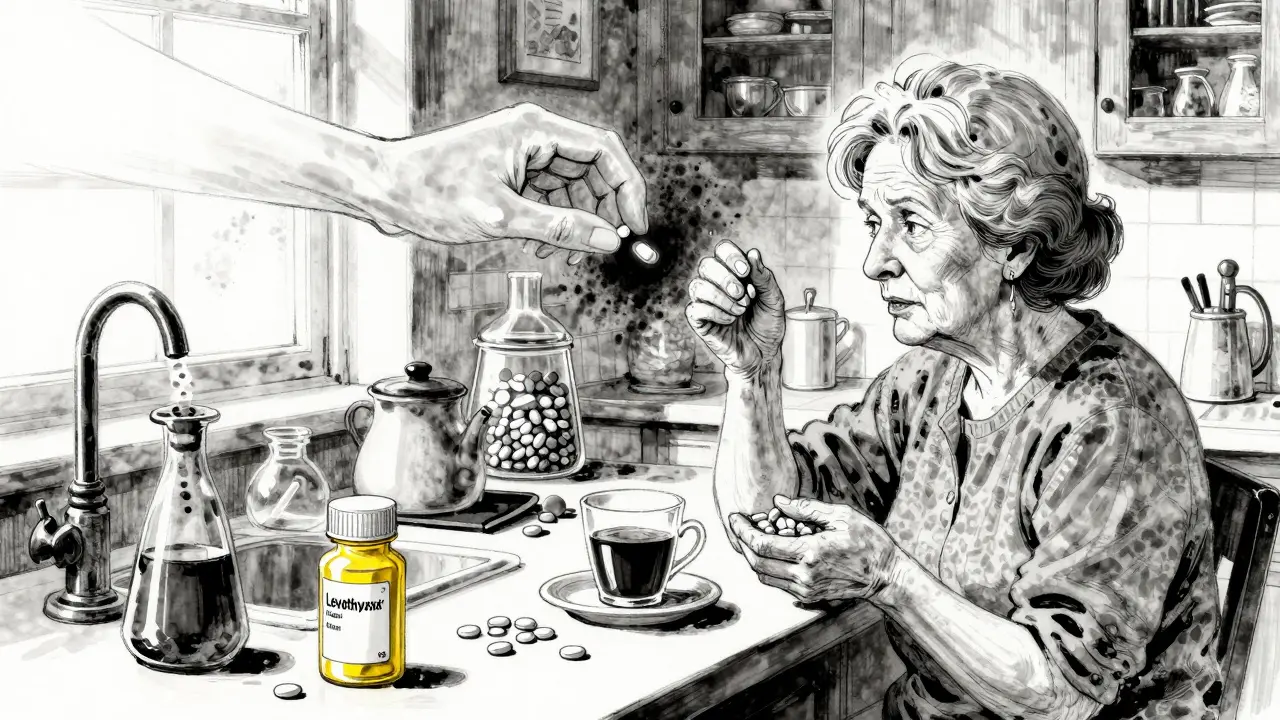
- Levothyroxine (Synthroid): For hypothyroidism. If you take it with calcium, iron, or even coffee within two hours, your body absorbs less than half the dose. You might think your treatment isn’t working-but it’s just being blocked.
And then there’s grapefruit juice. Yes, that healthy morning drink. It contains chemicals called furanocoumarins that block CYP3A4 in your gut. This means drugs like simvastatin, atorvastatin, and even some blood pressure pills can spike in your bloodstream by 300-600%. One FDA report from January 2023 described a man hospitalized with rhabdomyolysis after drinking grapefruit juice for two weeks while on simvastatin. He had no symptoms before. Within 48 hours, he was in critical condition.
Who’s at Highest Risk?
It’s not just the elderly. But they’re the most vulnerable.
People over 65 take an average of 4.7 prescription medications daily. The American Geriatrics Society says they experience drug interactions at three times the rate of younger adults. Why? Because their livers and kidneys don’t clear drugs as fast. They’re more likely to have multiple conditions, each needing its own drug. And they’re more likely to take over-the-counter pills-like painkillers, antacids, or sleep aids-that no one thinks to ask about.
A 2022 AARP survey of 5,000 Medicare beneficiaries found that 42% had experienced at least one harmful interaction. And it’s not just age. People with five or more chronic conditions have a 68% chance of having at least one dangerous interaction.
Even more concerning: 70% of all prescription drugs are processed by just three enzymes-CYP3A4, CYP2D6, and CYP2C9. If you’re on any of those drugs, you’re already in the danger zone.
The Real Cost: Hospital Beds and Lives
Drug interactions aren’t just a medical footnote. They’re a public health crisis.
In the U.S., they cause 1.3 million emergency room visits and 350,000 hospitalizations every year. According to the Agency for Healthcare Research and Quality, these events cost the system $30 billion annually. The Journal of the American Medical Association estimated that 106,000 deaths each year are linked to serious drug interactions.
And here’s the kicker: 6.5% of all hospital admissions in the U.S. are due to preventable drug interactions. That’s more than pneumonia, more than heart failure. And most of them happen because no one asked the right questions.
What Can You Do?
Preventing drug interactions isn’t rocket science-but it does take effort.
Keep a full medication list. Not just prescriptions. Include every vitamin, herb, supplement, and over-the-counter pill. Write down the dose and when you take it. Carry this list to every appointment-even if you think the doctor already knows.
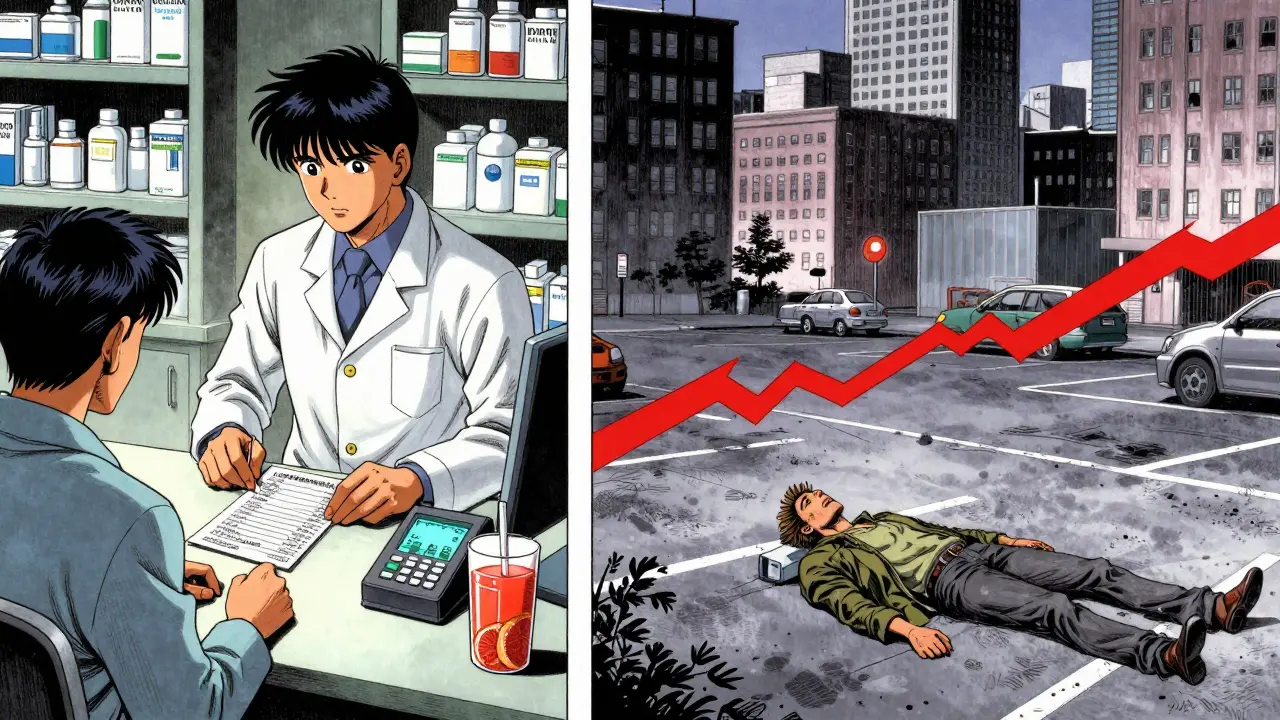
Use one pharmacy. Pharmacists are trained to catch interactions. If you fill all your prescriptions at one place, they can run automated checks across your entire regimen. Studies show this reduces errors by up to 40%.
Ask about food. If you’re on statins, avoid grapefruit. If you’re on levothyroxine, wait at least two hours after taking it before eating calcium-rich foods or taking iron pills. Don’t assume your doctor knows every interaction-many don’t.
Use trusted tools. The GoodRx Drug Interaction Checker (FDA-approved) and Medscape Drug Interaction Checker (used by 78% of U.S. physicians) are free, reliable, and easy to use. The NIH’s LiverTox database is great for liver-related risks. Don’t rely on random websites or chatbots.
Speak up at discharge. A 2022 study in the New England Journal of Medicine found that 34% of patients left the hospital with at least one undocumented interaction risk. Why? Because different doctors didn’t talk. Ask: “Am I on any new drugs? Could they interact with what I’m already taking?”
The Future: Personalized Safety
Right now, drug interaction checkers give you a simple “dangerous” or “safe” label. But that’s outdated.
The future is personalized risk. The FDA now includes pharmacogenetic data for over 350 drugs. That means your genes-specifically how your liver enzymes work-can predict if a drug will be too strong or too weak for you. By 2026, testing for CYP450 variants is expected to become standard for high-risk medications like warfarin and clopidogrel.
Artificial intelligence is stepping in too. IBM Watson Health’s tool scans over 300 million clinical notes to find patterns no one else sees. The FDA’s new Drug Interaction Knowledgebase (DIKB) now includes 12,000+ clinically validated interactions with evidence levels. This isn’t science fiction-it’s happening now.
But here’s the hard truth: pharmaceutical companies still underreport interaction risks. A 2022 study found that 73% of major drug interactions were only discovered after the drug hit the market. That means you can’t rely on labels alone.
Final Thought: You’re the Last Line of Defense
Doctors miss things. Pharmacists are overloaded. Electronic systems flag only what they’re programmed to see. The truth? You are the most important part of the safety chain.
If you’re on more than three medications, assume an interaction is possible. Ask questions. Write things down. Don’t be shy. Your life depends on it.
One woman in Melbourne told her pharmacist she’d started eating more oranges. She was on simvastatin. The pharmacist paused. “Oranges? Not grapefruit, right?” She laughed. “No, just oranges.” The pharmacist said: “Good. But next time, tell me about anything you changed. Even if it seems small.”
That’s the difference.
What are the most common drug interactions?
The most common drug interactions involve blood thinners like warfarin (over 600 known interactions), cholesterol drugs like simvastatin (especially with grapefruit juice or certain antibiotics), and thyroid medication like levothyroxine (which is blocked by calcium, iron, and coffee). Drug-drug interactions make up about 80% of serious cases, while food and health conditions make up the rest.
Can over-the-counter supplements cause drug interactions?
Absolutely. St. John’s Wort can reduce the effectiveness of birth control pills, antidepressants, and heart medications. Garlic and ginkgo can increase bleeding risk when taken with warfarin or aspirin. Even vitamin K can make blood thinners less effective. Always list supplements on your medication list.
Why do some people have interactions and others don’t?
It depends on genetics, age, liver and kidney function, and what else you’re taking. Some people naturally break down drugs faster or slower due to gene variants in enzymes like CYP3A4 or CYP2D6. Older adults, people with chronic diseases, and those on multiple drugs are far more likely to experience interactions.
How can I check for interactions myself?
Use trusted tools like the GoodRx Drug Interaction Checker, Medscape Drug Interaction Checker, or the NIH’s LiverTox database. These are free, updated regularly, and backed by clinical data. Never rely on random websites or AI chatbots without verification.
Is it safe to take drugs with alcohol?
It depends. Alcohol can dangerously increase drowsiness with sedatives, sleep aids, and some antidepressants. It can spike liver damage risk with acetaminophen. It can raise bleeding risk with warfarin. For many drugs, even one drink can be risky. Always check labels and ask your pharmacist.
Marie Fontaine
February 7, 2026 AT 12:44Brandon Osborne
February 9, 2026 AT 05:01Lyle Whyatt
February 10, 2026 AT 21:43Tom Forwood
February 11, 2026 AT 20:32Scott Conner
February 11, 2026 AT 21:49Tatiana Barbosa
February 11, 2026 AT 23:14Andy Cortez
February 13, 2026 AT 12:39Joseph Charles Colin
February 14, 2026 AT 14:53Camille Hall
February 16, 2026 AT 00:15Ashlyn Ellison
February 17, 2026 AT 11:35