
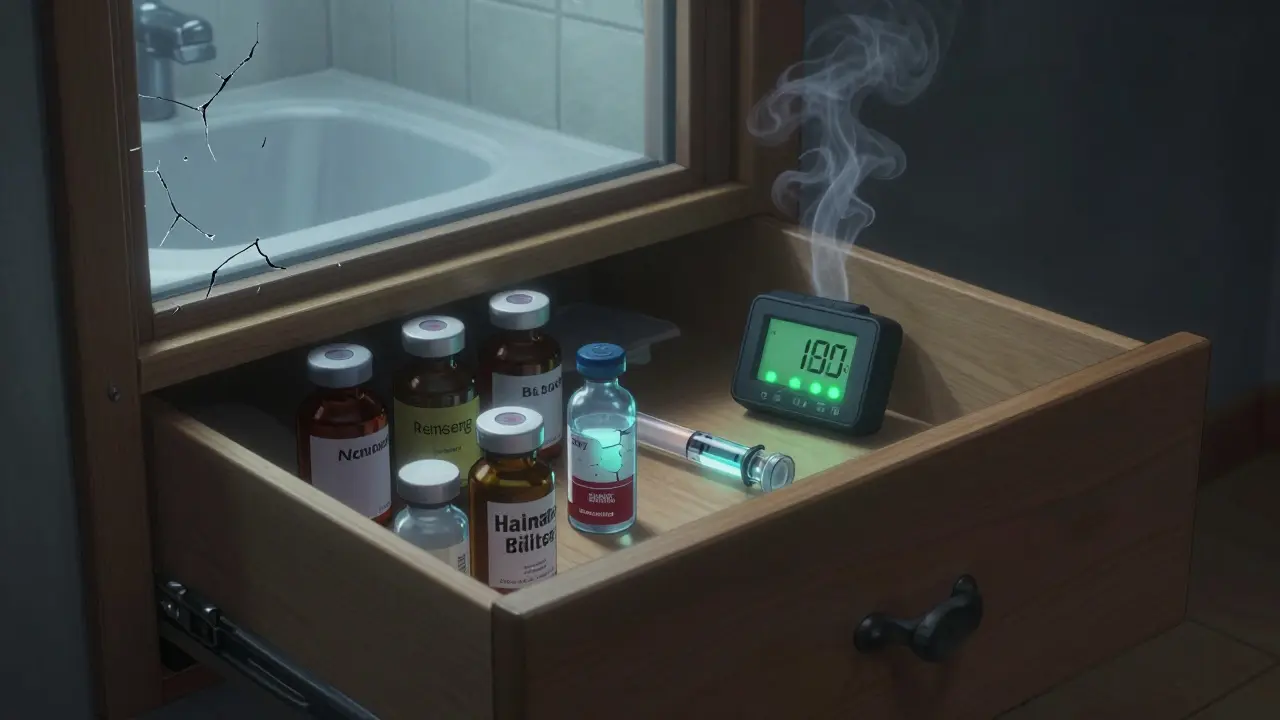
Learn how temperature and humidity affect medication safety in 2026. Discover official storage rules, common mistakes, and what you can do to protect your drugs-from home to clinic.
Medication Storage: Safe Ways to Keep Your Pills Effective and Out of Reach
When you think about medication storage, the way you keep your pills, liquids, and patches at home affects how well they work and whether someone gets hurt. Also known as drug storage, it’s not just about keeping bottles in a cabinet—it’s about preventing poisonings, preserving potency, and stopping errors before they happen. Many people don’t realize that heat, humidity, and light can break down medicines long before their expiration date. Storing insulin in a hot bathroom or leaving antibiotics in a car on a summer day doesn’t just waste money—it can make them useless or even dangerous.
Child-resistant packaging, a design requirement for many prescription drugs, helps keep kids safe. Also known as tamper-evident containers, it’s not foolproof—toddlers are clever, and curious teens can find ways in. That’s why the best practice is to store all meds out of sight and reach, ideally in a locked box or high cabinet. Pill organizer, a tool used to sort daily doses, also plays a role here. While helpful for adherence, leaving it on the counter makes it easy for kids or visitors to grab the wrong pill. Always return unused pills to their original containers after use. Seniors on multiple medications face different risks: mixing up pills, forgetting doses, or accidentally doubling up. A brown bag review with a pharmacist can catch these issues, but daily habits like pairing meds with brushing your teeth or eating breakfast cut down on mistakes.
Medication errors, including wrong doses, expired drugs, or accidental ingestion, are one of the leading causes of preventable harm at home. The FDA and CDC both warn that over 100,000 ER visits each year come from improper storage—especially involving children under six and older adults. Keep your medicines away from the kitchen sink, bathroom counter, or bedside table. Don’t rely on labels alone; if a bottle looks different, check the prescription. And never keep old or unused meds lying around. Take them to a drug take-back program or follow FDA disposal guidelines—flushing isn’t always the answer.
What you’ll find below are real, practical guides on how to handle medications safely—from how to measure kids’ liquid doses with a syringe, to why vitamin K matters for warfarin users, to how to do a brown bag review with your doctor. These aren’t theory pieces. They’re step-by-step tools from people who’ve seen what happens when storage goes wrong. Whether you’re caring for a child, managing chronic illness, or helping an aging parent, the right storage habits don’t just protect your medicine—they protect your family.
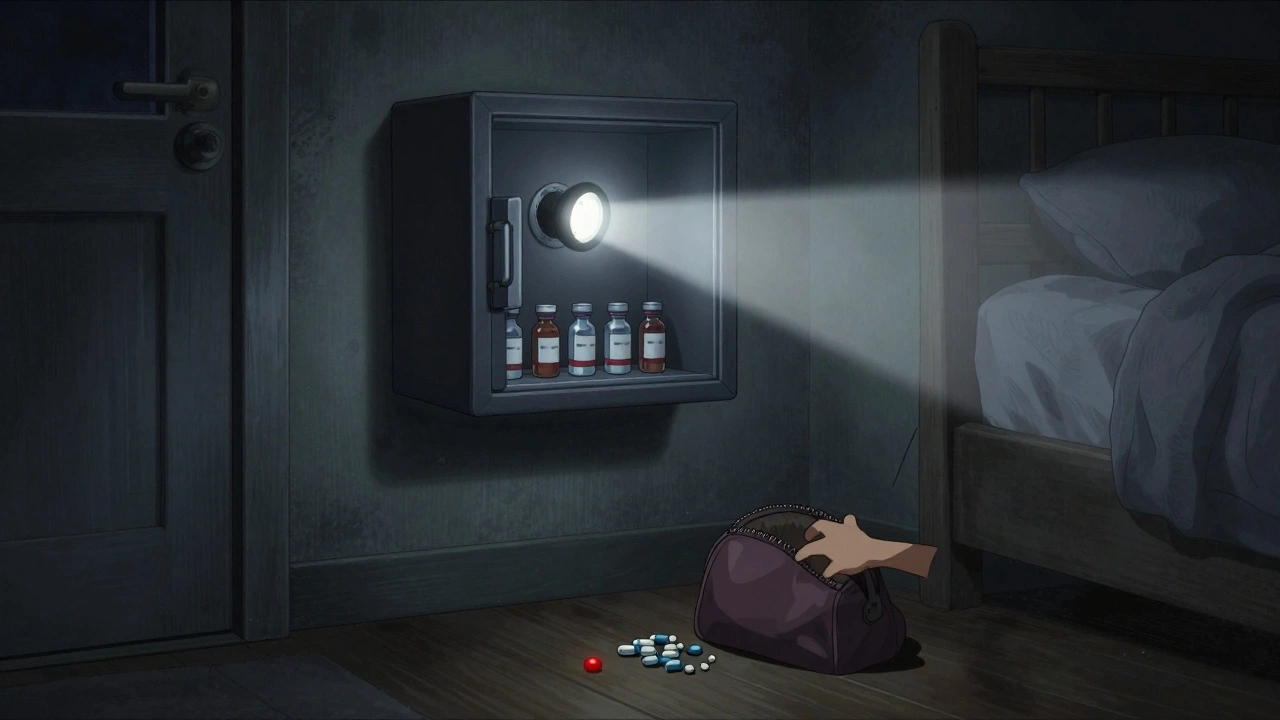
Learn how to safely store medications at home to prevent accidental poisonings, stop teen misuse, and avoid counterfeit drugs. Simple steps can protect your family and keep your pills effective.