
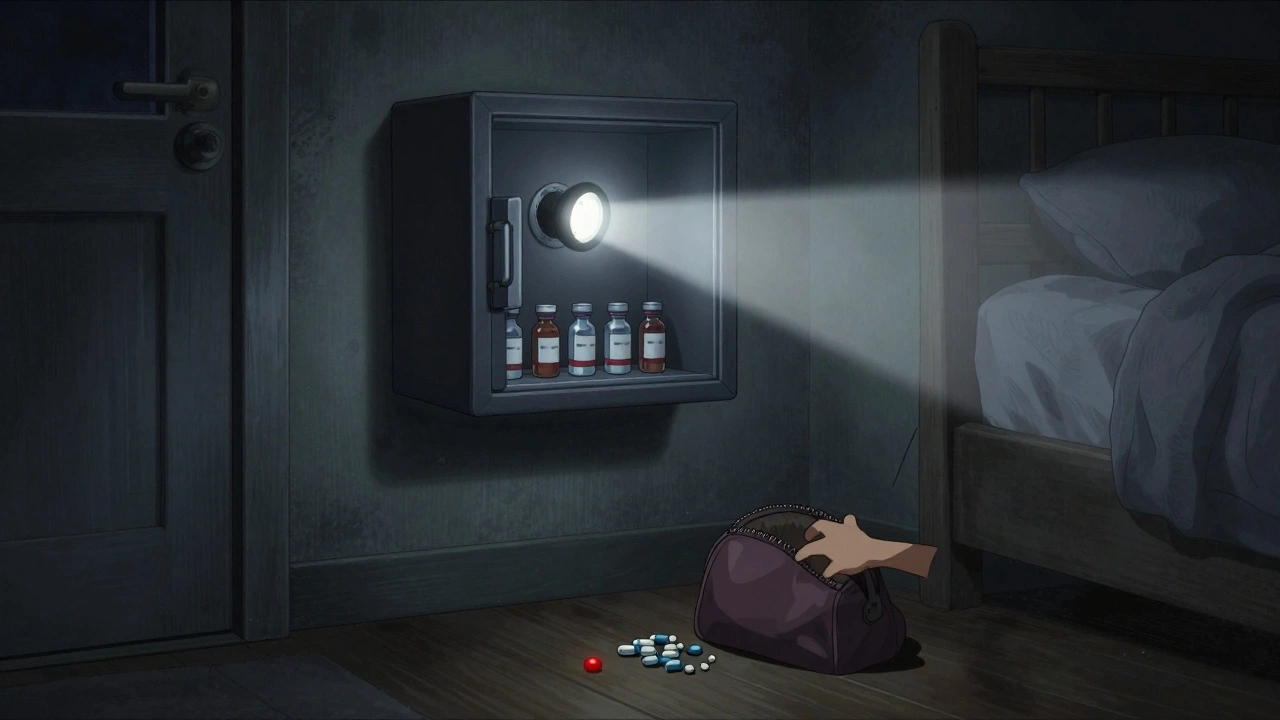
Every household in Australia keeps medicines - painkillers, heart pills, insulin, antibiotics. But how many of us actually know where they’re stored, how they’re kept, or whether they’re even real? In 2025, counterfeit drugs are no longer just a problem overseas. Fake painkillers laced with fentanyl, expired antibiotics sold as new, and bottles with fake batch numbers are showing up in online orders and even some local pharmacies. At the same time, accidental poisonings from kids grabbing pills off a nightstand or teens pulling bottles from an unlocked cabinet are still happening every week. The truth? Medication storage isn’t just about keeping pills dry - it’s about saving lives.
Why Your Medicine Cabinet Is a Danger Zone
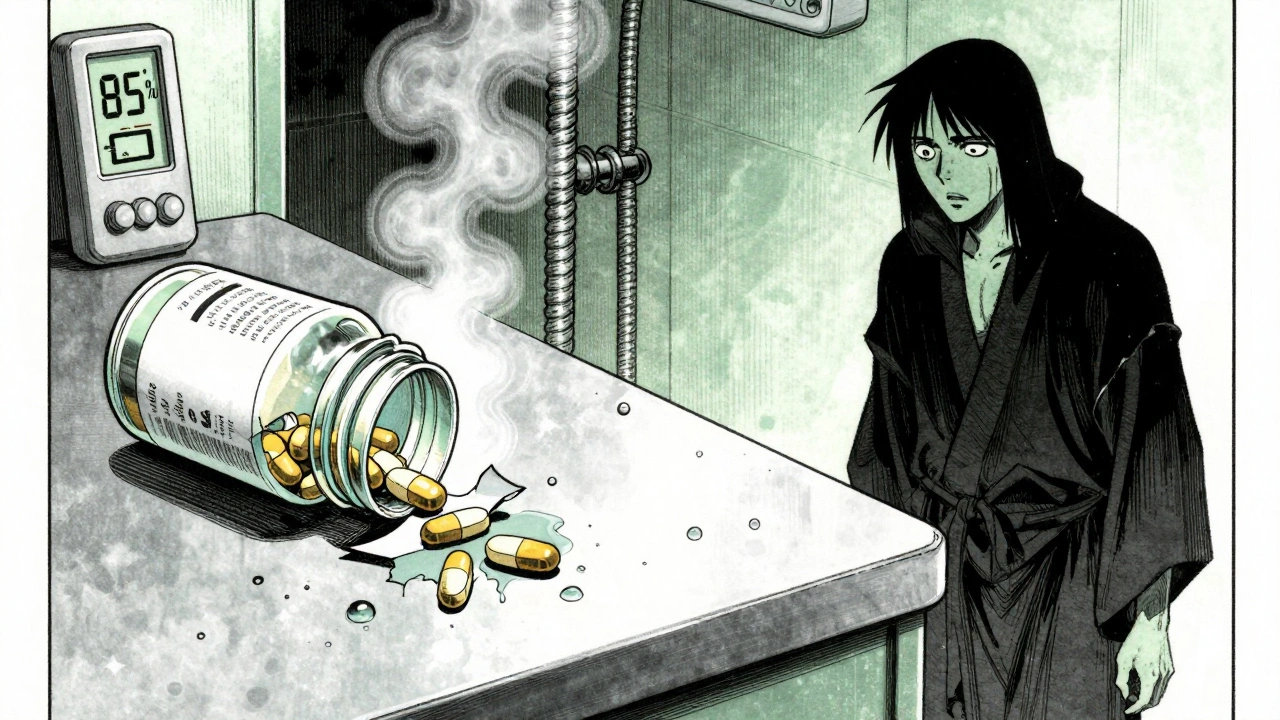
Most people store their meds in the bathroom. It’s convenient. You take your pills after brushing your teeth. But that’s exactly why it’s the worst place in the house. Humidity from showers spikes above 80%. Aspirin breaks down into vinegar and salicylic acid in as little as two weeks. Ampicillin loses 30% of its strength in seven days at that moisture level. Even acetaminophen degrades 53% faster in the bathroom than in a bedroom drawer. And it’s not just about effectiveness. The CDC reports that 70% of teens who misuse prescription drugs get them from home - usually from an unlocked cabinet within 15 minutes of deciding to try them. Meanwhile, children under five account for 60% of all accidental poisoning cases treated in emergency rooms. Most of these happen because a parent left a pill on the counter while answering the door, or a purse with meds was left within reach of a toddler.What Real Medication Storage Looks Like
The gold standard isn’t fancy. It’s simple: locked, cool, dry, and out of sight.- Temperature: Keep meds between 20-25°C. That’s room temperature in Melbourne. Avoid windowsills, near the stove, or above the fridge. Heat kills insulin - it can lose 15% potency per hour at 30°C.
- Humidity: Never store meds in the bathroom. Use a locked drawer in the bedroom, a high closet shelf, or a dedicated safe. Keep humidity below 60%.
- Light: Tetracycline and other light-sensitive drugs degrade 40% faster in direct sunlight. Store them in opaque containers or inside a closed cabinet.
- Original packaging: Never transfer pills to pill organizers unless you’re using them daily. The FDA says 78% of medication errors come from misidentifying pills. Bottle labels have expiration dates, batch numbers, and warnings. If you lose that, you lose proof it’s real.
Locked Storage Isn’t Optional - It’s Essential
Child-resistant caps help - but only if they’re used right. The Consumer Product Safety Commission found that when caps are twisted until they click, they block 85% of kids under five. But if the cap is loose or the bottle is left open? That protection vanishes. Locked storage boosts safety to 92%. That’s not a guess. It’s data from the Washington State Department of Health. Real locked solutions include:- Medication safes: Small, affordable boxes with key or combination locks. Look for ones that meet ASTM F2090-19 standards - they’re tested to resist 10 minutes of tampering by a 4-year-old.
- Gun safes or fireproof boxes: If you already have one, use it. The EPA confirms they’re just as effective as branded medicine safes.
- Wall-mounted lockboxes: Install one at 1.5 meters high - out of reach for kids, easy for adults. Many parents with chronic pain use these to keep opioids or strong painkillers accessible in emergencies but locked from children.
Spotting Counterfeit Medications
Fake drugs are harder to spot than ever. They look real. But here’s how to tell:- Check the packaging: Look for spelling errors, blurry logos, mismatched colors. Real bottles have sharp printing and consistent font sizes.
- Compare the pills: If your new bottle has pills that look different in shape, color, or markings than your last one - ask your pharmacist. Don’t assume it’s just a generic switch.
- Verify the batch number: Call the manufacturer’s helpline (it’s on the box). They can confirm if the batch was made and shipped to Australia.
- Buy from licensed pharmacies: Avoid online sellers offering “deep discounts” on brand-name drugs. The Therapeutic Goods Administration (TGA) warns that 90% of illegal online pharmacies sell counterfeit or unsafe products.
Refrigerated Medications and Special Cases
Insulin, some antibiotics, and biologics need to be kept cold - between 2-8°C. But don’t just toss them in the fridge door. Temperature swings there can damage them. Store them in the back, on a middle shelf, inside a small lockable container. That way, kids can’t reach them, and they stay stable. Naloxone (Narcan) is different. It needs to be instantly accessible. Keep it in a locked box near the front door or in your car - but make sure everyone in the house knows where it is and how to use it. The NACoA 2025 guidelines say it must be reachable within 10 seconds during an overdose emergency.What to Do with Expired or Unused Meds
Don’t flush them. Don’t toss them in the trash. Don’t give them to a friend. The EPA and TGA both say improper disposal contaminates water and fuels the black market. Use a take-back program. Australia has over 2,000 permanent collection points at pharmacies and hospitals. Go to TGA’s website to find your nearest drop-off. Some pharmacies even offer mail-back envelopes for unused pills. If you must dispose of meds at home (no take-back nearby), mix them with coffee grounds or cat litter in a sealed bag. This makes them unappealing and unusable. Then throw the bag in the trash. Never leave pills loose in a bin.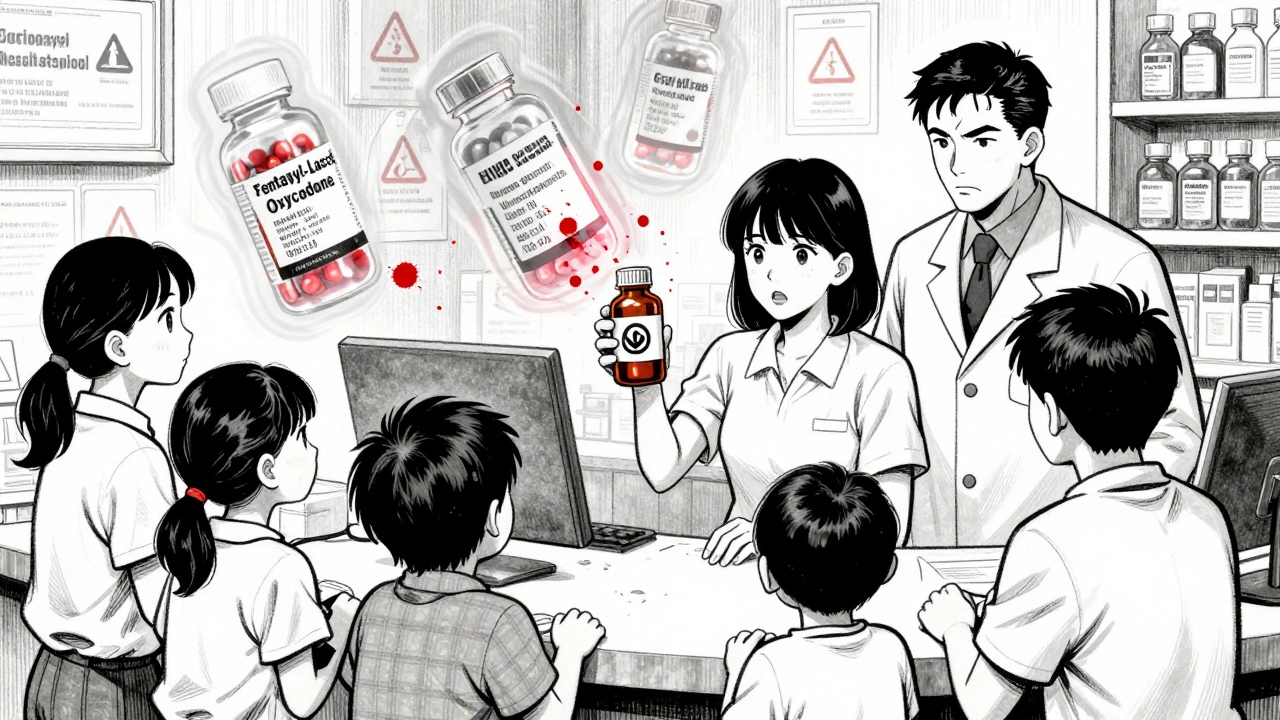
Building a Safe Routine - Not Just a Safe Box
Storage isn’t a one-time fix. It’s a habit. The CDC says it takes 3-5 weeks for new routines to stick. Here’s how to make it automatic:- Do a home audit: Walk through every room. Find every pill bottle - medicine cabinet, purse, drawer, glove box, bedside table. Write them down.
- Consolidate: Move everything into one or two secure locations. No more “I’ll just keep this here for now.”
- Set a schedule: Every quarter, check expiration dates. Toss what’s expired. Return what you don’t need.
- Teach your kids: Even toddlers can learn “meds are not candy.” Use simple language. Show them the locked box. Make it normal.
Special Considerations: Aging Parents and Chronic Pain
Some worry that locking meds makes it harder for older adults with arthritis or mobility issues. That’s valid. But there’s a solution: combination locks with large, easy-to-turn dials. The Arthritis Foundation recommends these - they’re secure but don’t require fine motor skills. Smart locks with voice control or fingerprint access are also becoming more common. They’re pricier, but for someone who needs meds within seconds, they’re worth it.It’s Not Just About Safety - It’s About Trust
When you store your meds right, you’re not just protecting your kids. You’re protecting your family’s health. You’re stopping counterfeit drugs from being passed around. You’re ensuring your insulin works. You’re keeping painkillers out of the hands of someone who shouldn’t have them. The numbers don’t lie. Locked storage reduces accidental poisonings by 83%. It cuts teen misuse by 92%. It preserves drug potency. It saves lives - and billions in healthcare costs. You don’t need a fancy safe. You don’t need to spend hundreds. You just need to act. Lock it. Keep it cool. Know what’s in it. And never, ever leave it out.Can I store my medications in the bathroom?
No. Bathrooms are too humid. Showers raise moisture levels above 80%, which causes many medications - like aspirin, ampicillin, and insulin - to break down faster. Aspirin can degrade into vinegar and salicylic acid in as little as two weeks. Always store meds in a cool, dry place like a bedroom drawer or locked cabinet.
How do I know if my pills are counterfeit?
Check the packaging for blurry logos, misspellings, or odd colors. Compare the pills to your last prescription - if shape, color, or markings are different, ask your pharmacist. Verify the batch number by calling the manufacturer’s helpline. Only buy from licensed Australian pharmacies. Avoid websites offering huge discounts on brand-name drugs - 90% of those are fake or unsafe.
What’s the best way to store insulin?
Keep unopened insulin in the fridge between 2-8°C. Once opened, it can be stored at room temperature (below 25°C) for up to 28 days. Always keep it in a locked container inside the fridge, away from food, to prevent accidental access by children. Never leave it in the fridge door - temperature swings can damage it.
How do I safely dispose of old or unused medications?
Take them to a pharmacy with a take-back program. Australia has over 2,000 drop-off locations. If that’s not possible, mix pills with coffee grounds or cat litter in a sealed bag, then throw it in the trash. Never flush pills or throw them loose in the bin - this pollutes water and can be dangerous if someone finds them.
Is child-resistant packaging enough?
No. Child-resistant caps reduce access by only 45%. When combined with locked storage, that jumps to 92%. Many parents think the cap is enough, but kids as young as two can open them in under 30 seconds. A locked box or safe is the only reliable way to prevent accidental ingestion.
What should I do if I suspect a fake medication?
Don’t use it. Take the medication to your pharmacy and ask them to report it to the Therapeutic Goods Administration (TGA). They track counterfeit products and can alert other pharmacies. If you bought it online, report the seller to the TGA’s online fraud portal. Every report helps stop dangerous drugs from reaching others.
James Kerr
December 3, 2025 AT 15:13Just locked my meds in a little safe under my bed. Best decision ever. My toddler can’t reach it and I don’t have to stress every time I leave the house. Simple, cheap, life-saving.
Katherine Gianelli
December 5, 2025 AT 02:56I used to keep everything in the bathroom because it was convenient 😅 But after my niece almost swallowed my dad’s blood pressure pills last year? No more. We moved everything to a locked drawer in the bedroom. Now I feel like I’m not just storing medicine-I’m protecting my family. It’s not about being paranoid, it’s about being smart.
Archie singh
December 6, 2025 AT 00:28The bathroom is a biochemical wasteland for pharmaceuticals. Humidity degrades aspirin into salicylic acid within weeks. Ampicillin loses 30% potency in seven days. Acetaminophen degrades 53% faster than in dry environments. This isn’t anecdotal-it’s pharmacokinetic fact. If you’re storing meds in a steam room, you’re not being practical, you’re being negligent.
Joykrishna Banerjee
December 6, 2025 AT 15:13Everyone says 'lock it' like it's the only solution. But in India, we've been storing meds in cool, dry cupboards for generations-no safes needed. Why are Westerners so obsessed with over-engineering safety? It’s not about locks, it’s about awareness. Also, why is everyone ignoring that 80% of counterfeit drugs come from unregulated online sellers? Focus on the source, not the drawer.
And yes, I know the CDC data. But correlation ≠ causation. 🤷♂️
parth pandya
December 8, 2025 AT 09:30hey i just learned this from my aunt who is a nurse-dont store insulin in the fridge door! the temp changes too much and it goes bad even if it looks fine. always put it in the back on a middle shelf. also if you use a pill organizer, write the name on each slot with a sharpie. i did this after i mixed up my blood sugar meds once. scary stuff.
bobby chandra
December 8, 2025 AT 19:35Locking your meds isn’t just safety-it’s power. Power over chaos. Power over addiction. Power over corporate greed selling fake pills. This isn’t a chore, it’s a revolution. Every locked drawer is a middle finger to the pharmaceutical black market. Every expired pill returned to a drop-off? That’s civic duty. You think you’re just storing medicine? No. You’re building a safer world-one pill bottle at a time.
Makenzie Keely
December 9, 2025 AT 04:05My mom has diabetes and arthritis-so we got her a voice-activated smart safe that opens when she says, 'Hey Safe, open for Mom.' It’s $120, but she can access her insulin in under two seconds, and my 4-year-old nephew can’t even get the lid to budge. It’s not about being fancy-it’s about being thoughtful. And yes, the TGA drop-off locations? I’ve used three. They’re clean, free, and quiet. No judgment, just care.
Myson Jones
December 9, 2025 AT 08:27I appreciate the thoroughness of this post. It’s clear that you’ve invested time in understanding both the clinical and domestic implications of medication storage. Many overlook the psychological component-the peace of mind that comes from knowing your home is a safe environment for children and vulnerable adults. That’s not trivial. It’s foundational to community health.
shalini vaishnav
December 9, 2025 AT 16:27Why are Americans so obsessed with locks and safes? In India, we teach kids from age 3 that medicine is not candy. No locks. No safes. Just respect. Your culture treats medicine like a weapon. Ours treats it like responsibility. Maybe the problem isn’t storage-it’s your mindset.
vinoth kumar
December 10, 2025 AT 15:36Love this thread. My sister is a nurse and she told me something crazy-most fake pills are made to look like oxycodone or Xanax. They’re laced with fentanyl. One pill can kill. So I started checking every new bottle with the manufacturer’s hotline. Takes 2 minutes. I even showed my dad how to do it. Now we both do it. Small habit. Big difference.