

Sugar Intake Calculator: How Your Diet Affects Diabetes Medications
Calculate Your Sugar Intake
This calculator helps you understand how your sugar intake affects diabetes medications. Based on ADA guidelines, limit added sugar to less than 10% of daily calories (about 50g for a 2,000-calorie diet).
Current Sugar Intake
How This Affects Your Diabetes Medications
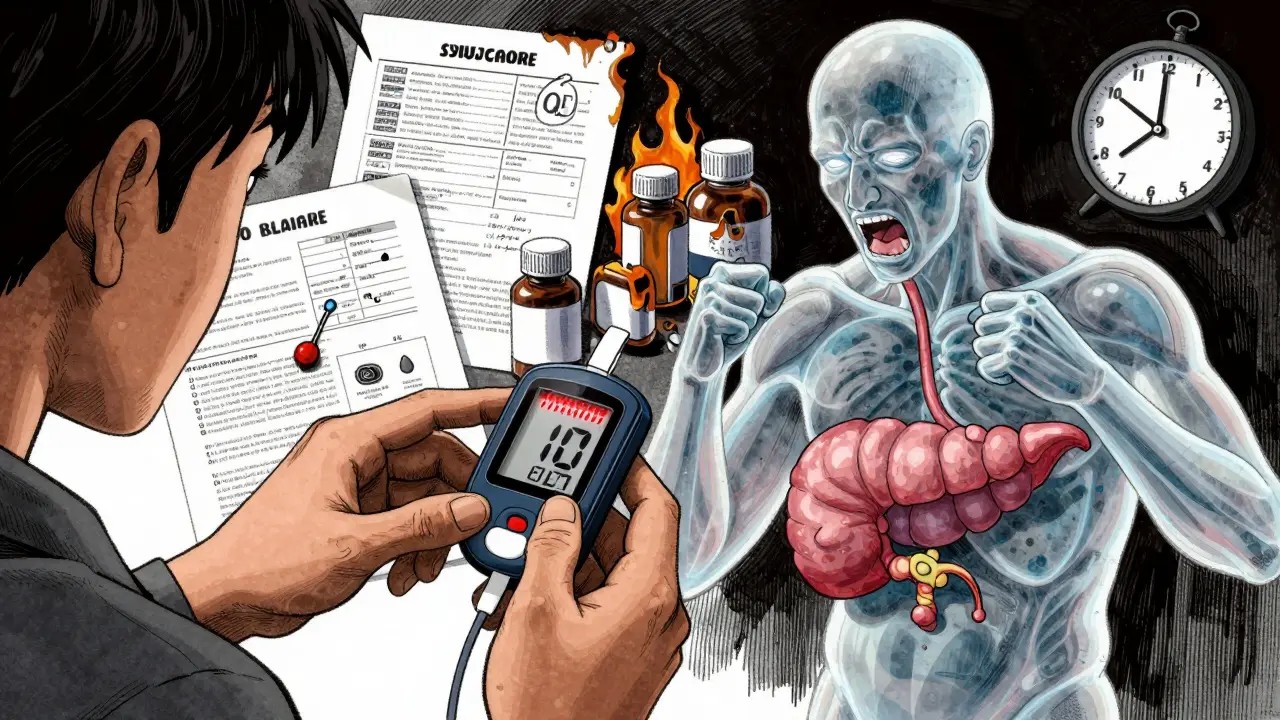
When you're taking medication for diabetes, what you eat matters just as much as the pill in your hand. Many people think that popping a pill like metformin is enough to keep blood sugar in check. But the truth is, high sugar intake can undo the work of even the most effective drugs. If you're on diabetes medication, your diet isn't just a suggestion-it's part of the treatment plan.
How Diabetes Medications Actually Work
Diabetes medications don’t fix your body. They help it work better. Metformin, the most common first-line drug, lowers blood sugar by reducing how much glucose your liver releases and helping your muscles use insulin more efficiently. But if you’re eating a lot of sugar, your body gets flooded with glucose faster than the drug can manage. A 2022 GoodRx analysis found that people consuming over 100 grams of added sugar daily needed 28% higher doses of metformin just to reach the same blood sugar levels as those limiting sugar to under 25 grams.
Other drugs like sulfonylureas (glyburide, glipizide) and meglitinides (repaglinide) force your pancreas to release more insulin. Sounds good, right? But here’s the catch: if you eat a big sugary meal and then skip the next one, your insulin levels stay high while your blood sugar drops-leading to dangerous lows. The Cleveland Clinic reports that patients with inconsistent sugar intake have 3 to 5 hypoglycemic episodes per year, while those with erratic eating patterns see 15 to 20.
Why Sugar Is the Hidden Problem
Sugar isn’t just in candy. It’s in places you wouldn’t expect. A single 12-ounce soda can contain over 39 grams of added sugar. Flavored yogurt? Often 20 grams or more. Even "healthy" fruit juices can pack more sugar than a candy bar. The 2020-2025 Dietary Guidelines for Americans say sugary drinks make up 44% of all added sugar in the American diet. That’s not a minor issue-it’s a major barrier to medication success.
Research from the DIAMOND study (2023) shows that people on metformin who eat high-sugar meals have 2.3 times more spikes above 180 mg/dL and spend 47% more time in hyperglycemia than those who stick to low-sugar patterns. Continuous glucose monitors (CGMs) confirm this: blood sugar doesn’t just rise-it stays elevated for hours, making it harder for your medication to catch up.
What Foods to Avoid with Diabetes Medications
Not all carbs are equal. The American Diabetes Association (ADA) 2023 guidelines recommend limiting added sugar to less than 10% of daily calories-about 50 grams for a 2,000-calorie diet. But some foods are worse than others. Here are seven categories to watch:
- Sugary drinks - soda, sweetened tea, fruit juice (over 20g sugar per serving)
- High-sugar fruits - mangoes, grapes, cherries (over 20g sugar per cup)
- Processed snacks - granola bars, cookies, packaged meals (over 15g added sugar per serving)
- Flavored dairy - sweetened yogurt, chocolate milk (over 15g sugar per container)
- Refined carbs - white bread, pastries, donuts (over 30g refined carbs per slice or serving)
- Alcohol - cocktails, sweet wines, liqueurs (over 25g sugar per drink)
- High-fat meals - fried foods, heavy cream sauces (over 20g saturated fat per meal)
Why do fats matter? High-fat meals slow down digestion, which delays how quickly metformin is absorbed. A 2019 study in the Journal of Clinical Pharmacology found this can reduce peak drug levels by up to 30%, making your medication less effective when you need it most.
What Works Better: Low-GI Foods and Consistency
Instead of cutting all sugar, focus on smart swaps. Low-glycemic-index (GI) foods-those with a score under 55-release sugar slowly into your bloodstream. Think steel-cut oats, legumes, non-starchy vegetables, and berries. A 2025 review in the International Journal of Molecular Sciences found these foods improve insulin sensitivity by 25-40% and cut post-meal glucose spikes by 35-50 mg/dL on average.
Consistency is just as important as quality. The Cleveland Clinic recommends keeping carbohydrate intake within 15 grams of the same amount at each meal. So if you eat 45 grams of carbs at breakfast, aim for 30-60 grams at lunch and dinner. This helps medications like sulfonylureas work predictably and prevents dangerous lows.
Other Medications That Make Sugar Worse
Diabetes meds don’t work alone. Many people also take other drugs that interfere with sugar control. Steroids like prednisolone can spike blood sugar by 50-100 mg/dL within a day. Diuretics like furosemide can change how metformin is processed in the kidneys-up to 32% of patients need dose adjustments. Even birth control pills can alter glucose metabolism in 27% of users, according to a 2021 Journal of Women’s Health study.
If you’re on any of these, your sugar intake needs even tighter control. A 2023 NIDDK survey found that only 39% of doctors refer new diabetes patients to dietitians. That’s a huge gap. Medical nutrition therapy isn’t a luxury-it’s a core part of treatment.

Newer Drugs Don’t Make Diet Optional
You might hear that newer drugs like SGLT2 inhibitors (canagliflozin, dapagliflozin) or GLP-1 agonists (semaglutide, dulaglutide) let you eat whatever you want. That’s misleading. These drugs work differently-SGLT2 inhibitors flush sugar out in urine, and GLP-1 drugs slow digestion and reduce appetite. But even they lose effectiveness with too much sugar. The ADA confirms that patients consuming over 100g of added sugar daily still see 15-20% less benefit from these drugs compared to those staying within guidelines.
Real-world data from the T1D Exchange registry shows that insulin pump users who log every meal and snack achieve HbA1c levels 0.8% lower than those who don’t. That’s not just a number-it’s a 15% lower risk of complications like nerve damage, kidney disease, and vision loss.
The Real Cost of Ignoring Diet
People who get nutrition counseling along with their meds reach target HbA1c levels in 6.2 months-nearly five months faster than those who only take pills. They also need fewer medication changes (1.2 adjustments on average vs. 3.7) and have 63% fewer emergency visits for highs or lows.
The most dangerous myth? That medication alone will fix things. It won’t. Sugar overload overwhelms your system, no matter what drug you’re on. Even if your numbers look okay today, consistent high sugar intake is slowly wearing down your pancreas, liver, and kidneys. The Cleveland Clinic and NHS both warn that high-sugar diets increase lactic acidosis risk in people with kidney issues who take metformin. That’s not a rare side effect-it’s a preventable emergency.
What to Do Next
Start tracking. Use a free app or a notebook. Write down what you eat, when, and how you feel afterward. Look for patterns: Do you crash after lunch? Do you spike after fruit? You might be surprised.
Swap one sugary item this week. Replace soda with sparkling water and lime. Swap sweetened yogurt for plain yogurt with a handful of berries. Choose whole grain bread instead of white.
Ask your doctor for a referral to a registered dietitian. The ADA says this should happen within 30 days of diagnosis-but only 42% of clinics actually do it. Don’t wait. Your medication deserves to work.
Can I still eat fruit if I have diabetes and take metformin?
Yes, but choose wisely. Berries, apples, pears, and citrus fruits have lower sugar content and are high in fiber, which slows sugar absorption. Avoid mangoes, grapes, and dried fruits, which can contain over 20g of sugar per serving. A half-cup of berries is a safe portion. Pairing fruit with protein or fat (like a handful of nuts) helps blunt blood sugar spikes.
Does metformin cause weight loss, so can I eat more sugar?
No. While metformin can help some people lose a small amount of weight, it doesn’t cancel out sugar. Eating excess sugar still raises blood glucose, increases insulin resistance, and can lead to weight gain over time. The drug helps your body use insulin better-but it can’t fight a constant flood of sugar. High sugar intake can reduce metformin’s effectiveness by up to 40%, according to clinical studies.
Why does my blood sugar spike even when I don’t eat sugar?
Your body turns protein and fat into glucose too, especially if you’re insulin resistant. High-fat meals can delay digestion, causing sugar to enter your bloodstream hours later. Also, stress, lack of sleep, and certain medications (like steroids) can raise blood sugar without any sugar intake. Monitoring with a CGM can help you spot these hidden triggers.
Is alcohol completely off-limits with diabetes meds?
Not completely, but it’s risky. Alcohol can lower blood sugar, especially when combined with sulfonylureas or insulin. Sweet cocktails add sugar on top of that risk. If you drink, choose dry wine, light beer, or spirits with soda water and lime. Never drink on an empty stomach. Limit to one drink per day, and always check your blood sugar before bed.
How long does it take to see improvement after cutting sugar?
Many people notice better energy and fewer spikes within 3-5 days. Blood sugar readings often stabilize in 1-2 weeks. HbA1c levels-which reflect 3-month averages-start improving in about 6-8 weeks. Consistency is key. Even small, daily changes add up over time.
Should I stop my medication if I change my diet?
Never stop or change your medication without talking to your doctor. Diet improvements can lower your blood sugar enough that your dose may need to be reduced-but that’s a medical decision. Stopping suddenly can cause dangerous highs or rebound effects. Work with your provider to adjust safely.
Stephanie Paluch
March 14, 2026 AT 23:59tynece roberts
March 16, 2026 AT 23:27Hugh Breen
March 17, 2026 AT 13:30Byron Boror
March 17, 2026 AT 20:25Lorna Brown
March 18, 2026 AT 14:09Rex Regum
March 19, 2026 AT 15:56Kelsey Vonk
March 20, 2026 AT 09:40Emma Nicolls
March 22, 2026 AT 03:44mir yasir
March 23, 2026 AT 16:22