
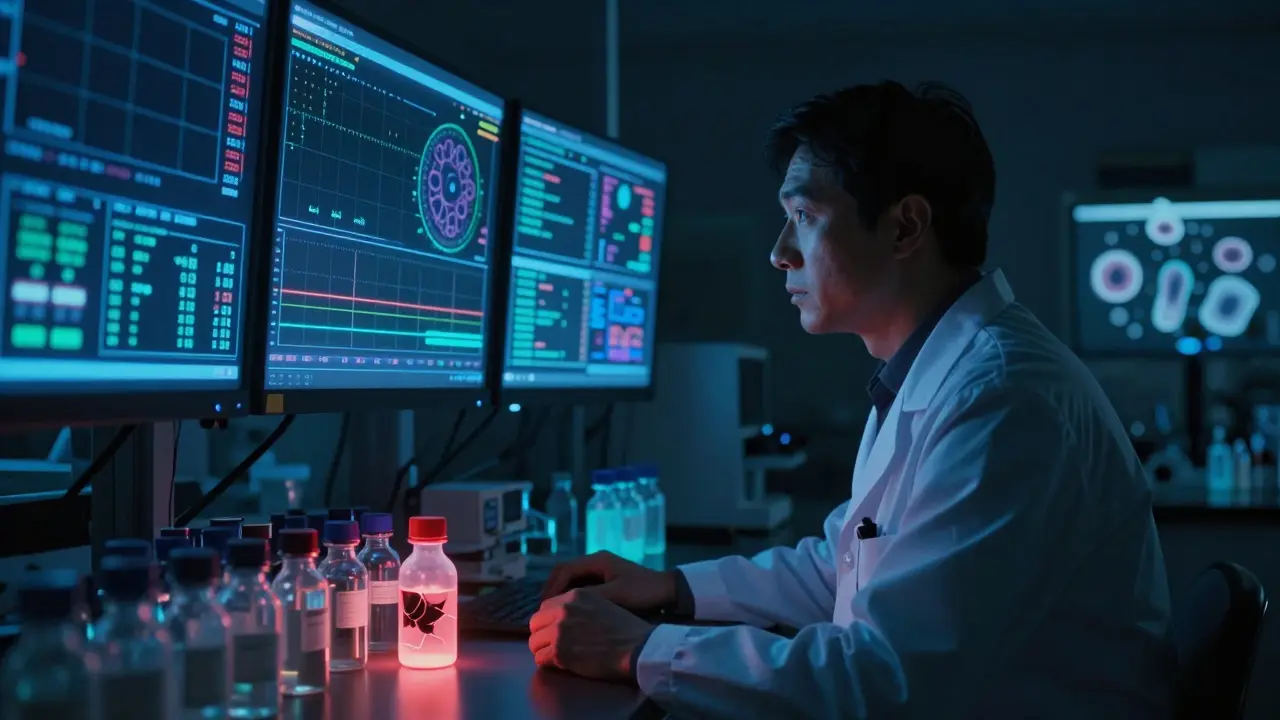
When a new batch of medicine leaves the factory, it doesn’t just get packed and shipped. There’s one last gatekeeper - batch release testing - that decides whether it’s safe to reach patients. This isn’t a formality. It’s the final, non-negotiable checkpoint in pharmaceutical manufacturing. One missed contaminant, one wrong potency level, and thousands of people could be at risk. That’s why every single batch of drug product - from a simple painkiller to a complex cancer therapy - goes through a brutal, detailed, and legally required inspection before it ever hits a pharmacy shelf.
What Exactly Happens in Batch Release Testing?
Batch release testing is the last physical and chemical verification that a drug meets its own approved specifications. Think of it like a final inspection on a car before it leaves the assembly line - but instead of checking paint scratches or tire pressure, they’re testing whether the active ingredient is at the right strength, whether there’s dangerous contamination, and whether the pill will dissolve properly in your body. This isn’t guesswork. Every test is based on strict, validated methods approved by global regulators like the FDA and EMA.For every batch, manufacturers must run at least six core tests:
- Identity: Is this really the drug it claims to be? They use techniques like HPLC or FTIR to match the chemical fingerprint against a known standard.
- Assay (Potency): Does it contain the right amount of active ingredient? The acceptable range is usually 90-110% of the labeled amount. Anything outside that gets rejected.
- Purity (Impurities): Are there unwanted chemicals? Even tiny amounts of unknown impurities - as low as 0.10% - can be a dealbreaker under ICH Q3 guidelines.
- Microbial Limits: Is it clean? For non-sterile products, no more than 100 colony-forming units per gram. For sterile injectables? Zero tolerance for bacteria or fungi.
- Endotoxin Testing: For injections, especially those going into the spine or brain, endotoxin levels must be below 5.0 EU/kg/hr. A single contaminated vial can cause septic shock.
- Dissolution: Will the pill break down in your stomach? Generic drugs must match the original brand’s dissolution profile with an f2 similarity factor of at least 50.
Then there are physical checks: tablet hardness, capsule fill weight, particulate matter in injectables, and visual inspection of every single vial under bright lights. For sterile products, 100% of containers are visually checked. No exceptions.
Who Signs Off on a Batch?
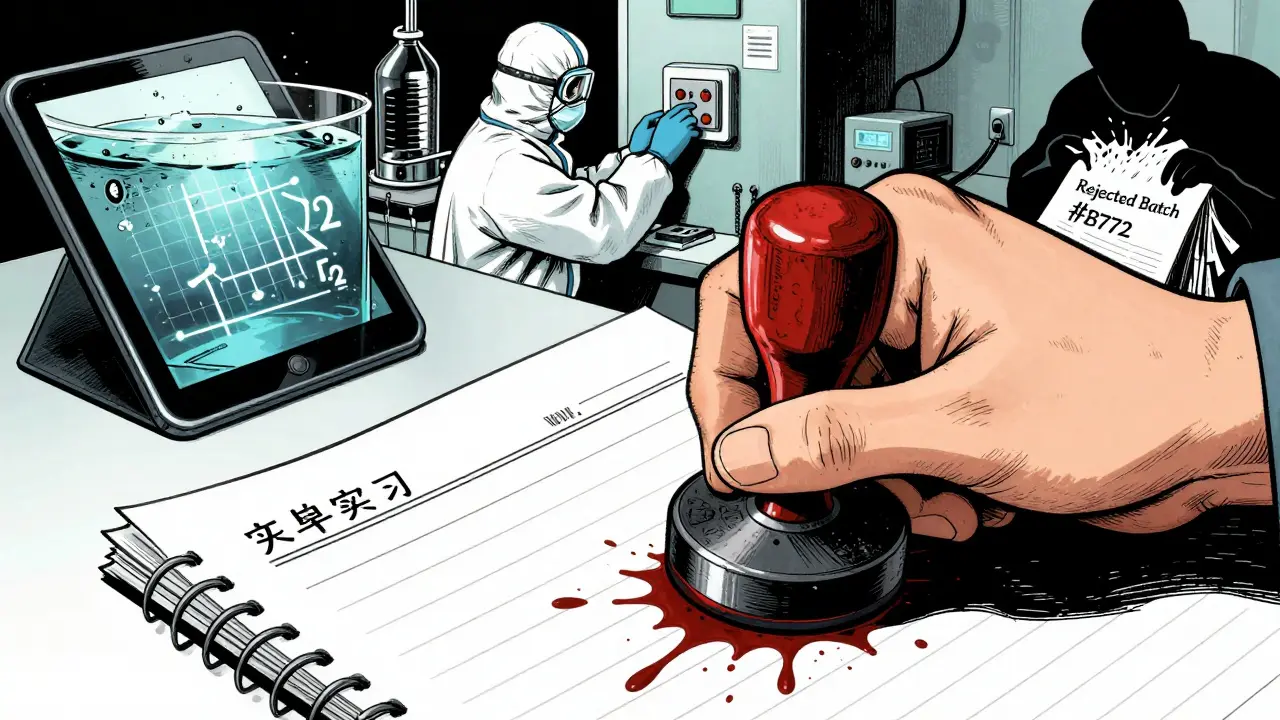
It’s not enough to run the tests. Someone has to review every single result, every raw data file, every instrument printout. In the U.S., this is done by a quality unit representative. In Europe, it’s the Qualified Person (QP) - a highly trained professional with at least five years of industry experience and formal GMP certification. The QP doesn’t just check boxes. They must be satisfied that every step of manufacturing and testing was done correctly. If they say no, the batch is destroyed - even if it passed every lab test.Here’s the catch: Europe has a 32% shortage of qualified QPs. That means delays. Bottlenecks. Backlogs. In Australia, where I’m based, we see similar pressure. Some companies are now using digital systems to automate document reviews - reducing human error by 63%, according to a 2024 PDA Journal study. But even then, a human must still make the final call.
Why This Process Costs So Much - and Why It’s Worth It
Batch release testing isn’t cheap. For a small-molecule drug, it can take 7-10 days. For a biologic? Up to 35 days. The cost? On average, 22% higher since 2020. Why? Because regulators have tightened everything: stricter impurity limits, more frequent stability testing, mandatory environmental monitoring within 72 hours of batch completion (as of EMA’s 2024 Annex 1 update).But here’s the math: A single recall costs pharmaceutical companies an average of $10.7 million, according to FDA data from 2023. In 2023, one manufacturer released 12,000 vials of a monoclonal antibody with subpotent batches. The recall? $9.2 million. The regulatory penalty? An 18-month import ban. The damage to patient trust? Unquantifiable.
Dr. Jane Smith, former director of the FDA’s drug evaluation center, said in 2023 that batch release testing blocked about 1,200 unsafe batches from reaching U.S. patients that year alone. That’s 1,200 chances to prevent harm. That’s why the industry spends $2.8 billion annually on this process - and why it’s growing at 6.7% per year.
Where Things Go Wrong
Most batch failures happen in three places:- Dissolution testing (32%): A pill looks fine, but doesn’t dissolve properly. Often due to changes in raw material sourcing or manufacturing conditions.
- Impurity profiles (28%): A new batch shows a trace impurity not seen before. Could be from a new supplier, a changed reaction condition, or even a dirty pipe.
- Microbial contamination (23%): A single breach in cleanroom protocol can ruin an entire batch. One study found 78% of QC analysts blame method transfers between R&D and production as the top cause of delays.
And then there’s paperwork. A Senior QP in Melbourne told me she spends 40-60 hours per batch just reviewing documents. For complex biologics, that’s 72-hour turnarounds - impossible with understaffed teams. That’s why companies using integrated LIMS systems like Thermo Fisher’s SampleManager report 22% faster release cycles.

The Future: AI, Real-Time Testing, and the End of Manual Checks?
The industry is changing. The FDA’s 2025 pilot for Predictive Release Testing lets companies with continuous manufacturing use real-time sensors to monitor product quality as it’s made. Instead of waiting days for lab results, they get instant feedback. Twelve companies qualified for this pilot by October 2025. But the FDA requires 99.9% confidence before full adoption. That’s not easy to prove.Meanwhile, AI is being tested. One company using AI to predict batch failures saw a 34% drop in rejections. But regulatory approval for AI-driven decisions? That takes 18 months. Only high-volume products make that ROI work.
And then there’s blockchain. The FDA is pushing for blockchain-based batch traceability by 2028. Imagine knowing exactly which vial came from which machine, which operator, which raw material lot. That’s not sci-fi anymore - it’s coming.
But here’s the truth: even with all this tech, we’re not eliminating batch release testing. We’re just making it smarter. ICH Q14 (effective Nov 2024) allows more flexible, risk-based testing for well-understood products. But for new drugs, complex biologics, or generic versions? The old-school tests are still the gold standard.
What’s Next?
By 2030, 60% of facilities using advanced manufacturing may reduce discrete batch testing. But for the majority of drugs - especially those made on older lines - full batch testing will still be required through 2035. The industry consensus? 97% of experts agree some form of batch verification will be mandatory until at least 2040.So if you’re on medication - whether it’s a daily pill or a life-saving injection - know this: before it reached you, it passed through a gauntlet of tests, reviews, and approvals. No one’s perfect. But this system? It’s the best we have. And right now, it’s working.
Is batch release testing required by law?
Yes. In the U.S., it’s mandated under 21 CFR 211.165. In the EU, it’s required by Directive 2003/94/EC. Every licensed pharmaceutical company must perform and document these tests before releasing any batch. Failure to comply can result in product seizures, fines, or shutdowns.
Can a batch pass lab tests but still be rejected?
Absolutely. Lab results are only part of the equation. If the manufacturing records show deviations - like a machine running outside its approved range, or an operator skipping a step - the batch can be rejected even if all tests came back normal. The Qualified Person must be satisfied that the entire process was controlled, not just the final numbers.
How long does batch release testing usually take?
It varies by product type. Small-molecule drugs: 7-10 days. Complex generics: 14-21 days. Biologics like monoclonal antibodies: 21-35 days. Delays often come from documentation review, method validation issues, or waiting for stability data. Some companies now use automated systems to cut this down by up to 22%.
What happens if a batch fails release testing?
The batch is quarantined and not released. Depending on the failure, it may be reprocessed (if allowed), retested, or destroyed. The company must investigate the root cause, document it, and report it to regulators. Repeated failures can trigger inspections, warning letters, or even import bans.
Are there alternatives to traditional batch testing?
Yes - but only for specific cases. The FDA allows real-time release testing (RTRT) for manufacturers using continuous manufacturing with validated process analytical technology (PAT). This replaces end-of-batch testing with continuous monitoring. However, only 12 companies had qualified for this by October 2025. For the vast majority of products, traditional batch testing remains mandatory.
Laura Gabel
March 19, 2026 AT 11:15Jeremy Van Veelen
March 20, 2026 AT 18:23Amadi Kenneth
March 22, 2026 AT 01:17jerome Reverdy
March 23, 2026 AT 05:27MALYN RICABLANCA
March 25, 2026 AT 03:49Justin Archuletta
March 26, 2026 AT 08:49Sanjana Rajan
March 27, 2026 AT 23:49Manish Singh
March 28, 2026 AT 15:13Andrew Mamone
March 29, 2026 AT 12:42cara s
March 30, 2026 AT 17:21Shameer Ahammad
April 1, 2026 AT 15:06Kal Lambert
April 2, 2026 AT 20:30Nilesh Khedekar
April 4, 2026 AT 09:33Kyle Young
April 6, 2026 AT 02:56