
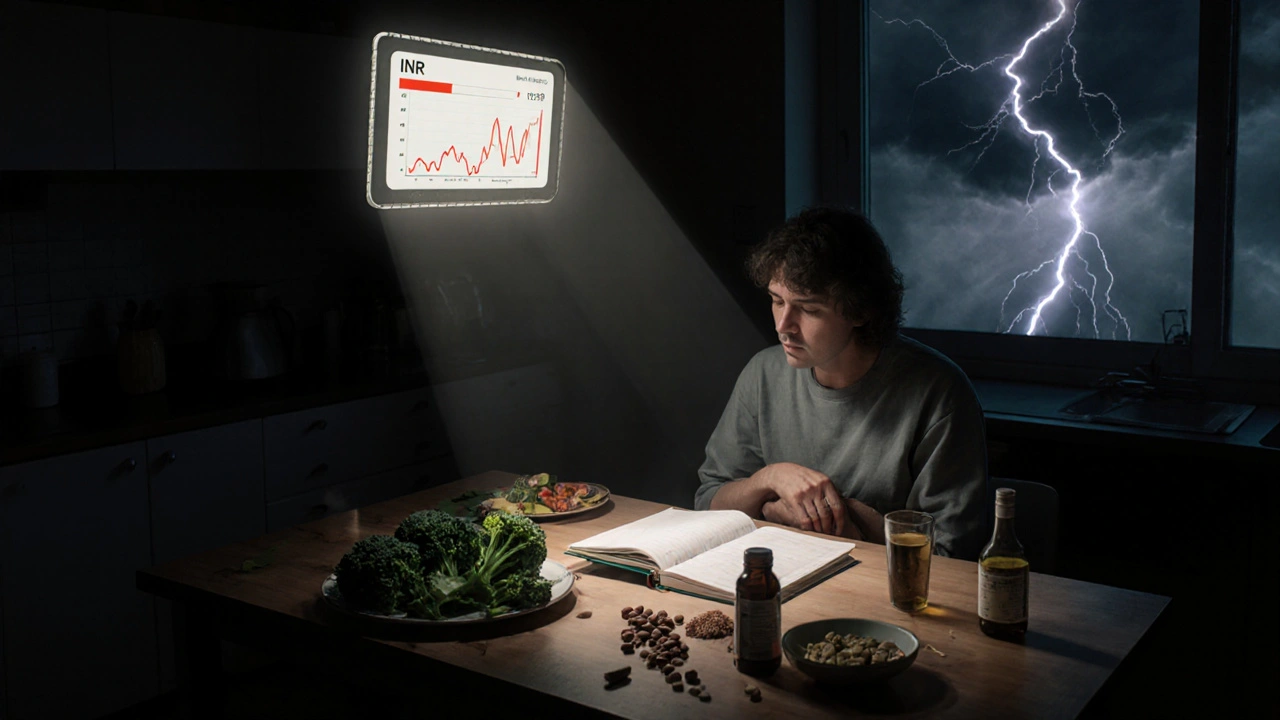
Vitamin K Intake Tracker
Track your daily vitamin K intake to maintain stable INR levels. Aim for 100-150 mcg of vitamin K per day for consistency.
Your Intake Today
Total Vitamin K Intake
Tip: The American College of Chest Physicians recommends staying within 100-150 mcg of vitamin K daily for consistent INR levels. Small changes can significantly impact your blood thinning.
When you're on warfarin, your life doesn't just revolve around taking a pill every day. It's about consistency. One day you eat a big salad, the next you skip it. Your INR jumps up or drops down. Suddenly, you're back in the doctor’s office, getting a new dose, wondering why things keep changing. It’s not your medication failing. It’s your diet.
Why Vitamin K Matters More Than You Think
Warfarin works by blocking vitamin K’s role in making blood clotting proteins. That’s why it prevents dangerous clots. But here’s the catch: vitamin K is everywhere-in spinach, kale, broccoli, soybean oil, even some meal replacements. If you eat more vitamin K one week and less the next, your INR swings like a pendulum. Too high? Risk of bleeding. Too low? Risk of stroke or clot. The American College of Chest Physicians says your target INR should stay between 2.0 and 3.5, depending on your condition. But studies show that if your vitamin K intake changes by more than 20% from your usual level, your INR can jump outside that safe range. And that’s not rare. The FDA found that inconsistent vitamin K intake causes 32% of warfarin-related ER visits.What Foods Actually Have High Vitamin K?
Not all veggies are equal. A cup of cooked kale has over 800 micrograms of vitamin K. That’s nearly 10 times the daily recommended amount for adults. Cooked spinach? Almost 500 mcg. Broccoli? Around 220 mcg. Even raw romaine lettuce adds up-138 mcg per 2 cups. But it’s not just greens. Soybean oil, canola oil, and fortified products like Ensure (25 mcg per serving) can sneak in extra vitamin K. A single meal with kale, broccoli, and a dressing made with soybean oil could easily hit 1,000 mcg. That’s enough to drop your INR fast. The key isn’t to avoid these foods. It’s to eat the same amount, every day.How Food Diaries Keep You Safe
A food diary isn’t just a notebook. It’s your personal safety net. Tracking what you eat-especially vitamin K-rich foods-helps you spot patterns before your INR goes off track. For example, one patient kept having high INRs. She thought she was eating the same way. But her diary showed she’d started adding spinach to her morning smoothie every day. That extra 480 mcg of vitamin K was pushing her INR too low. Once she cut it back to three times a week, her levels stabilized. The American Heart Association says structured dietary tracking is a Class I recommendation-meaning it’s a must-do, not just a nice-to-have. And it works. A 2022 study of 327 patients found those using a digital food diary stayed in their target INR range 72% of the time. Those using paper logs? Only 62%.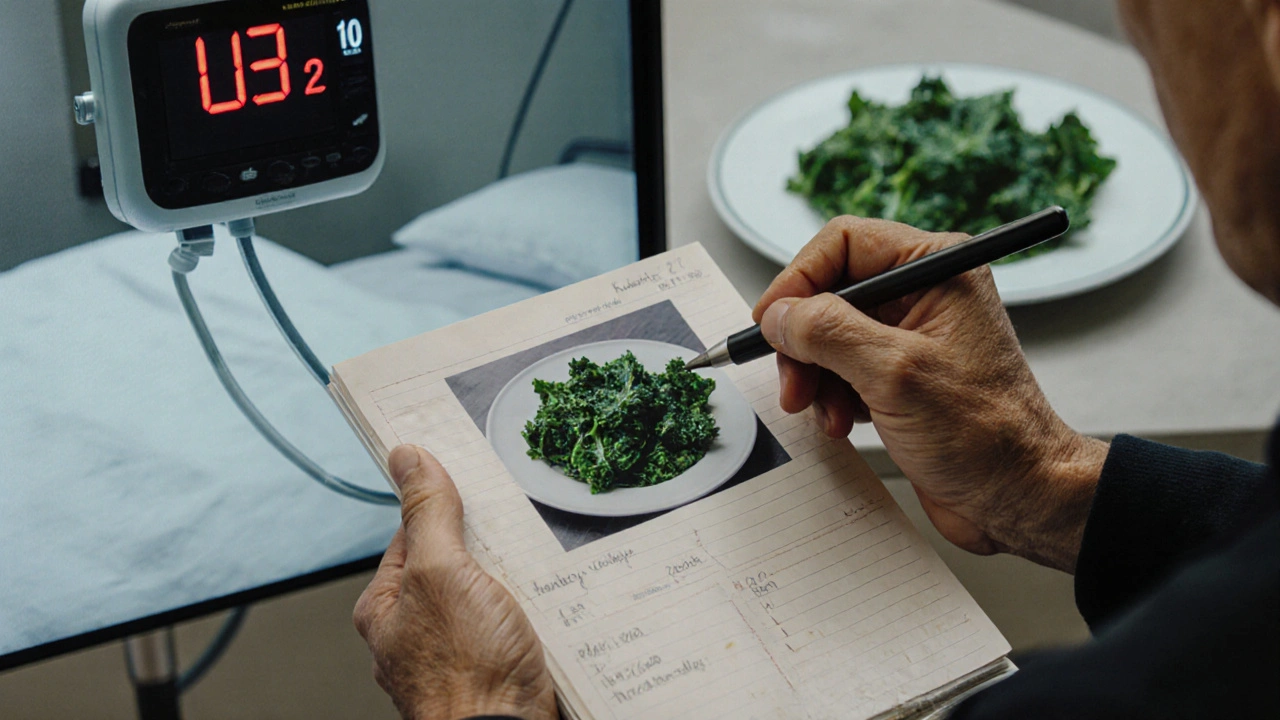
Paper vs. Digital: Which Works Better?
Some people swear by paper. It’s simple. You write it down. You bring it to your appointment. The Veterans Health Administration still uses paper diaries in 43% of its clinics. But they have problems. Pages get lost. Smudged ink. Forgotten entries. One patient told me his diary got soaked in his pocket and he lost two weeks of data. Digital apps solve that. The Vitamin K Counter & Tracker app (updated September 2023) lets you scan barcodes, search 1,200+ foods, and instantly see how much vitamin K you’ve eaten. It shows a progress bar. You can set a daily target. It even flags meals with high vitamin K. But not all apps are created equal. A 2023 review found 68% of vitamin K apps have no clinical validation. Some guess numbers. Others use outdated databases. The Vitamin K-iNutrient app, however, matched lab-tested values 94.7% of the time in a University of Toronto study. That’s the gold standard. Still, digital isn’t for everyone. People over 75 are far more likely to stick with paper. Smartphone use drops sharply with age. In one study, 82% of seniors used paper diaries consistently. Only 57% used apps.What Most People Get Wrong
The biggest mistake? Underreporting. In a 2020 NIH study, patients underestimated their vitamin K intake by 22% to 37%. Why? They forget about hidden sources. Soybean oil in salad dressing. Canola oil in baked goods. Multivitamins that contain 25-100 mcg of vitamin K. Even some protein shakes. These aren’t obvious. You don’t think of them as “high-vitamin K foods.” But they add up. Another common error? Portion size. People think “a handful of spinach” is a cup. It’s not. A cup of cooked spinach is a full plate. A cup of raw spinach is two big handfuls. Without measuring, you’re guessing-and guessing wrong.How to Use a Food Diary Right
If you’re going to do this, do it right. Here’s how:- Start with your current diet. Track everything for 7 days. Don’t change anything. Just record.
- Find your average daily vitamin K intake. Most people eat between 100-150 mcg. That’s your baseline.
- Stick to that baseline. Don’t try to eat more or less. Just be consistent.
- Use visual guides. A serving of cooked greens is the size of a tennis ball. A cup of raw greens fits in a baseball glove.
- Track multivitamins. If you take one, note the brand and dose. Some have vitamin K. Others don’t.
- Check your diary before every INR test. If your intake changed, tell your doctor.
What Your Doctor Needs to Know
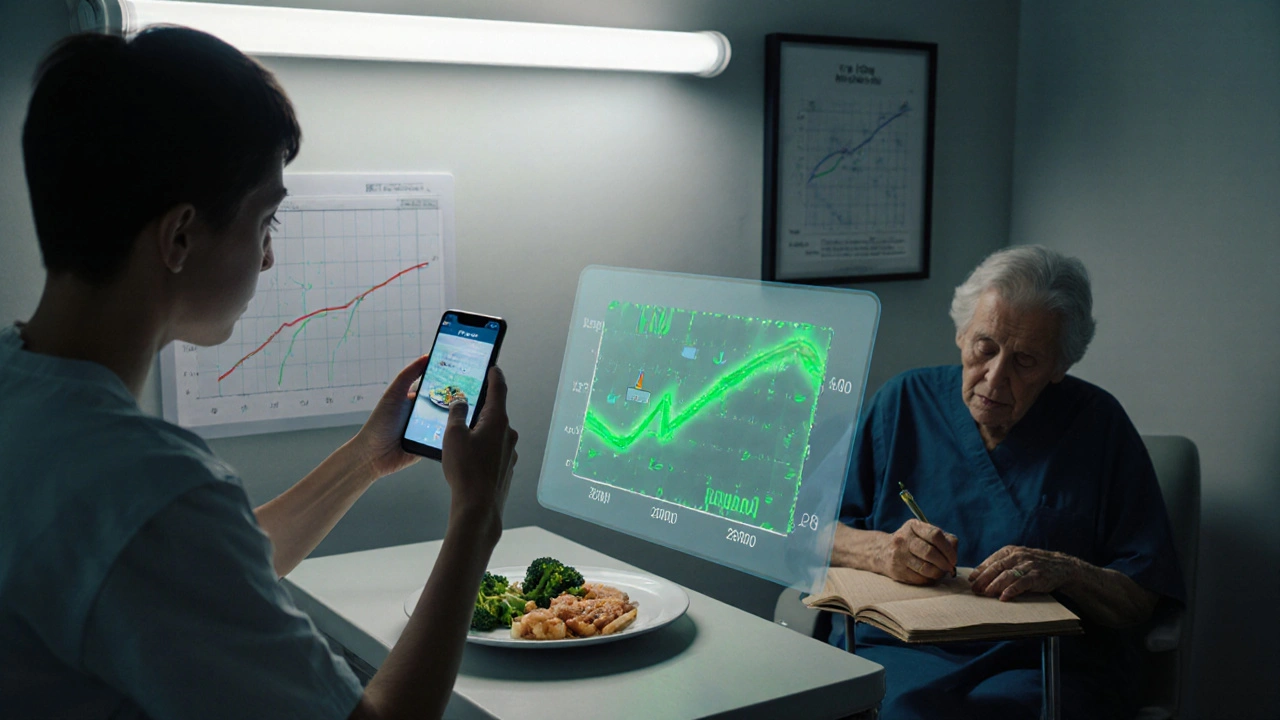
Your doctor can’t help you if you don’t show them the data. Bring your diary to every appointment. Even if you think nothing changed. Sometimes, small shifts matter. Many clinics now use digital tools integrated into electronic health records. Epic’s MyChart platform, used by 63% of U.S. hospitals, now includes vitamin K tracking. If your clinic uses it, your diary data can auto-populate your chart. No more manual entry. Dietitians also use spot checks. They’ll ask you to recall everything you ate in the last 24 hours. If your diary doesn’t match, they’ll help you improve.What’s Next for Food Diaries?
The future is here. In January 2024, the FDA approved the first AI-powered system called NutriKare. You take a photo of your meal. The app estimates vitamin K content with 89% accuracy. No typing. No searching. Just snap and go. Epic Systems plans to release INR prediction tools in late 2024. Imagine your app saying: “Based on your food log, your INR is likely to drop to 1.8 tomorrow. Consider skipping the kale.” That’s not science fiction-it’s coming. Meanwhile, researchers at McMaster University are testing real-time feedback systems. Early results suggest patients who get instant alerts when their vitamin K intake spikes stay in range longer.Bottom Line: Consistency Beats Perfection
You don’t need to be a nutritionist. You don’t need to memorize every food’s vitamin K content. You just need to be consistent. Eat your spinach every Tuesday, Thursday, and Saturday. Don’t switch to kale on Wednesday. Don’t start drinking Ensure every morning unless it’s your new normal. The goal isn’t to eat less vitamin K. It’s to eat the same amount every day. That’s what keeps your INR stable. That’s what keeps you out of the hospital. Your food diary isn’t a chore. It’s your lifeline. Use it. Trust it. Let it do the work so your body doesn’t have to pay the price.Can I just avoid vitamin K foods completely?
No. Avoiding vitamin K entirely is dangerous and unnecessary. Your body needs vitamin K for healthy bones and blood clotting. The goal is consistency, not elimination. Patients who eat a steady 100-150 mcg daily have fewer INR fluctuations than those who eat high amounts one day and low the next-even if the average intake is the same.
Do all multivitamins have vitamin K?
No. Some do, some don’t. Always check the label. If it lists vitamin K, note the amount-usually between 25 and 100 mcg. Take it at the same time every day, preferably with your warfarin. Skipping it or taking it at random times can cause INR swings.
Is it safe to use MyFitnessPal or Lose It! for tracking vitamin K?
It’s risky. A 2023 JAMA study found general nutrition apps are 3.2 times less accurate for vitamin K than specialized tools. They often misclassify foods or use outdated databases. For warfarin patients, accuracy matters. Use an app built specifically for vitamin K tracking, like Vitamin K Counter & Tracker or Vitamin K-iNutrient.
How often should I update my food diary?
Every single day. Even if you eat the same thing. Consistency is the point. Skipping days creates blind spots. If you forget one day, your diary becomes unreliable. Set a daily reminder. Do it right after meals. It takes less than five minutes.
What if I’m going on vacation or eating out?
Plan ahead. Research menus online. Ask restaurants how dishes are prepared-especially if they use olive oil, soy sauce, or salad dressings. When in doubt, stick to simple foods: grilled chicken, plain rice, steamed veggies you know the portion of. Avoid kale salads and broccoli dishes unless you’re sure. Bring your diary and log everything, even snacks.
Can my doctor change my warfarin dose based on my food diary?
Yes, but only if your INR is out of range for more than a few days. Doctors don’t adjust doses based on one day’s food log. They look at trends over weeks. If your diary shows you’ve been eating more greens for three weeks and your INR keeps dropping, they’ll likely increase your dose. If you’ve been eating less, they’ll lower it. The diary helps them make smarter decisions.
Do I need to track vitamin K forever?
If you’re on warfarin long-term, yes. Even if your INR is stable, your diet can change. You might start eating more salads, take a new supplement, or switch to a different brand of meal replacement. These small shifts add up. Keeping a diary is like wearing a seatbelt-you don’t need it every second, but you’ll be glad you have it when something goes wrong.
Josh Evans
November 29, 2025 AT 21:34Just started using the Vitamin K-iNutrient app after my last INR spike. Holy crap, I had no idea my salad dressing had soybean oil in it. That one little thing was wrecking my numbers. Now I scan everything. Game changer.
Pawittar Singh
December 1, 2025 AT 20:07Bro I’m from India and we eat so much spinach and kale in our curries 😅 I thought I was doing fine until my INR went to 5.2. Now I track every bite like it’s my job. My wife even helps me log it. 🙏 #WarfarinLife
Allison Reed
December 3, 2025 AT 10:00Consistency over perfection. This is the mantra I repeat every morning before I log my breakfast. I used to skip days because I thought "it’s just one day" - until I ended up in the ER. Now I set a reminder. Five minutes. That’s all it takes. You’re not just managing a drug - you’re managing your life.
Jacob Keil
December 4, 2025 AT 17:15so like… if vitamin k is so dangerous why does it even exist in food? like… is this just pharma’s way of making us slaves to apps? i mean… i get it but… like… who designed this system??
Rosy Wilkens
December 6, 2025 AT 10:11Did you know the FDA approved NutriKare because Big Pharma lobbied for it? They don’t want you to know that warfarin dosing is a profit engine. The real solution? Switch to DOACs. But they don’t push that because you can’t track those with a diary. This whole system is a scam. Read the 2021 whistleblower report on Epic’s data mining.
Ady Young
December 7, 2025 AT 04:59I’ve been on warfarin for 8 years. I used to use paper. Then I switched to a digital app. The difference? I went from 4 ER visits in 12 months to zero. It’s not about being tech-savvy - it’s about being alive. I’m 71. I don’t care if I look like a nerd with my phone out at dinner. My kids are alive because I log my kale.
Travis Freeman
December 7, 2025 AT 23:20Just wanted to say thanks for this post. I’m a nurse and I’ve seen too many people panic over INR swings because they didn’t know how diet affected it. You explained it so clearly. I’m sharing this with all my patients. Keep doing the good work. 🙌
Sean Slevin
December 9, 2025 AT 08:19...and yet... the paradox... if consistency is the goal... then why does the body even respond to vitamin K at all? Why not just make warfarin dose-independent? Is this not a flaw in the system? A biological loophole exploited by pharmacology? We’re not just tracking food... we’re negotiating with evolution. And evolution... doesn't care about your calendar.
gina rodriguez
December 10, 2025 AT 05:07I started this after my mom had a bleed. She didn’t track anything. Thought she was fine because she "didn’t eat greens." Turns out, her protein shake had vitamin K. I made her a printable chart with emojis. Now she checks it every night before bed. She says it feels like she’s taking care of herself instead of just taking pills. ❤️
Sue Barnes
December 10, 2025 AT 12:07Everyone’s so obsessed with apps. But have you checked the accuracy of those databases? The USDA data is outdated. The FDA doesn’t require validation. You’re trusting algorithms written by interns. Your INR could be wrong. You’re playing Russian roulette with your life.
jobin joshua
December 10, 2025 AT 23:24bro i just use my phone camera to scan my food and the app tells me if it’s safe 😎 no thinking needed. warfarin is chill now. 🍽️✅
Sachin Agnihotri
December 12, 2025 AT 08:10My dad’s 82. He refuses to use apps. So I made him a laminated card with pictures: tennis ball = cooked greens, baseball glove = raw. He sticks it to the fridge. He says it’s like his little nutrition fairy. We laugh. But he hasn’t had an INR issue in 18 months. Simple works.
Diana Askew
December 13, 2025 AT 17:36Wait… so if I eat the same amount every day… why do I need a diary at all? Isn’t that just common sense? Why are we being told we’re too dumb to remember? This feels like infantilization. They want us dependent. On apps. On doctors. On fear.