
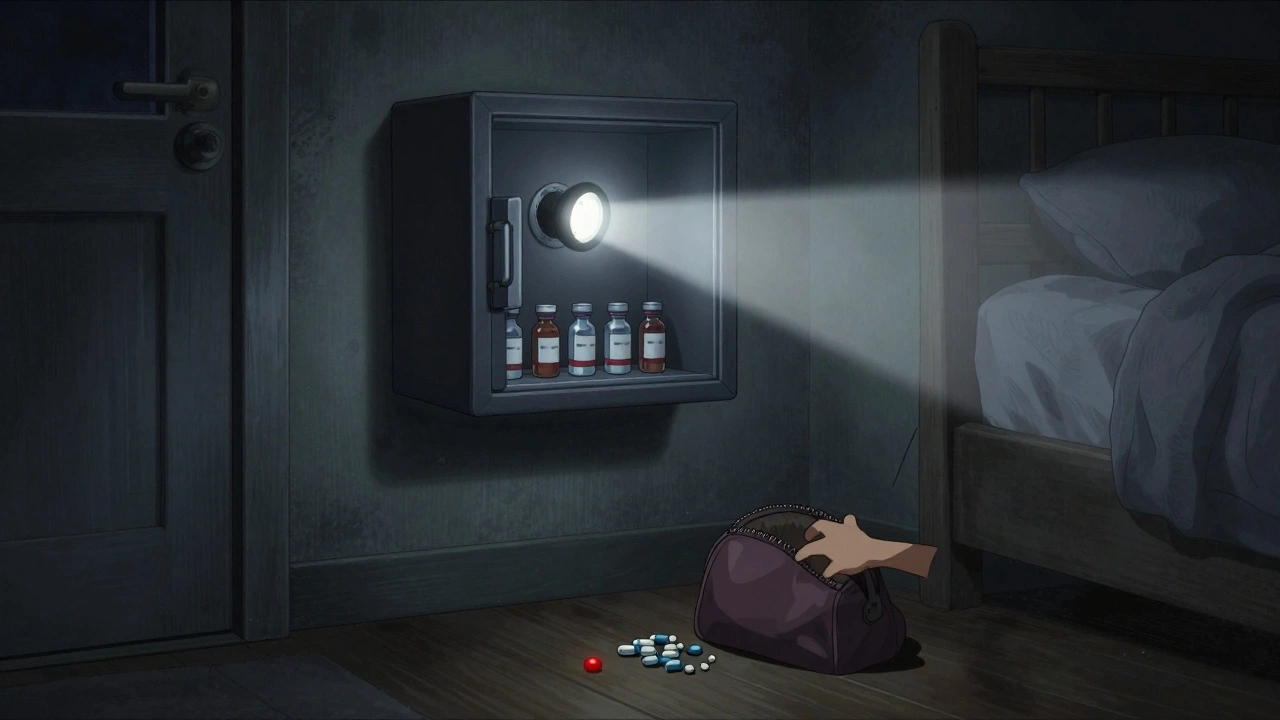
Learn how to safely store medications at home to prevent accidental poisonings, stop teen misuse, and avoid counterfeit drugs. Simple steps can protect your family and keep your pills effective.
Safe Medicine Storage: Keep Pills Out of Kids' Hands and Prevent Accidents
When we talk about safe medicine storage, the practice of keeping medications in secure, organized, and child-proof locations to prevent accidental ingestion and misuse. Also known as home medication safety, it’s not just about locking up pills—it’s about stopping tragedies before they happen. Every year, over 60,000 children under six end up in emergency rooms because they got into medicine left within reach. And it’s not just kids—seniors mixing up pills, teens grabbing meds out of curiosity, or caregivers misreading labels all lead to preventable harm.
Child-resistant packaging, a design standard required by law for many prescription and OTC drugs to slow down access by young children helps—but it’s not foolproof. A 2023 study found that 40% of toddlers opened these containers in under a minute. That’s why storage matters more than the cap. Keep all meds out of sight and out of reach—not on the bathroom counter, not in a purse, not in a drawer kids can pull open. A high cabinet with a latch or a locked box is the only real defense. For seniors, medication errors, mistakes in taking, measuring, or remembering doses that lead to harm are just as dangerous. Mixing up blood pressure pills with diabetes meds? That’s how hospital visits start. Using a pill organizer with clear labels and pairing doses with daily habits—like brushing teeth or eating breakfast—cuts errors by half.
It’s not just about locking things up. It’s about creating a system. Store different types of meds separately: keep opioids and sedatives locked away, put insulin in the fridge, and never mix supplements with prescription pills in the same container. Always keep original bottles with labels intact—no dumping pills into unmarked jars. That’s how you end up with a mystery blue pill and no idea what it is. And don’t forget the home medicine storage, the overall setup of where and how medications are kept in a household to ensure safety and accuracy—it needs to be consistent. If grandma stores her meds in the kitchen cabinet and your kid finds them there, you’ve created a risk. Everyone in the house needs to know where things go.
You don’t need fancy gear. A simple lockbox from the hardware store, a high shelf, and a habit of putting things back immediately after use will do more than any app or alarm. The goal isn’t perfection—it’s reducing the chance of disaster. One slip-up can change a family forever. That’s why safe medicine storage isn’t a suggestion. It’s a daily responsibility. Below, you’ll find real advice from people who’ve been there—how to set up a family-safe system, what to do if a child swallows something, how to clean out old meds safely, and why that brown bag review with your pharmacist might just save a life.