
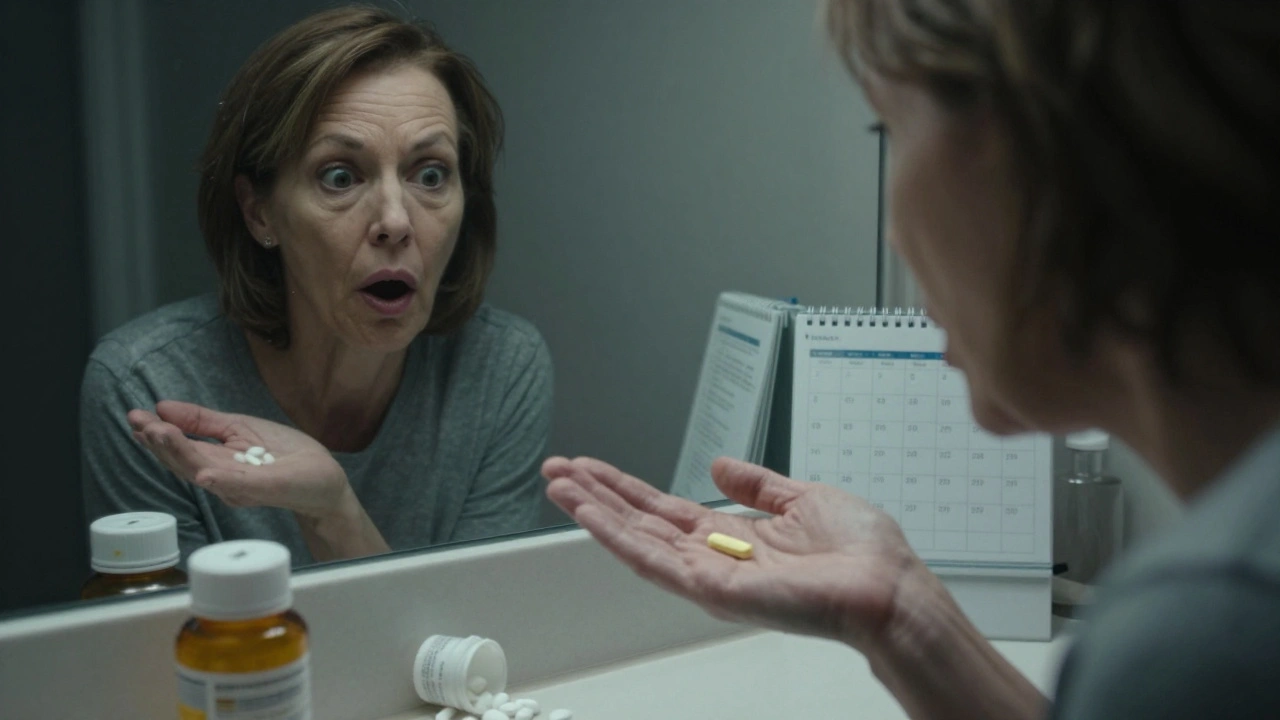
Generic pills often look different from brand-name drugs due to U.S. trademark laws - but these changes can cause patients to skip doses. Learn why this happens, how it affects adherence, and what you can do to stay safe.
Pill Shapes: What They Mean and Why They Matter for Your Medication Safety
When you pick up a pill from the pharmacy, its shape, the physical form of a medication that helps identify it visually and reduce dosing errors isn’t just about aesthetics. It’s a critical part of medication safety. A round tablet, an oval capsule, or a scored tablet isn’t chosen randomly—it’s designed so you, your pharmacist, and your doctor can quickly recognize what’s inside. This matters more than you think. One wrong pill can lead to serious side effects, especially when you’re on multiple drugs. In fact, studies show that over 1.5 million people in the U.S. get injured each year from medication errors, and many of them start with misidentifying a pill by its shape or color.
Pill identification, the process of recognizing medications by their physical traits like shape, color, and imprint is one of the first lines of defense against accidental overdose or mixing up drugs. For example, a blue, diamond-shaped pill might be Cialis, while a white, oval pill with "10" stamped on it could be a generic version of another drug entirely. Even small differences—like a scored line for splitting or a rounded vs. flat edge—can signal different strengths or manufacturers. That’s why the FDA and pharmacies require unique imprints and standardized shapes. It’s not just regulation; it’s protection. And if you’re helping an older parent or a child take their meds, getting this right is non-negotiable. You can’t rely on memory or packaging alone. The pill itself must be the guide.
Drug appearance, the combination of shape, color, size, and markings that uniquely identify a medication also plays a big role in adherence. People are more likely to take their medicine consistently when they can easily recognize it. If a pill looks unfamiliar—maybe because of a generic switch or a different pharmacy—they might skip a dose out of fear. That’s why authorized generics and brand-name drugs often look nearly identical, even if the price isn’t. And when a pill changes shape unexpectedly? That’s a red flag. It could mean a counterfeit, a mislabeling, or a storage issue that’s ruined the drug. That’s why we’ve gathered real stories and expert advice from posts about medication storage, pill organizers, dosing syringes, and even counterfeit drug risks. You’ll find practical tips on how to check your pills, what to do when something looks off, and how to talk to your pharmacist about changes you notice.
These aren’t just facts—they’re tools. Whether you’re managing diabetes with daily pills, caring for someone on multiple medications, or just trying to avoid a mix-up with your own prescriptions, understanding pill safety, the practices and awareness needed to prevent errors related to medication identification and handling can make all the difference. You’ll see how shape ties into everything from child-resistant packaging to brown bag reviews and medication therapy management. No fluff. No guesswork. Just what you need to know to keep your meds—and your family—safe.
Below, you’ll find real-world guides on how to spot fake pills, store meds properly, use dosing tools for kids, and even report suspicious changes to the FDA. Each post is built around actual cases and common mistakes—so you get answers that work in your kitchen, your medicine cabinet, and your daily routine.