
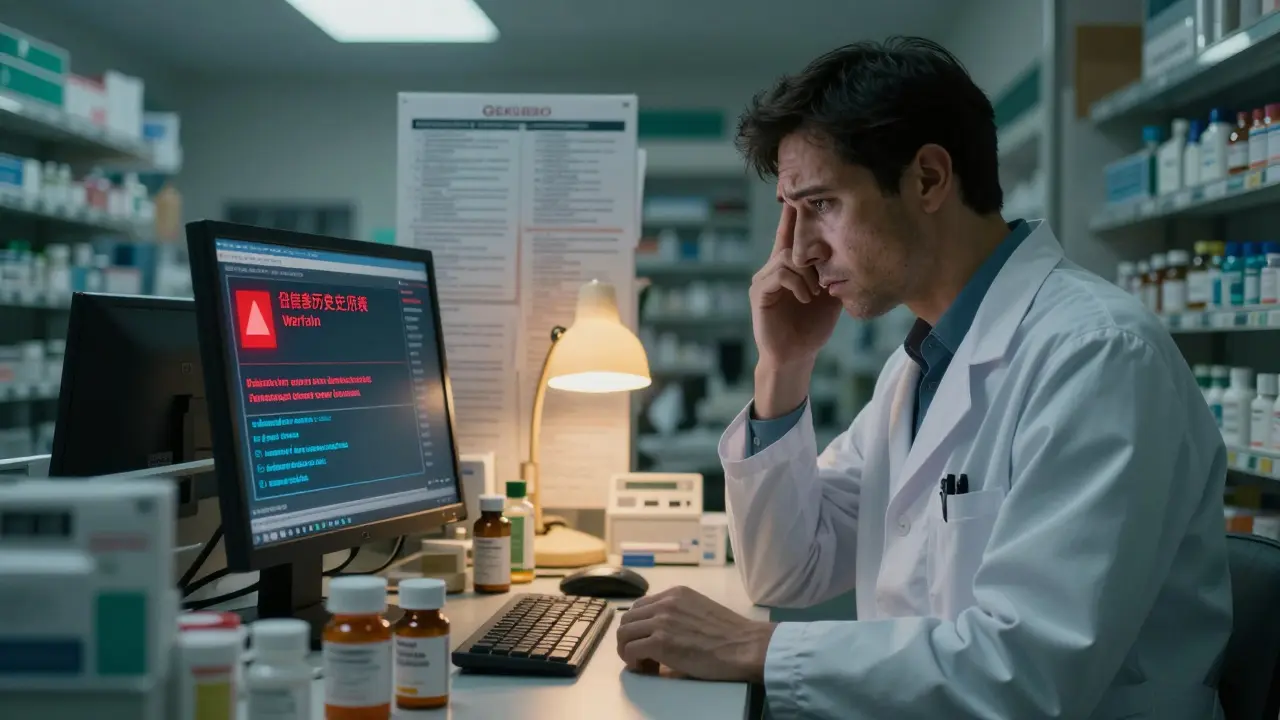
Pharmacists prevent over 200,000 medication errors yearly by catching dosing mistakes, drug interactions, and allergies before prescriptions reach patients. Their clinical judgment, combined with technology, makes them the final and most critical safety checkpoint in healthcare.
Medication Reconciliation: What It Is and Why It Saves Lives
When you’re taking multiple drugs, medication reconciliation, the process of comparing a patient’s current medications with their prescribed list to catch errors and avoid dangerous overlaps. It’s not just paperwork—it’s a safety net that stops mix-ups before they hurt someone. Think of it like double-checking your bank statement. If you see a charge you didn’t make, you call the bank. With meds, a wrong dose, a duplicate, or a bad interaction can land you in the ER—or worse.
It happens most often when you move between care settings: from hospital to home, from one doctor to another, or when a new pharmacist fills your script. drug interactions, when two or more medications react in harmful ways are the silent killers here. One pill might make another too strong. Another might cancel it out. And if no one checks your full list, you’re flying blind. That’s why pharmacy safety, the system of checks, training, and protocols pharmacists use to prevent harm from medications relies on reconciliation as its backbone. It’s not optional. It’s required by law in most hospitals and increasingly in clinics too.
Patients don’t always know what they’re on. Maybe you stopped one drug last month but forgot to tell your new doctor. Maybe your kid’s school nurse gave you a new inhaler, and your primary care provider never got the update. medication errors, mistakes in prescribing, dispensing, or taking medicine that lead to harm happen more often than you think—over 1.5 million people are injured each year in the U.S. alone because of them. Most are preventable. Reconciliation fixes that. It’s not about trust. It’s about verification. A nurse, pharmacist, or even you with a printed list, comparing every pill, patch, and injection against what’s written down. No assumptions. No guesses.
And it’s not just for seniors. Kids on multiple meds for ADHD, asthma, and seizures need it. People on blood thinners like warfarin, or those managing diabetes, heart disease, and depression—all of them are at risk. You don’t need to be sick to need this. You just need to be taking more than one thing. That’s why patient safety, the collective efforts to prevent harm during medical care starts with knowing exactly what’s in your medicine cabinet.
Below, you’ll find real-world guides on how to track your meds, avoid dangerous combos, set up safe routines at home, and spot when something doesn’t add up. These aren’t theory pieces. They’re tools built from mistakes that happened to real people. Use them. Your life might depend on it.

A brown bag medication review helps prevent dangerous drug interactions by having patients bring all their pills, supplements, and OTC meds to a provider for a full checkup. Learn how to prepare and why it’s essential for seniors on multiple medications.