
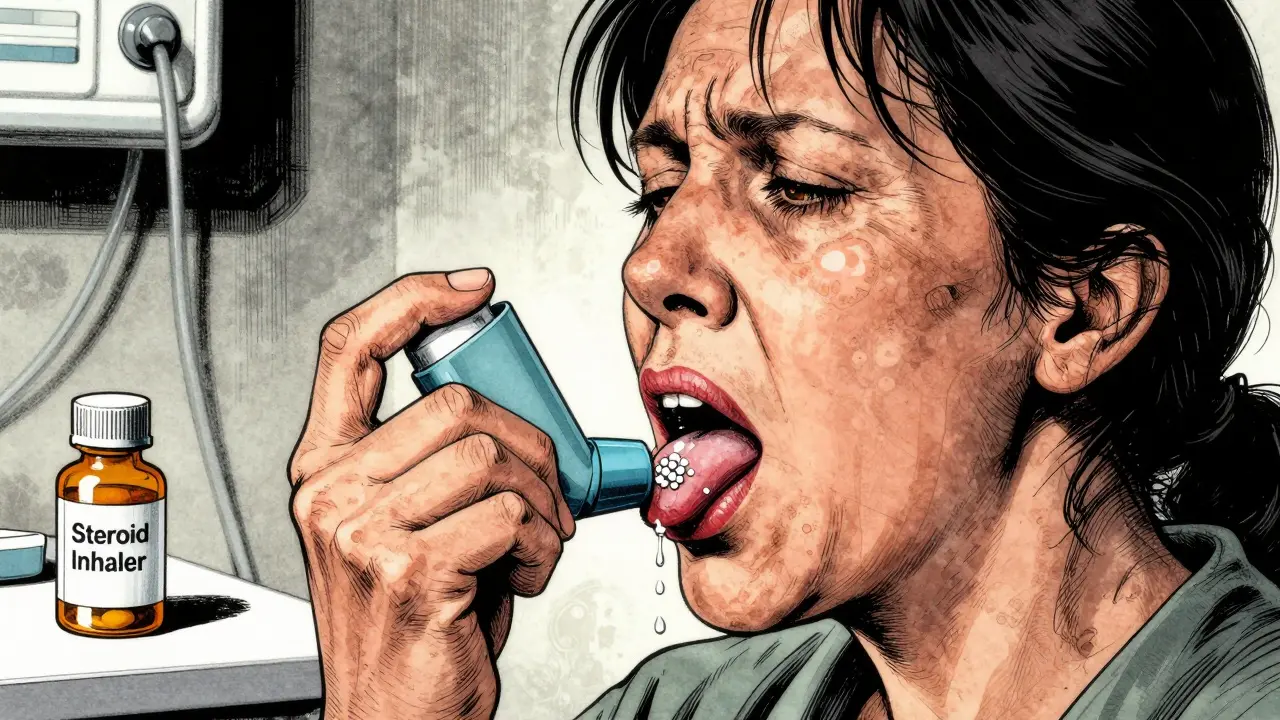
Oral thrush from medications like inhalers and antibiotics is common but treatable. Learn how nystatin and fluconazole work, why prevention matters, and how to stop it from coming back.
Fluconazole: What It Is, How It Works, and What You Need to Know
When you hear fluconazole, a broad-spectrum antifungal medication used to treat fungal infections like yeast infections, thrush, and systemic candidiasis. Also known as Diflucan, it works by stopping fungi from making cell membranes, which kills them or keeps them from spreading. It’s one of the most prescribed antifungals in the world—not because it’s flashy, but because it’s simple, effective, and often taken as just one pill.
Fluconazole doesn’t just treat vaginal yeast infections. It’s used for oral thrush in people with HIV, fungal infections in the lungs or bloodstream, and even to prevent infections in those with weak immune systems after chemotherapy or transplants. It’s taken orally, which makes it easier than creams or IVs, and it stays in your system for days, so you don’t need to take it every few hours. But here’s the catch: it doesn’t play nice with everything. If you’re on blood thinners like warfarin, seizure meds like phenytoin, or even some statins, fluconazole can make them stronger—and that’s dangerous. It also affects how your liver processes other drugs, especially those handled by the CYP3A4 enzyme. That’s why a brown bag medication review can be life-saving if you’re on multiple pills.
Not everyone reacts the same. Some people feel fine after one dose. Others get nausea, headaches, or even liver issues. And while it’s not an antibiotic, people often think it fixes any kind of infection—which it doesn’t. Taking it for a bacterial sore throat? Useless. For a stubborn fungal nail infection? Might help, but you’ll need months of daily doses. The real power of fluconazole isn’t just killing fungi—it’s being a reliable, low-maintenance tool when used right. But using it wrong? That’s where things go sideways. That’s why the posts below cover everything from how it interacts with other drugs, to when it’s the right choice over topical creams, to what to watch for if you’re on long-term treatment. You won’t find fluff here. Just clear, practical info from real cases and medical guidelines.

Azoles and echinocandins are the two main classes of antifungal drugs used to treat serious fungal infections. Learn how they work, their safety risks, drug interactions, and when each is the best choice.