
Oral Thrush Treatment Calculator
This tool helps you determine the best treatment option for oral thrush based on your personal health circumstances. Select your specific conditions to see which antifungal treatment is most appropriate for you.
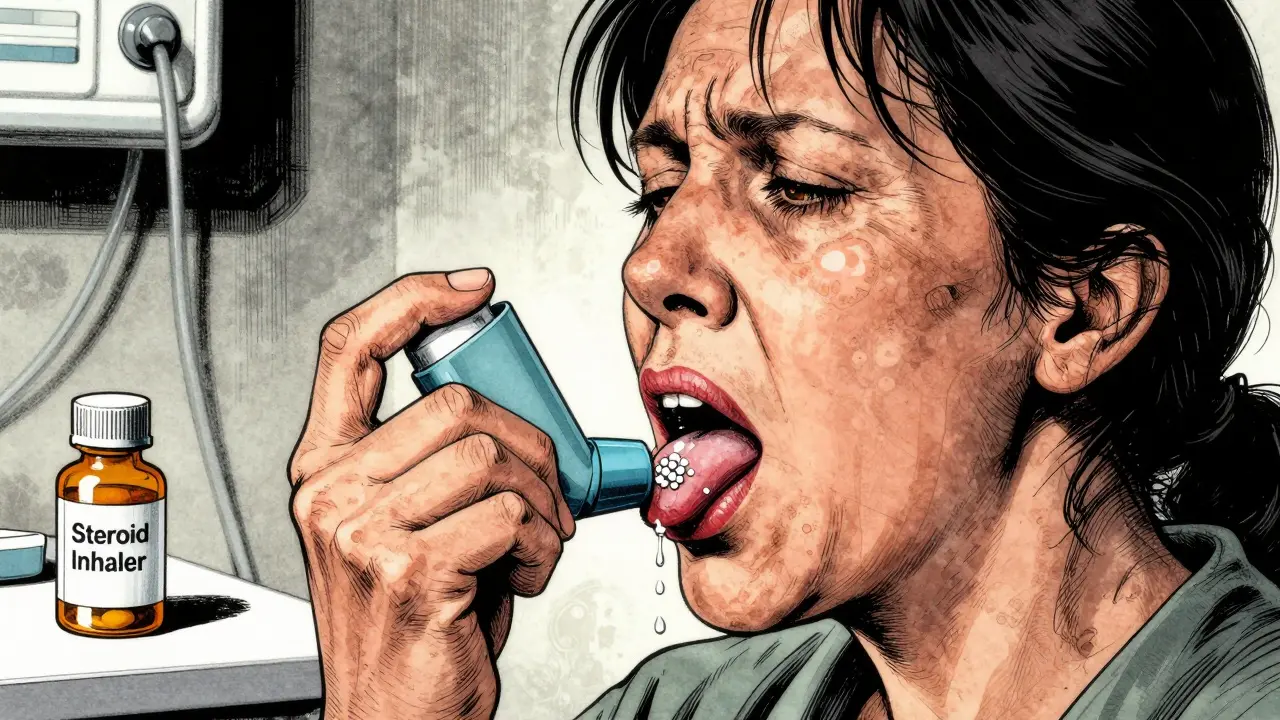
Ever swished mouthwash and felt a weird chalky coating that won’t wash away? Or noticed white patches on your tongue after starting a new inhaler or antibiotic? You’re not alone. Oral thrush from medications is more common than most people realize - especially if you’re on long-term steroids, antibiotics, or immune-suppressing drugs. It’s not just annoying; it can make eating, swallowing, and even talking painful. But here’s the good news: it’s treatable, and often preventable.
Why Medications Cause Oral Thrush
Oral thrush isn’t caused by poor hygiene. It’s caused by an imbalance. Your mouth naturally hosts tiny amounts of Candida albicans - a yeast-like fungus. Normally, bacteria keep it in check. But certain medications wipe out those helpful bacteria or weaken your body’s defenses, letting Candida take over. The biggest culprits? Inhaled corticosteroids for asthma or COPD. About 1 in 5 people using these inhalers develop thrush, according to NHS 2023 guidelines. Antibiotics are another major trigger. When you take broad-spectrum antibiotics like amoxicillin or doxycycline, they don’t just kill bad bacteria - they also clear out the good ones that normally hold yeast in check. Immunosuppressants after organ transplants, chemotherapy drugs, and even some diabetes medications can tip the scales too. It’s not just about the drug. It’s about how you use it. If you use an inhaler and don’t rinse your mouth afterward, the steroid stays on your tongue and cheeks. That’s like giving Candida a free pass to grow.What Oral Thrush Looks and Feels Like
You’ll usually see it before you feel it. Creamy white patches that look like cottage cheese - on your tongue, inner cheeks, roof of your mouth, or even your throat. These aren’t just food residue. They stick tightly. If you scrape them off, you might see red, raw areas underneath that bleed a little. Symptoms often include:- Loss of taste or a bad, metallic taste
- Pain or burning in the mouth
- Cracking at the corners of your lips
- Difficulty swallowing (especially if it spreads to your esophagus)
- Feeling like there’s cotton in your mouth
First-Line Treatment: Nystatin
For most people, the first treatment doctors reach for is nystatin. It’s been around since the 1950s, and it’s still the go-to because it works locally - meaning it doesn’t get absorbed into your bloodstream. That makes it safe for pregnant women, kids, and people on multiple medications. The liquid suspension (usually 100,000 units per mL) comes in a bottle with a dropper. You take 4 to 6 mL - about a teaspoon - and swish it around your mouth for at least two minutes. Then spit it out. Not swallow. Not rinse. Just swish and spit. Why so long? Because nystatin needs time to stick to the fungal cells and break them down. A 2023 study from Cleveland Clinic found that 42% of treatment failures happened because people swallowed it right away. It’s not working if it’s going straight to your stomach. You’ll need to do this four times a day - after meals and before bed. That’s a lot. And yes, the taste is awful. Many users call it chalky, bitter, or like wet plaster. But it works. Memorial Sloan Kettering reports a 92% success rate when used correctly.
When You Need Fluconazole
If nystatin doesn’t clear it up after 10-14 days, or if the infection has spread to your throat or esophagus, your doctor will likely switch you to fluconazole (brand name Diflucan). This is an oral pill - one daily dose for 7 to 14 days. Fluconazole is stronger. It gets absorbed into your blood and reaches areas nystatin can’t. It’s the standard for people with weakened immune systems - like those with HIV, cancer, or organ transplants. Studies show it clears up thrush in 95% of cases. But it’s not without risks. Fluconazole can interact with over 30 common medications - including blood thinners like warfarin, seizure meds like phenytoin, and even some diabetes pills. It can also cause headaches, stomach upset, and, rarely, liver damage. The FDA has issued warnings about this. One case on PatientsLikeMe in 2023 described hospitalization after fluconazole triggered liver toxicity. Cost-wise, generic fluconazole runs about $23 for a 14-day course. Brand-name Diflucan? Over $300. Nystatin is cheaper - around $16 for a month’s supply. But price isn’t the only factor. If you’re immunocompromised, fluconazole is worth the risk.Comparing Treatment Options
| Feature | Nystatin | Fluconazole |
|---|---|---|
| Form | Oral suspension (swish and spit) | Oral tablet |
| Dosing | 4 times daily for 7-14 days | Once daily for 7-14 days |
| Systemic absorption | <5% | 98% |
| Best for | Mild cases, children, pregnant women, people on other meds | Severe cases, immunocompromised, esophageal thrush |
| Common side effects | Bad taste, mouth irritation | Headache, nausea, stomach pain |
| Drug interactions | Minimal | 32+ medications (warfarin, phenytoin, sulfonylureas) |
| Cost (generic, 14-day supply) | $15.79 | $23.49 |
| Success rate | 89% | 95% |
Prevention: The Real Game-Changer
Treating thrush is one thing. Stopping it before it starts? That’s where you win. If you use an inhaler for asthma or COPD, rinse your mouth with water immediately after each puff. Don’t just swish - gargle and spit. The NHS found this simple step cuts thrush risk by 65%. Use a spacer device too - it helps the medicine go to your lungs instead of sticking to your mouth. Brush your teeth twice a day. Floss daily. Clean your dentures every night if you wear them. And if you’ve had thrush before, consider switching to a toothpaste without sodium lauryl sulfate - it can irritate your mouth lining and make you more prone to infection. Xylitol helps. Chewing gum or using lozenges with xylitol reduces Candida growth by 40%, according to the Journal of Dental Research. It’s not magic, but it’s a simple, safe habit. If you have diabetes, keep your HbA1c below 7.0%. High blood sugar feeds yeast. Tight control doesn’t just help your heart - it protects your mouth.
New Developments and What’s Coming
In March 2023, the FDA approved a new form of nystatin - a mucoadhesive tablet called Mycolog-II. Instead of swishing liquid, you stick a small tablet to your cheek. It slowly dissolves over 4 hours, keeping the antifungal right where it’s needed. Early trials showed 94% effectiveness - better than the old liquid. Probiotics are also gaining traction. A 2023 study in Nature Microbiology found that taking Lactobacillus reuteri supplements alongside antifungal treatment cut recurrence by 57%. You can find these in some refrigerated probiotic capsules or fermented foods like kefir. But there’s a warning. Candida resistance is rising. In 2010, only 3% of Candida strains resisted fluconazole. By 2022, that jumped to 12%. The CDC now tracks this through its Antifungal Resistance Laboratory Network. If thrush keeps coming back, your doctor may need to culture the yeast to find the right drug.What to Do If It Keeps Coming Back
If you’ve had thrush more than twice in six months, it’s not just bad luck. It’s a signal. Maybe your inhaler technique needs fixing. Maybe your blood sugar’s too high. Maybe you’re on a medication that’s just too harsh for your system. Talk to your doctor. Ask about:- Switching to a different inhaler with less steroid
- Adding a probiotic
- Testing for undiagnosed diabetes or immune issues
- Getting a fungal culture if standard treatment fails
Bottom Line: Treat Smart, Prevent Better
Oral thrush from medications isn’t rare - but it’s manageable. Nystatin works well for most people if you use it right. Fluconazole is powerful but carries risks. Prevention is easier than treatment. Rinse after inhalers. Brush your teeth. Watch your sugar. Try xylitol gum. And if it keeps coming back, dig deeper. It’s not just a mouth problem - it’s a sign your body’s balance is off. You don’t have to live with white patches and burning. With the right steps, you can clear it up - and keep it from coming back.Can oral thrush go away on its own without treatment?
Sometimes, yes - especially in healthy people with mild cases. But if you’re on medications like steroids or antibiotics, it’s unlikely to resolve without help. Left untreated, thrush can spread to your throat or esophagus, making swallowing painful and increasing the risk of systemic infection, especially in immunocompromised individuals. Don’t wait. Start treatment early.
Is nystatin safe for children and pregnant women?
Yes. Nystatin is approved for use from birth and is considered safe during pregnancy because it’s not absorbed into the bloodstream. It’s the first-line choice for infants with thrush and pregnant women who develop it. Fluconazole, however, is generally avoided during pregnancy unless absolutely necessary due to potential fetal risks.
Why does my thrush keep coming back after treatment?
Recurrent thrush usually means the root cause hasn’t been addressed. Common reasons: not rinsing after inhalers, uncontrolled diabetes, poor oral hygiene, or antibiotic overuse. In some cases, it’s a resistant strain of Candida. If it returns within weeks, ask your doctor about fungal culture testing and review your medications and habits.
Can I use mouthwash to treat oral thrush?
Regular alcohol-based mouthwashes won’t help - they can even make it worse by drying out your mouth. Antifungal mouthwashes like nystatin are prescribed specifically for thrush. Avoid commercial mouthwashes unless they’re alcohol-free and approved by your dentist. Some people find rinsing with salt water helps ease discomfort, but it won’t kill the yeast.
Does fluconazole cause yeast infections elsewhere?
Fluconazole treats yeast infections, but it can sometimes trigger a different kind of imbalance. In rare cases, it may lead to vaginal yeast infections in women or digestive upset from gut flora disruption. This isn’t common, but if you notice new symptoms like itching or diarrhea after taking fluconazole, mention it to your doctor. It doesn’t mean the drug failed - it means your microbiome is adjusting.
How long does it take for nystatin to work?
Most people notice improvement within 3 to 5 days - the white patches start fading, and the burning lessens. But you must finish the full 7-14-day course. Stopping early, even if you feel better, can let the yeast bounce back. Full clearance usually takes 10-14 days with consistent use.
Gerard Jordan
January 21, 2026 AT 13:42MAHENDRA MEGHWAL
January 23, 2026 AT 10:13Jerry Rodrigues
January 24, 2026 AT 03:17Uju Megafu
January 24, 2026 AT 17:18Barbara Mahone
January 25, 2026 AT 19:22Kelly McRainey Moore
January 27, 2026 AT 10:01Amber Lane
January 28, 2026 AT 11:48Ashok Sakra
January 28, 2026 AT 17:21Andrew Rinaldi
January 30, 2026 AT 09:33michelle Brownsea
January 30, 2026 AT 23:04Roisin Kelly
February 1, 2026 AT 15:35lokesh prasanth
February 2, 2026 AT 14:27