
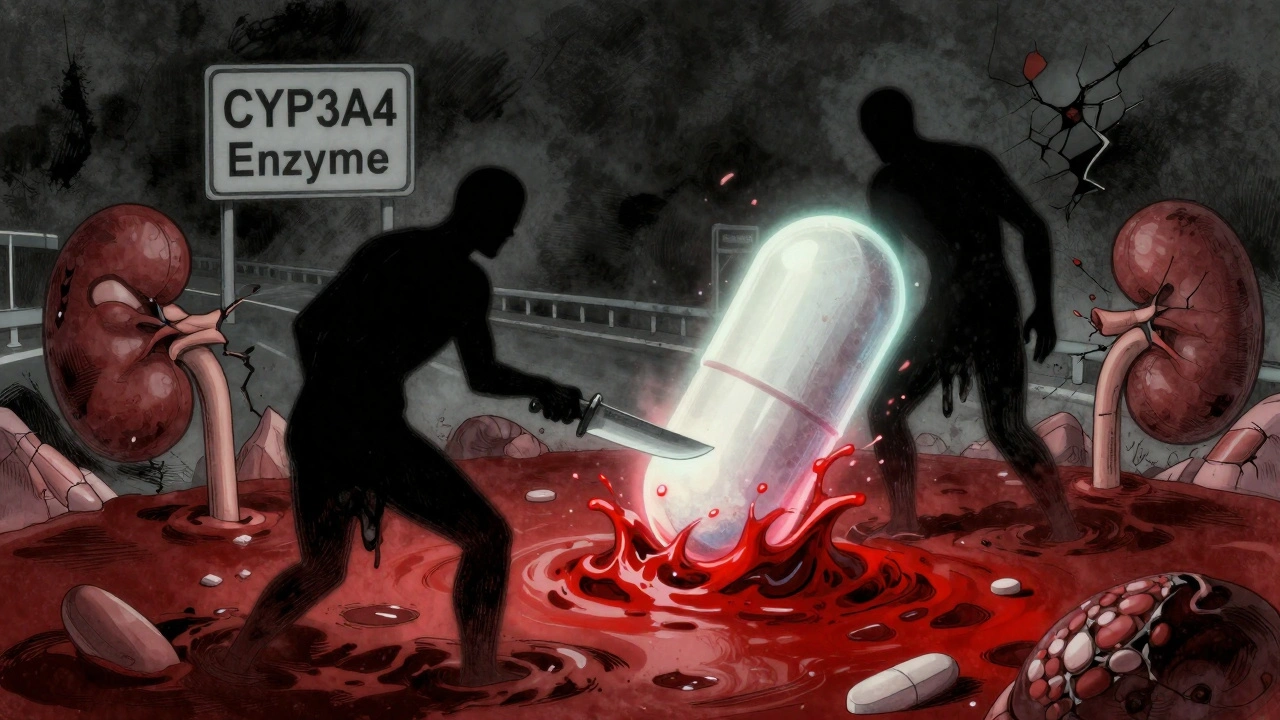
Drug-drug interactions can make medications ineffective or dangerously strong. Learn how enzymes, transporters, and genetics affect how drugs work together-and what you can do to stay safe.
CYP3A4: How This Enzyme Affects Your Medications and What You Need to Know
When you take a pill, your body doesn’t just let it sit there—it tries to break it down, and one of the main players in that process is CYP3A4, a liver enzyme responsible for metabolizing over half of all prescription drugs. Also known as cytochrome P450 3A4, it’s the workhorse that decides how much of your medicine actually gets into your system and how long it lasts. If CYP3A4 is slowed down, your drugs can build up to toxic levels. If it’s sped up, your meds might not work at all. This isn’t theory—it’s why some people get sick on normal doses, while others feel nothing even at high doses.
CYP3A4 doesn’t work alone. It’s constantly being influenced by other substances you take. Grapefruit juice? It blocks CYP3A4, which is why your doctor warned you not to drink it with certain blood pressure or cholesterol pills. Antibiotics like clarithromycin? They do the same thing. On the flip side, St. John’s wort and some epilepsy drugs can turn CYP3A4 into a hyperactive machine, flushing your meds out before they have a chance to help. This enzyme is why ritonavir boosting, a technique used in HIV treatment to raise drug levels by inhibiting CYP3A4 can be life-saving—or deadly—if used with the wrong other meds. It’s also why drug interactions, the hidden risks when two or more substances interfere with each other’s metabolism are so common and so dangerous. You don’t need to memorize every interaction. But you do need to know that your pharmacist or doctor should be looking at your full list—prescriptions, OTC meds, supplements, even herbal teas—before you start anything new.
The real problem? Most people think side effects are just random. But a lot of them—nausea, dizziness, weird heart rhythms, or meds that suddenly stop working—are tied to how CYP3A4 is being messed with. That’s why brown bag reviews, medication therapy management, and prescription transfers all matter: they’re not just paperwork. They’re checks to make sure your body isn’t caught in a chemical tug-of-war. If you’re on more than a few meds, especially for chronic conditions like HIV, heart disease, or epilepsy, CYP3A4 is the silent gatekeeper. Get it wrong, and the consequences can be serious. Get it right, and you’re not just taking pills—you’re taking them safely.
Below, you’ll find real-world examples of how CYP3A4 affects everyday treatments—from HIV drugs to pain relievers, from heart meds to supplements. These aren’t abstract science articles. They’re guides written by people who’ve seen what happens when this enzyme is ignored.