
Opioid-Antidepressant Risk Checker
Important Note: This tool is for informational purposes only. Always consult with your healthcare provider or pharmacist before making any changes to your medication regimen.
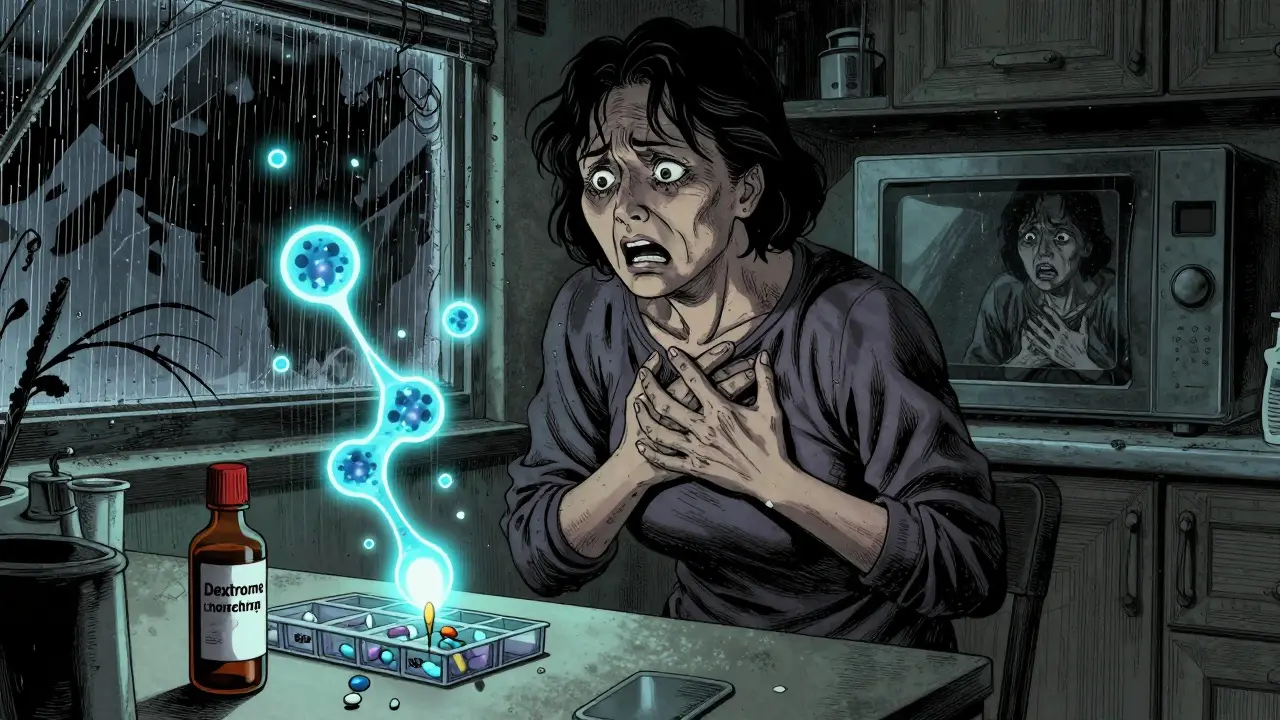
It’s not just about pain relief. When you’re taking an opioid for chronic pain - or even a cough syrup with dextromethorphan - and you’re also on an antidepressant, you could be walking into a silent, life-threatening danger. Opioid serotonin syndrome isn’t a myth. It’s a real, growing problem in clinics and emergency rooms, and most people have no idea it’s even possible.
What Exactly Is Serotonin Syndrome?
Serotonin syndrome happens when your brain gets flooded with too much serotonin. That’s the chemical that helps regulate mood, sleep, and pain. A little extra can help with depression. Too much? It turns your body into overdrive.
You don’t need to overdose. Just taking two common medications together - say, tramadol for back pain and sertraline for anxiety - can trigger it. Symptoms come fast: high fever, shaking, muscle stiffness, confusion, rapid heartbeat, sweating. In severe cases, it leads to seizures, organ failure, and death. The Hunter Criteria, used by doctors worldwide, says you need at least one of these key signs: muscle twitching, clonus (involuntary muscle contractions), or a combination of agitation and high body temperature.
It’s not rare. About 8% of all serious drug reaction hospital admissions are due to serotonin syndrome. And nearly one-third of those cases involve opioids mixed with antidepressants. That’s not a small number - it’s a quiet epidemic.
Not All Opioids Are Created Equal
Here’s the thing: saying "all opioids cause serotonin syndrome" is wrong. Some barely touch serotonin. Others are basically serotonin grenades.
High-risk opioids - the ones you should avoid if you’re on antidepressants - are tramadol, meperidine (pethidine), and dextromethorphan. Tramadol is the biggest culprit. It doesn’t just relieve pain. It blocks serotonin reuptake, just like SSRIs do. So when you combine them, you’re doubling down on serotonin. In Australia, 78% of all reported opioid-antidepressant interactions involve tramadol. That’s not a coincidence. It’s a pattern.
Dextromethorphan is sneaky. It’s in every cough syrup, cold tablet, and sleep aid. You don’t think of it as a drug. But 30mg a day - half a teaspoon - can trigger serotonin syndrome when mixed with an SSRI. There are documented cases of people dying from this combo. And they weren’t addicts. They were grandparents taking cough medicine.
Medium-risk opioids include methadone and fentanyl. Methadone’s risk is complicated. It does inhibit serotonin, but because it’s used in long-term addiction treatment, the body adapts. Still, when you add fluoxetine or venlafaxine, levels can spike dangerously. Fentanyl’s risk rises sharply during surgery or high-dose pain management - especially above 100mcg/kg. That’s not common in daily use, but it’s a real concern in hospitals.
Low-risk opioids like morphine, oxycodone, and hydromorphone? They barely interact with serotonin at all. Studies show they don’t block serotonin transporters in lab tests. And in real-world use, they’re far less likely to cause problems. If you’re on an antidepressant and need strong pain relief, these are your safest bets.
Why Do Some People Get It and Others Don’t?
It’s not just the drugs. It’s your genes.
Recent research from the University of Toronto found that some people have a genetic variation in the SERT gene (SLC6A4), which controls how serotonin is absorbed in the brain. If you have the short version of this gene, your body clears serotonin slower. Even a small increase from a cough syrup and an SSRI can push you over the edge.
Also, some antidepressants slow down how your liver breaks down opioids. Paroxetine and fluoxetine block the CYP2D6 enzyme. That means tramadol doesn’t turn into its active form properly - so you get more of the parent drug, which is the serotonin culprit. Codeine turns into morphine via the same enzyme. If it’s blocked, you get less pain relief and more serotonin buildup. It’s a double whammy.
And then there’s timing. Serotonin syndrome often hits within hours of adding a new drug. One patient in a 2021 case report started tramadol on Monday. By Wednesday, she was in the ICU with a fever of 40.1°C. No warning. Just sudden, terrifying symptoms.
What Should You Do If You’re on Antidepressants?
If you’re taking an SSRI, SNRI, or MAOI - and you need pain relief - here’s your simple plan:
- Avoid tramadol completely. Even if your doctor says "it’s fine," ask for alternatives. There are better options.
- Check every cough medicine. Read the label. If it says "dextromethorphan," put it back. Use plain guaifenesin or a saline spray instead.
- Choose morphine, oxycodone, or hydromorphone. These are your safest painkillers when serotonin is a concern. Start low. Go slow. Monitor.
- Talk to your pharmacist. They see every prescription you fill. Ask: "Is this safe with my antidepressant?" Don’t assume they’ll catch it.
- Know the warning signs. If you feel unusually anxious, start trembling, get a high fever, or your muscles feel locked up - stop the opioid and go to the ER. Don’t wait. Don’t call your doctor first. Go.
The Hidden Risk: Over-the-Counter Medicines
Most people don’t realize that serotonin syndrome can come from a $10 bottle of cough syrup.
In the U.S., 28 million doses of dextromethorphan are sold every year. Many are taken by older adults on antidepressants. A 2020 review found 14 cases of serotonin syndrome from OTC dextromethorphan - three of them fatal. All involved doses under 100mg a day. That’s less than two tablespoons of syrup.
And it’s not just cough medicine. Some sleep aids, migraine pills, and even certain herbal supplements like St. John’s Wort can add to the risk. You don’t need to be on five drugs to get into trouble. Just two - one prescribed, one bought off the shelf.

What Happens If You Get It?
Doctors treat serotonin syndrome in three steps:
- Stop everything. All serotonergic drugs - opioids, antidepressants, supplements - are stopped immediately.
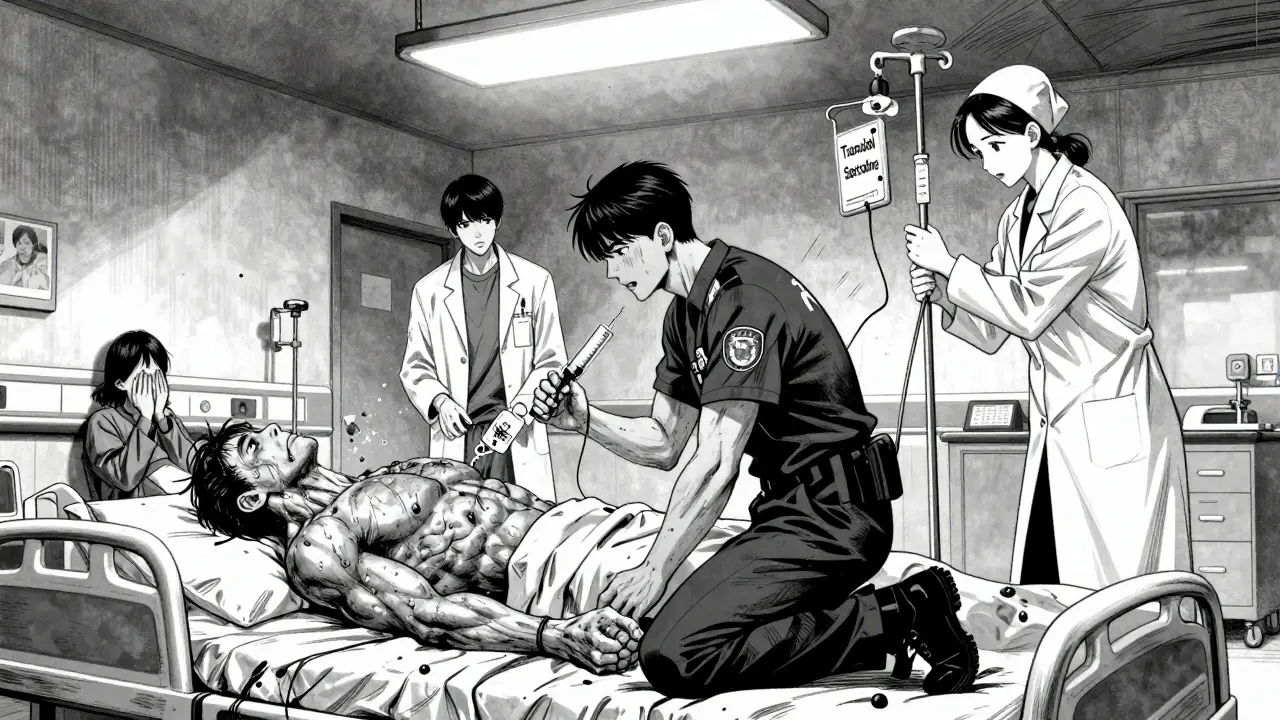
- Supportive care. Cooling blankets for fever, IV fluids, sedatives for agitation. Muscle relaxants like benzodiazepines help with rigidity.
- Cyproheptadine. This is the only specific antidote. It blocks serotonin receptors. It’s not in every hospital, but most ERs in major cities keep it on hand.
Recovery usually takes 24 to 72 hours if caught early. But if you wait? It can kill you in hours.
The Bottom Line
Opioid serotonin syndrome isn’t a rare side effect. It’s a preventable medical emergency. The risk isn’t equal across all opioids. Tramadol and dextromethorphan are dangerous with antidepressants. Morphine and oxycodone? Not so much.
If you’re on an antidepressant, don’t assume your painkiller is safe. Ask your doctor: "Is this opioid linked to serotonin syndrome?" If they say "probably not," ask for the evidence. Demand alternatives. Your life depends on it.
And if you’re taking cough medicine, cold pills, or sleep aids - read the label. Look for dextromethorphan. If it’s there, and you’re on an SSRI, don’t take it. Find another way to feel better.
This isn’t about fear. It’s about awareness. Millions of people take these combinations every day. Most will be fine. But some won’t. And they won’t see it coming.
Can tramadol be taken safely with SSRIs if the dose is low?
No. Even low doses of tramadol carry a significant risk when combined with SSRIs. Tramadol inhibits serotonin reuptake directly, and this effect doesn’t disappear at lower doses. Studies show a 6.7-fold increase in serotonin syndrome risk compared to non-serotonergic opioids. Medical guidelines from Medsafe New Zealand and the FDA classify this combination as contraindicated, regardless of dosage.
Is codeine safe to use with antidepressants?
Codeine is generally considered low-risk for serotonin syndrome because it doesn’t directly affect serotonin transporters. However, it’s metabolized by the CYP2D6 enzyme, which is blocked by some antidepressants like paroxetine and fluoxetine. This can lead to reduced pain relief and accumulation of codeine, increasing the chance of other side effects. In rare cases, especially with other serotonergic drugs like triptans, codeine has triggered serotonin syndrome. It’s not recommended as a first choice if safer alternatives exist.
What over-the-counter medicines should I avoid if I’m on an SSRI?
Avoid any product containing dextromethorphan - this includes popular cough syrups, cold tablets, and sleep aids. Also avoid St. John’s Wort, certain migraine medications like triptans (e.g., sumatriptan), and herbal supplements like 5-HTP or L-tryptophan. Always check the active ingredients list. If you’re unsure, ask your pharmacist before taking anything new.
Can fentanyl cause serotonin syndrome?
Yes, but only under certain conditions. Fentanyl doesn’t strongly inhibit serotonin reuptake, but it does activate 5-HT2A receptors. This becomes a concern at high doses - like those used in anesthesia or severe pain management. In routine outpatient use, the risk is low. But in hospitals, where doses can exceed 100mcg/kg, the chance of serotonin syndrome increases. Always inform your anesthesiologist if you’re on antidepressants.
What’s the safest opioid for someone on an SSRI?
Morphine, oxycodone, and hydromorphone are the safest choices. They have minimal to no effect on serotonin pathways. Studies show they don’t inhibit serotonin transporters in lab tests, and real-world data shows far fewer cases of serotonin syndrome with these drugs compared to tramadol or meperidine. Always start with the lowest effective dose and monitor for any unusual symptoms.
How quickly does serotonin syndrome develop after taking a new opioid?
Symptoms usually appear within 2 to 48 hours after starting or increasing a serotonergic drug. In many documented cases, patients developed full symptoms within 24 hours. For example, someone starting tramadol while already on venlafaxine often shows signs like agitation, tremors, and fever by the second day. Don’t wait for symptoms to worsen - act immediately if you notice any early signs.
Is serotonin syndrome reversible?
Yes, if caught early. Stopping the triggering drugs and getting supportive care - like fluids, cooling, and benzodiazepines - usually leads to full recovery within 1 to 3 days. In severe cases, the antidote cyproheptadine is given to block serotonin receptors. Without treatment, it can progress to organ failure and death. The key is early recognition and immediate action.
Ryan van Leent
December 17, 2025 AT 12:40Laura Hamill
December 18, 2025 AT 20:00Vicki Belcher
December 20, 2025 AT 15:41Aboobakar Muhammedali
December 21, 2025 AT 09:26Nicole Rutherford
December 22, 2025 AT 14:42Kevin Motta Top
December 22, 2025 AT 18:44Sahil jassy
December 23, 2025 AT 11:59jessica .
December 25, 2025 AT 05:25Marsha Jentzsch
December 26, 2025 AT 15:24Nina Stacey
December 27, 2025 AT 21:55Kathryn Featherstone
December 28, 2025 AT 13:29Alisa Silvia Bila
December 29, 2025 AT 10:10