
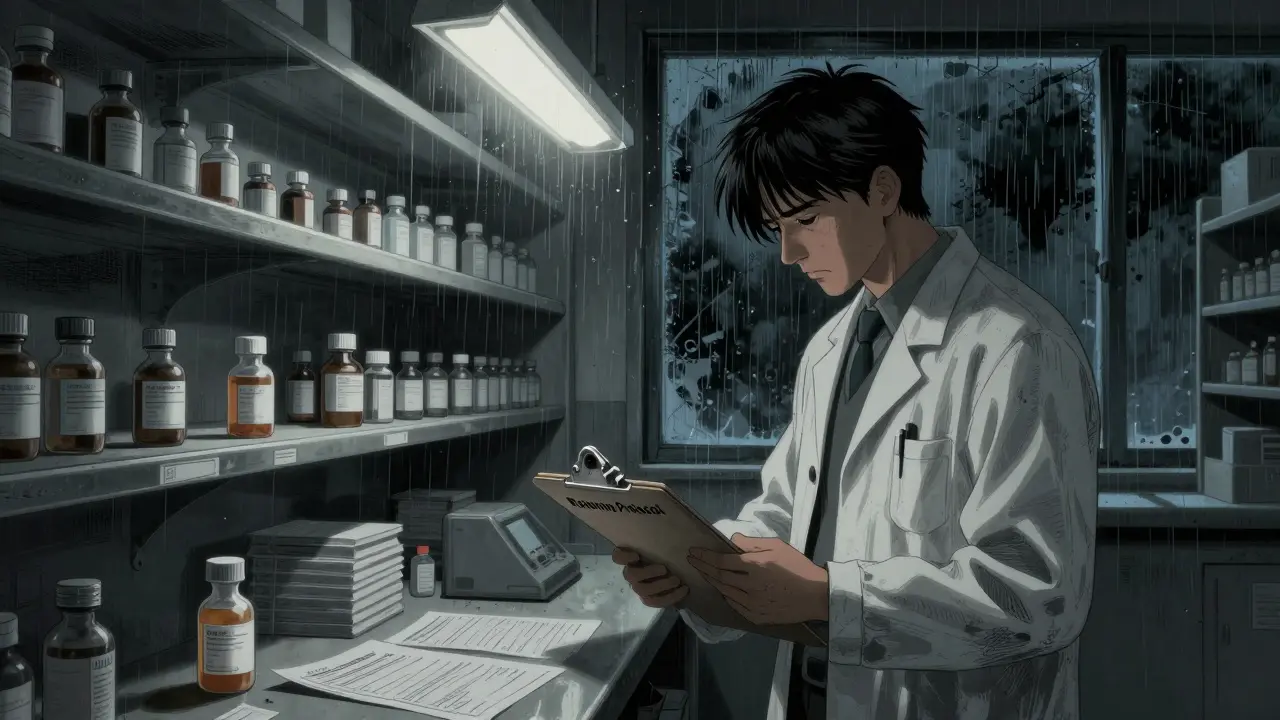
When antibiotics disappear from hospital shelves, it’s not just an inventory problem-it’s a life-or-death crisis. In 2024, over 147 antibiotics were listed as in short supply in the United States alone. Globally, 37 critical antimicrobials were officially flagged as unavailable. And for many patients, that means no treatment at all. Antibiotic shortages aren’t rare glitches-they’re systemic failures with real, measurable consequences on how we treat infections today.
Why Antibiotics Are More Likely to Vanish Than Other Drugs
Antibiotics are 42% more likely to face shortages than any other type of medication. Why? It’s not because they’re hard to make. It’s because they’re cheap. Generic antibiotics, which make up 85% of all antibiotic use, have seen prices drop by 27% since 2015. Manufacturers in India and China produce them at scale, but the profit margins are razor-thin. Meanwhile, regulatory costs to meet sterile production standards have jumped 34% over the same period. When a factory has to choose between making a $10 antibiotic or a $500 cancer drug, the math doesn’t lie.What Happens When Penicillin or Amoxicillin Disappears
Penicillin G benzathine has been in short supply since 2015. Amoxicillin, one of the most common antibiotics for ear infections and pneumonia, was rationed across Europe after a 2023 shortage. In 2024, amoxicillin use dropped by 55% in 22 health databases. Amoxicillin with clavulanate? Down 69%. When these go missing, doctors are forced to reach for stronger, broader-spectrum drugs like carbapenems. These are powerful-but they’re also the last line of defense against resistant infections. Using them for routine cases is like burning your last match to light a candle.Consider this: over 40% of E. coli and 55% of K. pneumoniae are now resistant to third-generation cephalosporins. When those drugs aren’t available, clinicians turn to colistin-a toxic, last-resort antibiotic with serious kidney risks. A California infectious disease specialist told the American Public Health Association forum she once had to prescribe colistin for a simple urinary tract infection. That’s not medicine. That’s triage.
The Global Inequality of Antibiotic Access
In high-income countries, shortages are managed with import swaps, emergency stockpiles, and hospital protocols. But in low- and middle-income countries, the problem is deeper. About 70% of antibiotics are already inaccessible in these regions. The World Health Organization calls this a “syndemic”-a deadly mix of resistance and under-treatment. In rural Kenya, nurses report sending patients home without antibiotics because the supply never arrived. In Mumbai, a child’s pneumonia treatment was delayed 72 hours due to azithromycin shortages, leading to ICU admission. These aren’t isolated cases. They’re the norm where supply chains are weak and budgets are tight.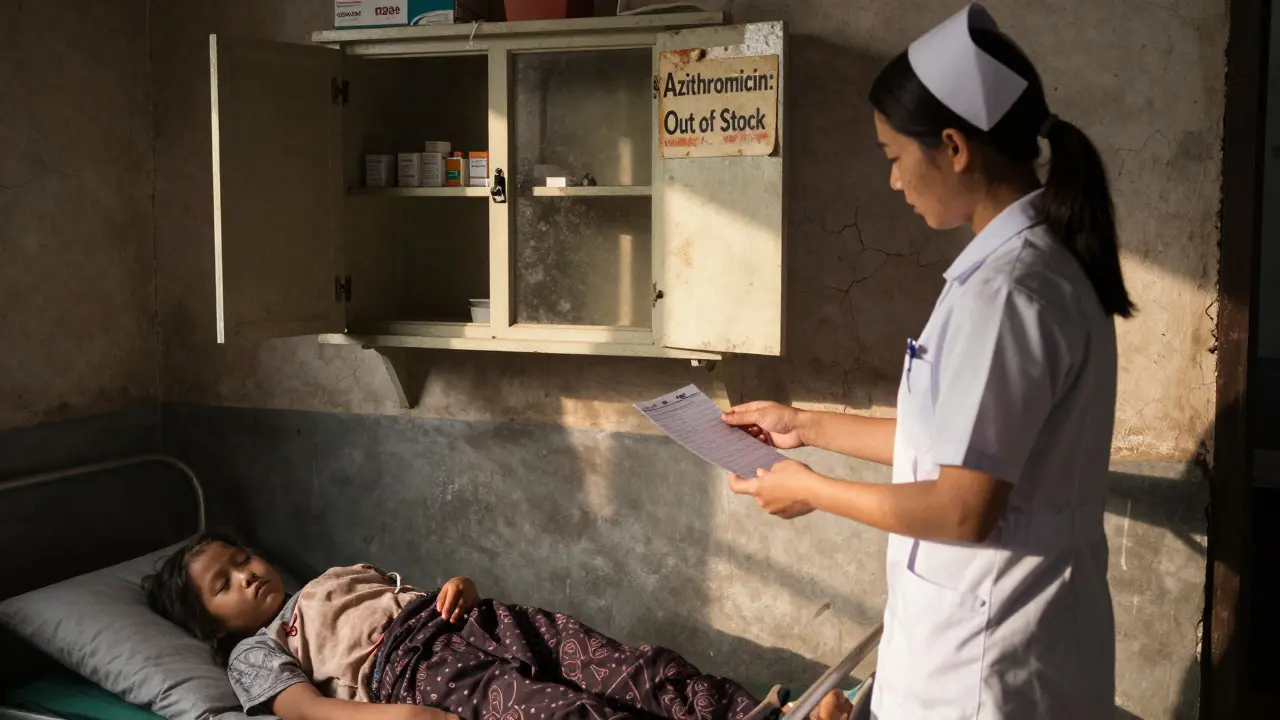
How Hospitals Are Trying to Cope
Hospitals are scrambling. A 2025 survey found 78% of U.S. hospital pharmacists had to change treatment plans because of antibiotic shortages. Sixty-two percent saw more patient complications as a result. Rationing has become routine-89% of U.S. hospitals now formally ration antibiotics. Pharmacists spend 22% more time managing shortages. Many hospitals are turning to antimicrobial stewardship programs (ASPs) to reduce unnecessary use. Johns Hopkins cut broad-spectrum antibiotic use by 37% during shortages by using rapid diagnostic tests to confirm infections before prescribing. California launched a regional sharing network in 2024 that cut critical shortage impacts by 43% across 15 hospitals.But not all programs are equal. Only 37% of U.S. hospitals meet all WHO-recommended standards for stewardship. Without accurate diagnostics, clinicians are flying blind. Without coordinated supply tracking, hospitals duplicate efforts or run out overnight. The learning curve for these systems takes 6 to 12 months-and many facilities don’t have that time.
Resistance Is Growing Faster Than Our Responses
Every time we use a broad-spectrum antibiotic out of necessity, we fuel resistance. Between 2018 and 2023, resistance rose in over 40% of pathogen-antibiotic combinations monitored by the WHO. The average annual increase? 5% to 15%. In the WHO South-East Asian and Eastern Mediterranean regions, one in three bacterial infections is now resistant. In Africa, it’s one in five. The European Court of Auditors found that regulatory agencies have failed to enforce manufacturing standards, while drugmakers have no financial incentive to fix the problem. The result? We’re treating infections with weapons that are losing their edge-and we’re running out of replacements.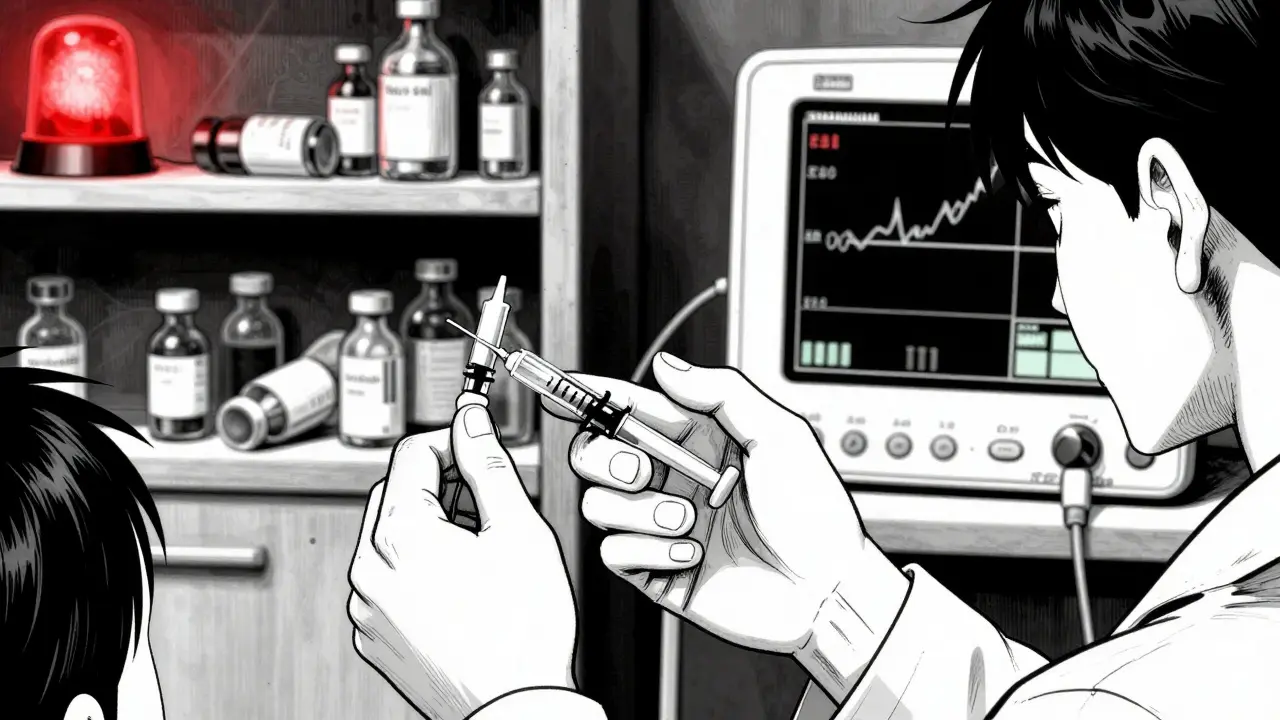
What’s Being Done-and Why It’s Not Enough
The WHO announced a five-point action plan in October 2025, including a $500 million Global Antibiotic Supply Security Initiative funded by G7 nations. The European Commission is pushing its Pharmaceutical Strategy for Europe, aiming to fix shortages by 2026. The U.S. FDA approved two new antibiotic manufacturing facilities in January 2025, expected to relieve 15% of current shortages by late 2025. Industry analysts predict a 22% increase in antibiotic development funding by 2027 through public-private partnerships.But here’s the catch: new drugs take 10 to 15 years to develop. Manufacturing infrastructure takes even longer to build and certify. Meanwhile, the Review on Antimicrobial Resistance (2025 update) warns that without major intervention, global antibiotic shortages will rise 40% by 2030-and could cause 1.2 million extra deaths annually from infections we used to treat easily. The WHO’s goal of getting 70% of antibiotic use from the safer “Access” group by 2030? We’re at 58% today. We’re falling behind.
What This Means for You
You might think antibiotic shortages are a hospital problem. But they’re yours too. If you’ve ever been told to wait a few days before starting antibiotics for a sore throat or ear infection, that’s not just “letting your body fight it.” That’s a sign the supply is low. If your child’s prescription for amoxicillin is suddenly unavailable, and you’re offered a different, more expensive drug, that’s the system stretching thin. If your elderly parent’s infection isn’t improving because the usual antibiotic isn’t in stock, that’s the human cost of a broken supply chain.There’s no quick fix. But awareness matters. Supporting policies that fund antibiotic manufacturing, pushing for better diagnostics in clinics, and avoiding unnecessary antibiotic use are all part of the solution. Because when antibiotics fail, we all pay the price.
Why are antibiotics more likely to be in short supply than other drugs?
Antibiotics are cheaper to produce and sell than most other drugs, especially generics. Manufacturers make very little profit on them, while regulatory costs have risen sharply. As a result, companies prioritize more profitable medications like cancer drugs or diabetes treatments. This economic imbalance means production stops when demand dips-even if the drug is essential.
What happens when a common antibiotic like amoxicillin runs out?
When amoxicillin is unavailable, doctors turn to broader-spectrum antibiotics like amoxicillin-clavulanate or even carbapenems. These are more powerful but also increase the risk of antibiotic resistance. In some cases, patients are sent home without treatment, especially in low-resource areas. Studies show amoxicillin use dropped by 55% and amoxicillin-clavulanate by 69% during recent shortages, forcing changes in treatment standards.
Are there alternatives to antibiotics during a shortage?
For some infections, yes-but rarely for serious bacterial infections. Unlike insulin or blood pressure meds, antibiotics don’t have many equally effective substitutes. If a patient is allergic to penicillin or the infection is resistant, options shrink quickly. In critical cases, doctors may use last-resort drugs like colistin, which carry serious side effects. The real solution isn’t substitution-it’s preventing shortages before they happen.
How do antibiotic shortages affect antibiotic resistance?
When first-line antibiotics aren’t available, clinicians use broader-spectrum drugs to cover more bacteria. These drugs kill off more good bacteria and leave behind resistant strains. This accelerates resistance. For example, overusing carbapenems because cephalosporins are unavailable has already led to rising carbapenem-resistant infections. The WHO reports resistance is increasing by 5-15% annually in monitored pathogen-antibiotic combinations.
Can I help prevent antibiotic shortages?
Yes. Don’t pressure doctors for antibiotics when they’re not needed-for viral infections like colds or flu. Complete your full course when prescribed. Support policies that fund domestic antibiotic production and improve global supply chains. And advocate for better diagnostics in clinics, so antibiotics are only used when truly necessary. Every responsible use helps reduce the pressure on the system.
Is this problem getting worse?
Yes. The number of antibiotic shortages has risen steadily since 2020. In the UK, shortages tripled from 648 in 2020 to 1,634 in 2023. The U.S. hit a 10-year high in 2024. The WHO predicts a 40% increase in global shortages by 2030 if no major changes occur. Manufacturing gaps, geopolitical instability, and lack of investment make this a growing crisis, not a temporary hiccup.
Jodi Harding
January 18, 2026 AT 05:38They’re not shortages-they’re scheduled collapses.
rachel bellet
January 18, 2026 AT 18:23Let’s be real-the entire pharma supply chain is a Ponzi scheme built on profit maximization and regulatory arbitrage. Generic antibiotics? They’re the disposable batteries of medicine. Companies don’t *make* them-they *license* the liability. And when the FDA raises sterile production standards? Suddenly, it’s cheaper to let kids in Mumbai die than to certify a new batch. This isn’t negligence. It’s economics with a straight face.
Praseetha Pn
January 19, 2026 AT 23:30Y’all act like this is new? In India, we’ve been patching together antibiotics like a kid with duct tape and hope since 2012. My cousin’s baby got pneumonia and the hospital had to send her home with a vial of leftover amoxicillin from 2021-expired, but still ‘better than nothing.’ The pharma giants? They’re not *losing* money on antibiotics-they’re *strategically abandoning* them. And guess who’s left holding the bag? The poor. The rural. The voiceless. This isn’t a shortage. It’s a massacre with a spreadsheet.
Tyler Myers
January 20, 2026 AT 01:14They’re not running out of antibiotics. They’re running out of *profit*. Big Pharma doesn’t want you to know this, but the entire system is rigged. The FDA, WHO, G7-they’re all in on it. Why? Because they’re working with the same corporations that own the patents on cancer drugs. You think they want you curing a UTI with $0.50 amoxicillin when they can sell you a $20,000 chemo drip? Wake up. This is deliberate. The ‘shortages’? Marketing tools. The ‘resistance’? A cover story. They want you dependent on last-resort drugs so they can charge you $10,000 for colistin. It’s not a crisis-it’s a business model.
Andrew Qu
January 21, 2026 AT 22:25There’s hope, though. Hospitals like Johns Hopkins are proving that smarter prescribing + rapid diagnostics = fewer shortages + less resistance. It’s not magic-it’s just good science. If we invested even 10% of what we spend on cancer drugs into stewardship and diagnostics, we could cut this mess in half. We don’t need more antibiotics-we need better use of the ones we have. And that’s something every hospital, every doc, every patient can help with right now.
Max Sinclair
January 22, 2026 AT 22:36I appreciate the depth here. The fact that 78% of U.S. hospitals had to change treatment plans due to shortages is staggering. But I also think we need to stop framing this as just a supply chain issue. It’s a moral failure. We treat antibiotics like toilet paper-something we can just restock when it runs out. But they’re not. They’re the last line between life and death for millions. Maybe if we started valuing them like we value heart medication, we’d stop letting the market decide who lives and who doesn’t.
Danny Gray
January 24, 2026 AT 20:32What if the real problem isn’t the shortage-but our addiction to antibiotics? We’ve turned every sniffle into a medical emergency. We treat viral infections like bacterial ones. We demand pills like they’re candy. Maybe the shortage isn’t the crisis. Maybe it’s the universe hitting pause on our hubris. What if we needed this collapse to learn that not every fever needs a prescription? That sometimes, rest and hydration are the real medicine?
Wendy Claughton
January 24, 2026 AT 22:17So... we’ve got this perfect storm: cheap drugs = no profit, expensive regulation = no incentive, global supply chains = fragile as wet paper, and we’re still overprescribing like it’s 2005? 🤦♀️ I just read that 37% of U.S. hospitals don’t even meet WHO stewardship standards. That’s not a system in crisis-that’s a system in denial. We need policy. We need funding. We need to stop pretending this is someone else’s problem. My kid’s ear infection could be next. And I’m tired of waiting for the system to wake up.
Dayanara Villafuerte
January 25, 2026 AT 17:24My mom got colistin for a UTI in 2023. She’s 72. Kidney damage? Yep. Hospital stay? 11 days. Insurance denied the ‘off-label’ use. 🤯 We were lucky she survived. But the real kicker? The doctor said, ‘We had no choice.’ No choice. Not ‘we tried everything.’ Not ‘we’re out of options.’ NO CHOICE. And this is happening every day. This isn’t a headline. It’s a funeral. 💔
Pat Dean
January 26, 2026 AT 20:09China and India are flooding the market with cheap generics, then the U.S. blames them for shortages? Please. We outsource production, then act shocked when the supply chain snaps? We’ve been outsourcing our healthcare infrastructure since the 90s. Now we’re surprised when the pipes burst? We don’t need more WHO reports. We need a ban on exporting antibiotic manufacturing. Build it here. Pay the cost. Or stop pretending we care about American lives.
Kristin Dailey
January 27, 2026 AT 14:14Stop the hand-wringing. Just make antibiotics profitable again. Tax breaks. Guaranteed buybacks. Price floors. Done.
Robert Cassidy
January 29, 2026 AT 02:09What if the antibiotics aren’t disappearing… but evolving? What if the real crisis isn’t scarcity-but our refusal to evolve with them? We cling to penicillin like it’s holy scripture while the bacteria rewrite their code every 48 hours. Maybe the shortage isn’t a failure of supply… but a failure of imagination. We’re trying to fight 21st-century superbugs with 20th-century pills. We’re using a typewriter to code a rocket. The system isn’t broken. We are.
kenneth pillet
January 30, 2026 AT 22:50my local pharmacy ran out of amoxicillin last month. they gave me a different brand. it worked. but why do we even have to gamble like this? it’s 2025. we have gps tracking for packages. why can’t we track antibiotics like we track our amazon orders? just saying.
Zoe Brooks
February 1, 2026 AT 03:53Okay, but what if we stopped treating antibiotics like a commodity and started treating them like clean water? You don’t auction off water when it’s scarce-you protect it. We need a global antibiotic reserve. Like the Strategic Petroleum Reserve, but for lifesaving drugs. Funded by taxes on profit-driven meds. Shared across borders. No one gets left behind. It’s not radical. It’s basic human decency.
Robert Davis
February 2, 2026 AT 17:23Look, I get it. But here’s the uncomfortable truth: we’re not running out of antibiotics because of economics. We’re running out because we’ve stopped innovating. We’ve spent 30 years optimizing the same class of drugs while the bacteria laugh. Meanwhile, we’ve got AI-driven drug discovery sitting in labs, underfunded and ignored. We’re not facing a shortage. We’re facing a creativity deficit. And that’s a much harder problem to fix.