
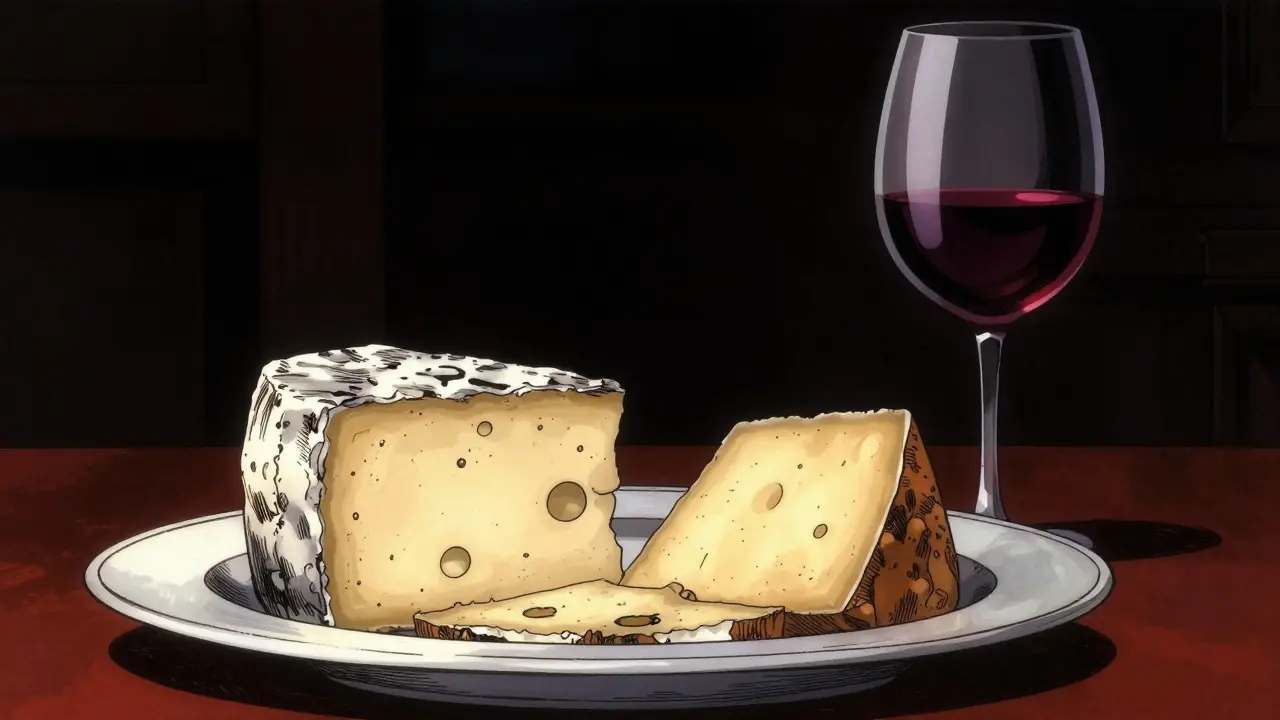
Imagine sitting down for a nice dinner with a platter of aged cheddar and a glass of red wine, only to find yourself in the emergency room an hour later with a skull-splitting headache and blood pressure through the roof. For most people, this sounds like a freak accident. But for those taking certain antidepressants, it is a very real risk known as the "cheese reaction." While these medications can be life-changing for people with treatment-resistant depression, they come with a strict set of rules about what you can put on your plate.
The core of the problem lies in how your body processes tyramine-rich foods. Normally, an enzyme called Monoamine Oxidase (MAO) acts like a security guard in your gut and liver, breaking down tyramine before it ever hits your bloodstream. However, when you take MAO Inhibitors (MAOIs), you essentially fire that security guard. Tyramine then floods your system and forces your brain to dump a massive amount of norepinephrine-a stress hormone-into your blood. This causes your blood vessels to tighten instantly, sending your blood pressure skyrocketing.
The Danger Zone: Foods to Avoid
Not all foods are created equal when it comes to tyramine. Fresh foods are generally safe because they have very little tyramine (usually under 5 mg per 100g). The danger starts when food is aged, fermented, or left to spoil. During these processes, amino acids break down into tyramine, and the concentration can jump by 300% to 500%.
You don't need a massive feast to trigger a reaction. Research from Brown University shows that as little as 5 to 10 mg of tyramine can cause a significant spike in blood pressure. To put that in perspective, some blue cheeses contain up to 41 mg per 100g, which is well above the threshold for a crisis.
| Food Item | Estimated Tyramine Content | Risk Level |
|---|---|---|
| Pickled Herring | 110-230 mg/100g | Very High |
| Aged Cheeses (e.g., Blue, Cheddar) | 9-41 mg/100g (some > 400mg) | High |
| Soy Sauce / Fermented Soy | 20-70 mg/100ml | High |
| Chianti Wine | 4-15 mg/100ml | Moderate to High |
Not All MAOIs Are Created Equal
If you are worried about the diet, it is worth noting that not every MAOI carries the same level of risk. The "old school" irreversible drugs like phenelzine or tranylcypromine require the strictest diets, usually limiting tyramine to less than 15 mg per day. These drugs permanently disable the enzyme until your body grows new ones.
Then there are the RIMAs (Reversible Inhibitors of MAO-A), such as moclobemide. These are more flexible. Because the inhibition is competitive, tyramine can actually "push" the drug off the enzyme, allowing the tyramine to be broken down. Clinical trials have shown that some people on RIMAs can handle up to 100 mg of tyramine without a crisis.
Finally, there is the transdermal selegiline (Emsam) patch. At the lowest dose (6 mg/24h), it targets MAO-B and leaves the MAO-A in your gut intact. This means you can mostly ignore the tyramine restrictions altogether, which is why it has become the go-to choice for many new patients.
Spotting a Hypertensive Crisis Early
While fatalities are extremely rare today due to better education, a hypertensive crisis is a medical emergency. It doesn't always happen instantly; symptoms usually appear within 15 to 30 minutes after eating the trigger food.
The hallmark sign is a severe, throbbing headache, usually felt at the back of the head (occipital headache). You might also feel your heart racing (palpitations) or notice your face flushing. If you have a home blood pressure monitor, a systolic reading above 180 mmHg is a massive red flag.
If you suspect a reaction, don't wait for it to "wear off." Get medical help immediately. Modern hospitals now use specific medications like nicardipine to bring blood pressure down slowly and safely, avoiding the danger of dropping it too fast and starving the brain of oxygen.

Living With the Diet: Practical Tips
Many people quit MAOIs because they feel socially isolated. It's hard to go to a tapas bar or a wine tasting when you're terrified of the menu. However, you can make it work with a few simple rules of thumb.
- Stick to fresh: Fresh meats, fresh fish, and fresh vegetables are almost always safe.
- Watch the labels: In the US, the FDA now requires some cheese packaging to disclose if tyramine exceeds 10 mg per serving.
- Portion control: A tiny amount of aged cheese (less than 1 ounce) is often acceptable, but always check with your doctor first.
- Avoid "funky" smells: Generally, if a food has a very strong, fermented, or "aged" smell, it's a high-tyramine risk.
If the diet feels impossible, ask your provider about newer options. There are now enzyme supplements in development, like TYR-001, designed to help your body metabolize tyramine even while on an MAOI. This could eventually make the "cheese reaction" a thing of the past.
Can I eat any cheese while on an MAOI?
Yes, but only certain types. Fresh cheeses like cottage cheese, cream cheese, and ricotta are generally safe because they aren't aged. Avoid aged varieties like cheddar, swiss, parmesan, and especially blue cheese.
Is red wine completely off-limits?
Not necessarily, but you have to be careful. Red wines like Chianti are high in tyramine. White wines and some light reds are lower, but you should always test your tolerance under medical guidance first.
What should I do if I accidentally eat a high-tyramine food?
Monitor your blood pressure immediately. If you develop a severe headache, nausea, or heart palpitations, seek emergency medical care. Tell the staff immediately that you are taking an MAOI so they can use the correct blood-pressure-lowering medications.
Do all antidepressants cause this interaction?
No. This interaction is specific to MAO Inhibitors. SSRIs (like Prozac) and SNRIs (like Cymbalta) do not have this tyramine interaction and do not require these dietary restrictions.
How long do I need to wait after stopping an MAOI before I can eat aged cheese?
Because irreversible MAOIs permanently disable the enzyme, you typically need to wait about two weeks for your body to regenerate enough new enzymes to safely process tyramine again.
Next Steps and Troubleshooting
If you are just starting an MAOI, the best move is to keep a food diary for the first month. Note everything you eat and any mild symptoms, like a slight headache, that follow. This helps you find your personal "threshold." If you find that the social cost of the diet is outweighing the mental health benefits, talk to your doctor about switching to a RIMA or a transdermal patch.
For those who have already experienced a mild reaction, don't panic-it doesn't mean you can't take the medication. It just means your current diet needs a tweak. Set up a home blood pressure logging system so you can share a concrete data set with your psychiatrist during your next visit.