
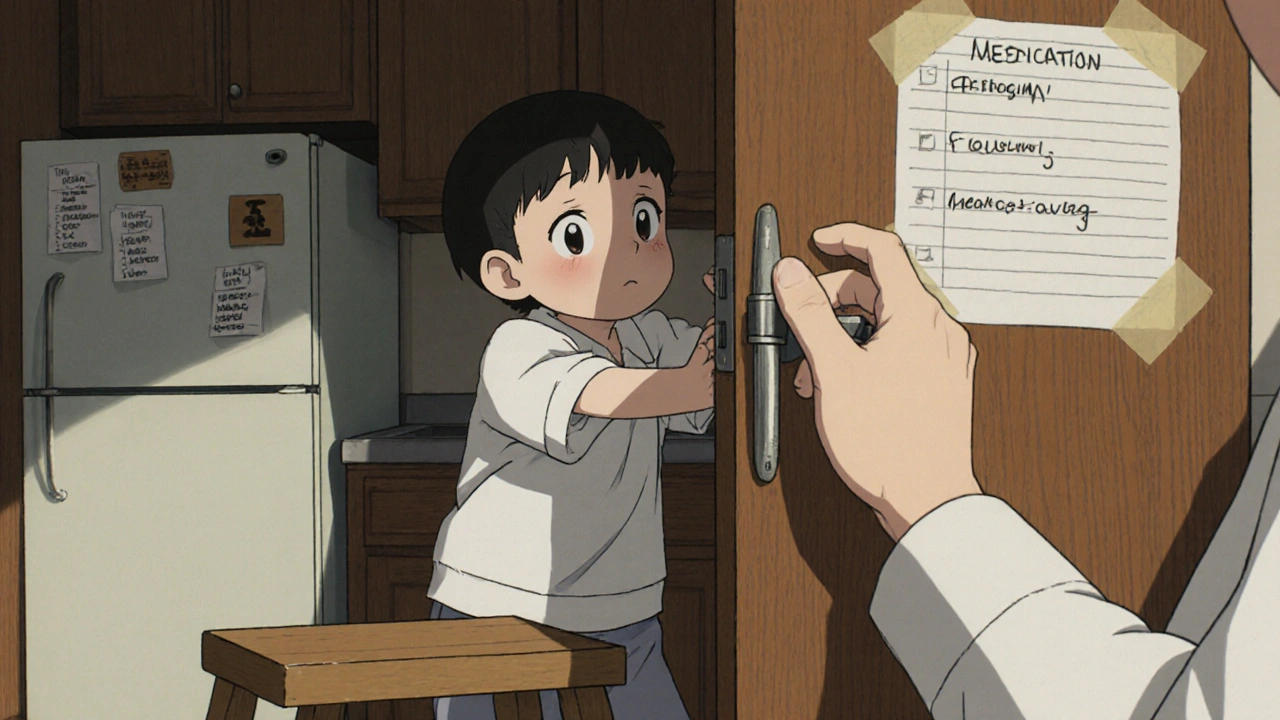
Learn how to create a safe medication routine at home to prevent accidental poisonings in kids and errors in seniors. Discover simple steps for storage, dosing, tracking, and emergency prep.
Home Medicine Storage: Safe Ways to Keep Pills, Liquids, and Supplements Ready and Effective
When you think about home medicine storage, the way you keep your pills, liquids, and supplements in your house. Also known as medication storage, it’s not just about finding a spot under the sink—it’s about keeping your drugs safe, strong, and out of reach of kids or pets. A misplaced pill bottle can lead to accidental overdose, a humid bathroom can ruin your insulin, and expired antibiotics might not work when you actually need them.
Many people store medicines in the bathroom cabinet because it’s convenient, but heat and moisture from showers and sinks break down active ingredients. The medicine cabinet, a common storage spot for household drugs. Also known as pharmacy cabinet, it’s often the worst place for most medications. Instead, a cool, dry drawer in your bedroom or a high shelf in a closet works better. For liquid medicines like insulin or liquid antibiotics, refrigeration is often required—but never freeze them unless the label says so. pediatric dosing, the accurate measurement of medicine for children. Also known as children's medication measurement, it’s only as safe as the container you use—so always keep syringes and caps locked away after use. Kids don’t know what’s medicine and what’s candy, and even a single extra dose of something like acetaminophen can cause liver damage.
Old or unused pills shouldn’t just sit in a drawer for years. The brown bag medication review, a process where patients bring all their meds to a pharmacist or doctor for a full check. Also known as medication reconciliation, it’s one of the best ways to find expired or duplicate drugs you’ve forgotten about. If you’re on multiple prescriptions, you likely have bottles that haven’t been opened in months. Check expiration dates—some drugs lose potency after a year, especially liquids and eye drops. Don’t flush pills down the toilet unless the label says to; instead, look for a drug take-back program at your local pharmacy. And if you’re using OTC switches, medications that moved from prescription to over-the-counter status. Also known as OTC drug transitions, they’re easier to get but just as risky if stored poorly. A bottle of ibuprofen left in a hot car can become useless—and dangerous if someone mistakes it for something else.
Proper home medicine storage isn’t just about safety—it’s about effectiveness. If your blood pressure pill or thyroid med isn’t stored right, it might not work when you need it most. That’s why pairing your meds with daily habits—like brushing your teeth or eating breakfast—works better than alarms. You’re more likely to remember to take them if they’re in the same spot every day, and you’ll notice if something’s missing or expired.
Below, you’ll find real-world advice from people who’ve dealt with medication mix-ups, expired drugs, and storage mistakes. From how to organize pills for seniors on multiple meds to why you should never keep your insulin in the glove compartment, these posts give you the facts—not the fluff. You’ll learn what to throw out, what to save, and how to make your medicine shelf work for you, not against you.