
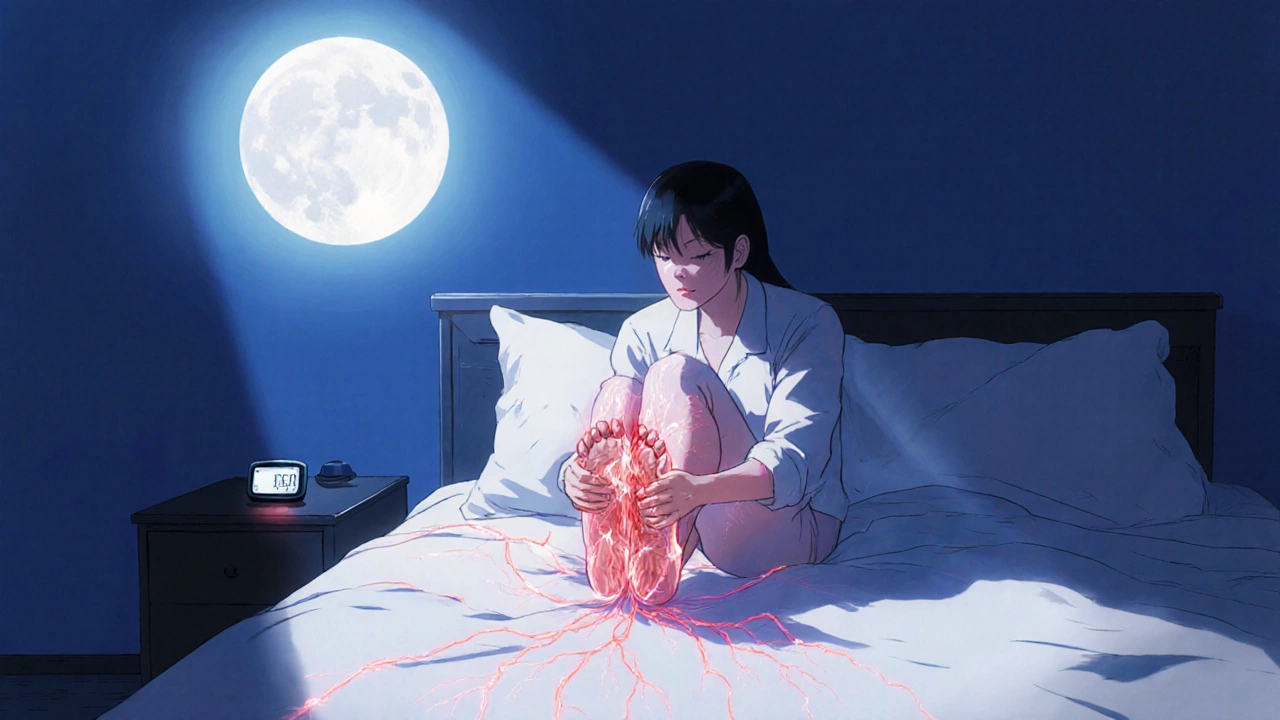
Learn how to manage diabetic neuropathy pain and protect your nerves with blood sugar control, proven medications, topical treatments, and lifestyle changes. Stop the damage before it's too late.
Diabetic Neuropathy: Causes, Symptoms, and How to Manage Nerve Damage from Diabetes
When you have diabetic neuropathy, nerve damage caused by long-term high blood sugar levels. Also known as peripheral neuropathy, it’s one of the most common and disabling complications of diabetes, affecting up to half of all people with the condition. It doesn’t happen overnight—it builds slowly as sugar in your blood damages the tiny blood vessels that feed your nerves, especially in your feet and hands. You might not notice it at first, but over time, you’ll feel tingling, burning, or numbness. Some people describe it like walking on pebbles or wearing socks that don’t fit. Others lose feeling entirely, which is dangerous because you won’t feel a cut, blister, or infection until it’s serious.
What makes diabetic neuropathy worse isn’t just high sugar—it’s how long it’s been high. People who struggle to keep their blood sugar control steady over years are far more likely to develop it. But it’s not just about insulin or pills. nerve damage also gets worse if you smoke, drink heavily, or don’t move much. The good news? Slowing or stopping progression is possible. Studies show that keeping HbA1c under 7% cuts the risk of nerve damage by up to 60%. That doesn’t mean perfection—it means consistency. Small, daily habits like walking after meals, checking your feet every morning, and avoiding tight shoes matter more than you think.
Managing diabetic neuropathy isn’t about one magic fix. It’s layered: controlling blood sugar, protecting your nerves, and preventing injuries you can’t feel. Some people use medications like gabapentin or duloxetine for pain, but those don’t fix the root problem. The real win comes from daily routines—like foot inspections, moisturizing to prevent cracks, and wearing proper footwear. Even simple things like not crossing your legs or avoiding barefoot walking can prevent ulcers that lead to amputations. And if you’ve already lost sensation? That’s when you need to be extra careful. A minor blister can turn into a life-threatening infection if ignored.
You’ll find real-world advice here—not theory, but what actually works for people living with this every day. From how to pick the right shoes to how to talk to your doctor about nerve pain, the posts below cover what matters most: stopping damage before it’s too late, managing symptoms without overmedicating, and protecting your body when your nerves can’t warn you anymore.