
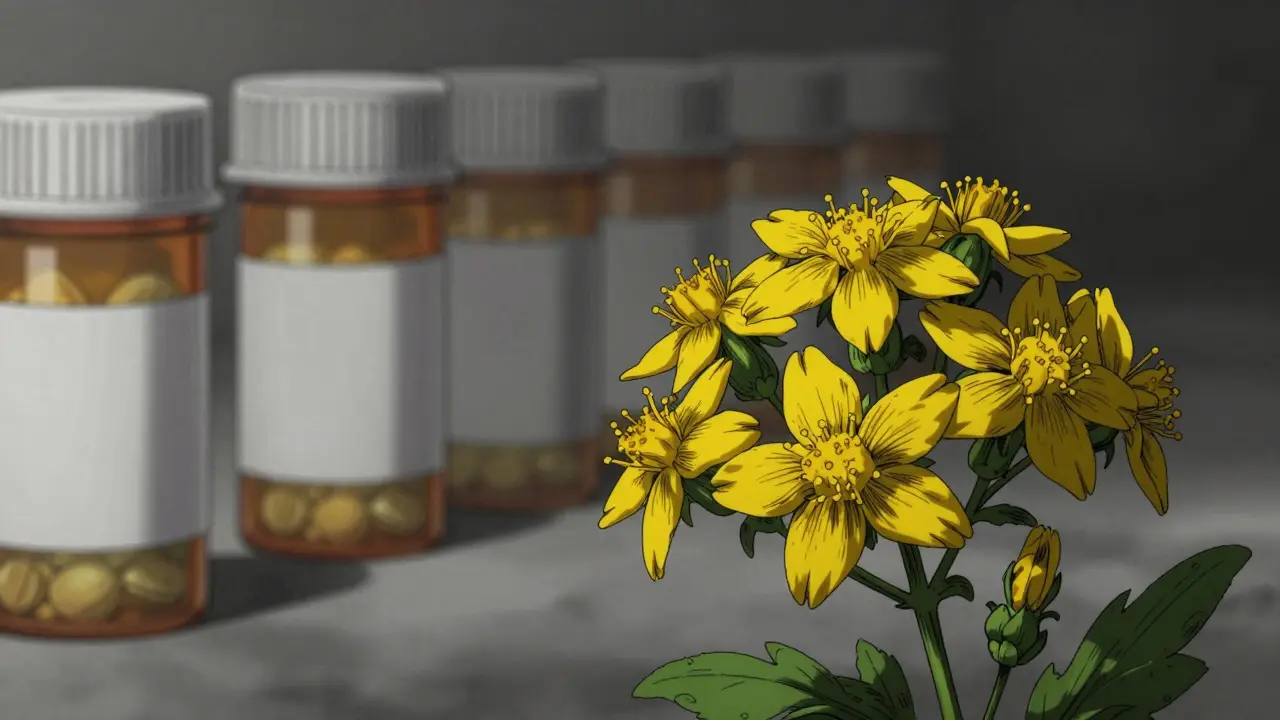
Imagine taking a "natural" herbal supplement to lift your mood, only to find out it's quietly disabling the medication that keeps your heart stable or prevents an organ transplant rejection. That is the reality for many people using St. John's Wort is a flowering plant (Hypericum perforatum) used as a herbal supplement primarily for treating mild to moderate depression. While it's often marketed as a gentle alternative to pharmaceuticals, this plant is actually a powerhouse of chemical compounds that can clash violently with prescription drugs.
Quick Takeaways on St. John's Wort Safety
- Metabolism Booster: It speeds up how your liver processes drugs, often making them less effective.
- High Risk: Critical interactions occur with blood thinners, birth control, and HIV medications.
- Serotonin Danger: Combining it with antidepressants can lead to a life-threatening condition called serotonin syndrome.
- Persistence: The effects on your enzymes can last up to two weeks after you stop taking the supplement.
How St. John's Wort Actually Changes Your Body
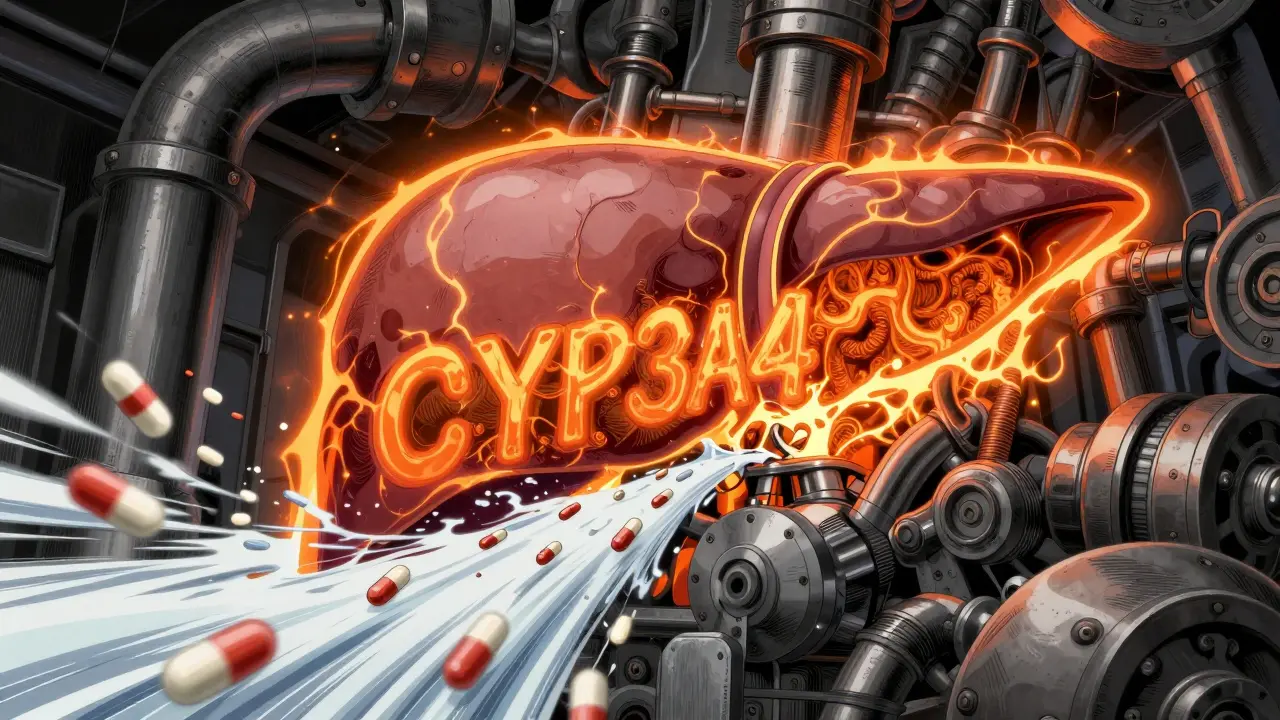
To understand why this plant is so risky, we have to look at the liver. Your body uses a family of enzymes called Cytochrome P450 is a group of enzymes responsible for the metabolism of most prescription drugs in the liver to break down medications. Specifically, St. John's Wort targets an enzyme called CYP3A4.
One of the plant's active parts, hyperforin is the primary constituent of St. John's Wort responsible for inducing liver enzymes, acts as an "inducer." Think of it like putting your liver's metabolic engine into overdrive. When CYP3A4 is overstimulated-sometimes by as much as 40%-it chews through your prescription meds much faster than intended. Instead of the drug staying in your system to do its job, it gets flushed out. This can drop your medication levels in the blood by 30% to 50%, effectively rendering your treatment useless.
It doesn't stop at the liver. It also affects P-glycoprotein is a transport system that pumps foreign substances out of cells and across biological membranes, which further accelerates the removal of drugs from your body.
The Danger Zones: High-Risk Medication Classes
Not every drug is affected, but the ones that are usually fall into life-critical categories. If you are taking any of the following, using St. John's Wort without a doctor's supervision is a gamble.
Heart and Blood Management
For those on warfarin is an anticoagulant medication used to prevent blood clots, the results can be scary. Because the plant speeds up the breakdown of the drug, your INR (the measure of how long it takes your blood to clot) can drop significantly. In some documented cases, an INR has plummeted from a safe 2.5 to a dangerous 1.3 in just one week, vastly increasing the risk of a stroke or clot.
Birth Control and Hormones
Many people are surprised to learn that herbal supplements can cause contraceptive failure. St. John's Wort reduces the concentration of ethinyl estradiol in the blood. This leads to breakthrough bleeding and, in several recorded instances, unintended pregnancies despite the user taking their pill perfectly every day.
Organ Transplants and HIV Treatment
This is perhaps the most critical area. cyclosporine is an immunosuppressant drug used to prevent organ transplant rejection can see a 30-50% drop in blood levels. This can leave a patient hours away from total organ rejection. Similarly, protease inhibitors used in HIV therapy can be reduced by half, allowing the virus to potentially develop resistance or rebound.
| Medication Class | Example Drugs | Typical Effect | Risk Outcome |
|---|---|---|---|
| Anticoagulants | Warfarin | Lower plasma levels | Blood clots/Stroke |
| Immunosuppressants | Cyclosporine | 30-50% reduction | Organ rejection |
| Oral Contraceptives | Combined Pill | 25-35% reduction | Unintended pregnancy |
| Anticonvulsants | Phenytoin | 30-40% reduction | Seizure breakthrough |
| Statins | Atorvastatin | 30-40% reduction | High cholesterol |
The "Serotonin Storm": A Different Kind of Risk
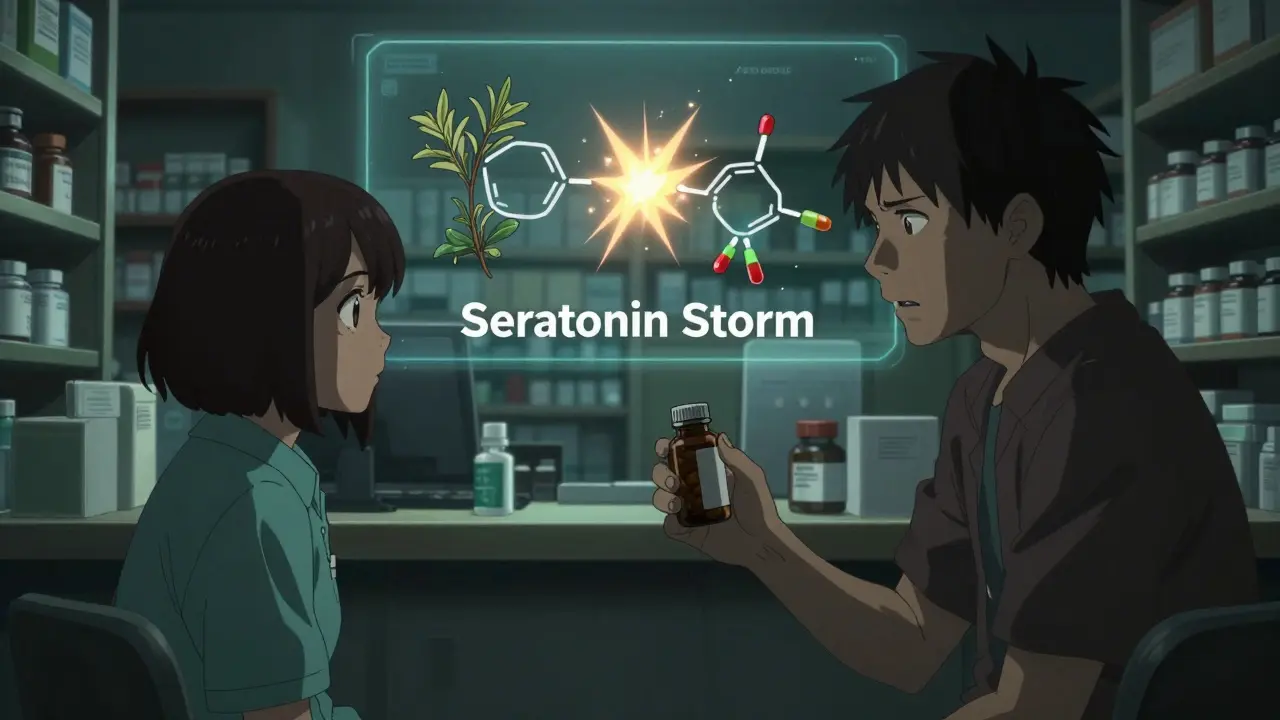
While the liver enzymes are about *removing* drugs, antidepressants create a different problem: *accumulation*. St. John's Wort works by increasing serotonin in the brain. If you combine it with Selective Serotonin Reuptake Inhibitors (SSRIs) is a class of antidepressants that increase serotonin levels in the brain by blocking its reabsorption like sertraline or fluoxetine, you can end up with too much serotonin.
This leads to serotonin syndrome, a potentially fatal condition. Symptoms usually hit within 3 to 7 days and include agitation, high fever, rapid heart rate, and muscle rigidity. Because both the herbal supplement and the prescription drug are pushing serotonin levels up, the brain simply becomes overwhelmed.
Why "Natural" Doesn't Mean Safe
There is a common misconception that if something comes from a plant, it can't hurt you. In reality, the potency of hyperforin makes St. John's Wort one of the most chemically active supplements on the market. Many patients don't even tell their doctors they are taking it because they don't view it as a "medication." This is a dangerous gap in communication.
Even stopping the supplement doesn't provide an immediate fix. Because the liver enzymes were "trained" to be hyperactive, it takes about two weeks for your system to return to its normal baseline. If you stop St. John's Wort abruptly while staying on a prescription drug, the drug levels in your blood might suddenly spike because the "metabolic engine" has slowed down, potentially leading to toxicity.
How to Manage Your Medications Safely
If you are considering a natural approach to mood support, you need a concrete strategy to avoid these pitfalls. Don't just check a label; have a real conversation with a healthcare provider.
First, be specific. Instead of saying "I take some vitamins," tell your pharmacist, "I am taking 900mg of St. John's Wort daily." This allows them to check for the 50+ documented major interactions associated with this plant. Second, if you must switch from the supplement to a prescription drug, ask about a "washout period." A two-week gap is often recommended to let your liver enzymes reset.
For those on critical meds like warfarin or cyclosporine, frequent monitoring is non-negotiable. You may need INR checks every 3 to 5 days when starting or stopping the supplement to ensure your blood levels remain in the therapeutic range.
Can I take St. John's Wort with birth control?
It is highly discouraged. St. John's Wort can reduce the concentration of ethinyl estradiol by 25-35%, which significantly increases the risk of breakthrough bleeding and unintended pregnancy. If you are using oral contraceptives, it is best to avoid this supplement or use a non-hormonal backup method.
What is Serotonin Syndrome?
Serotonin syndrome occurs when too much serotonin builds up in your body, often caused by combining St. John's Wort with SSRIs or other antidepressants. Symptoms include confusion, rapid heart rate, shivering, sweating, and muscle stiffness. It is a medical emergency that requires immediate treatment.
How long does it take for the effects of St. John's Wort to leave my system?
While the supplement itself may leave your blood quickly, the induction of the CYP3A4 liver enzymes can persist for up to two weeks after your last dose. This means medication interactions can still occur or change even after you've stopped taking the herb.
Are all statins affected by St. John's Wort?
No. Statins like atorvastatin and simvastatin show a 30-40% reduction in plasma concentrations. However, others like pravastatin and fluvastatin do not show significant interactions because they use different metabolic pathways in the body.
Is St. John's Wort effective for depression?
Yes, it is often effective for mild to moderate depression and may have fewer side effects than some prescription antidepressants. However, because of its massive interaction profile, doctors usually only recommend it for patients who are not taking any other prescription medications.