
Rebound Congestion Recovery Tracker
Recovery Progress Tracker
Track your recovery from rebound congestion using medical research guidelines
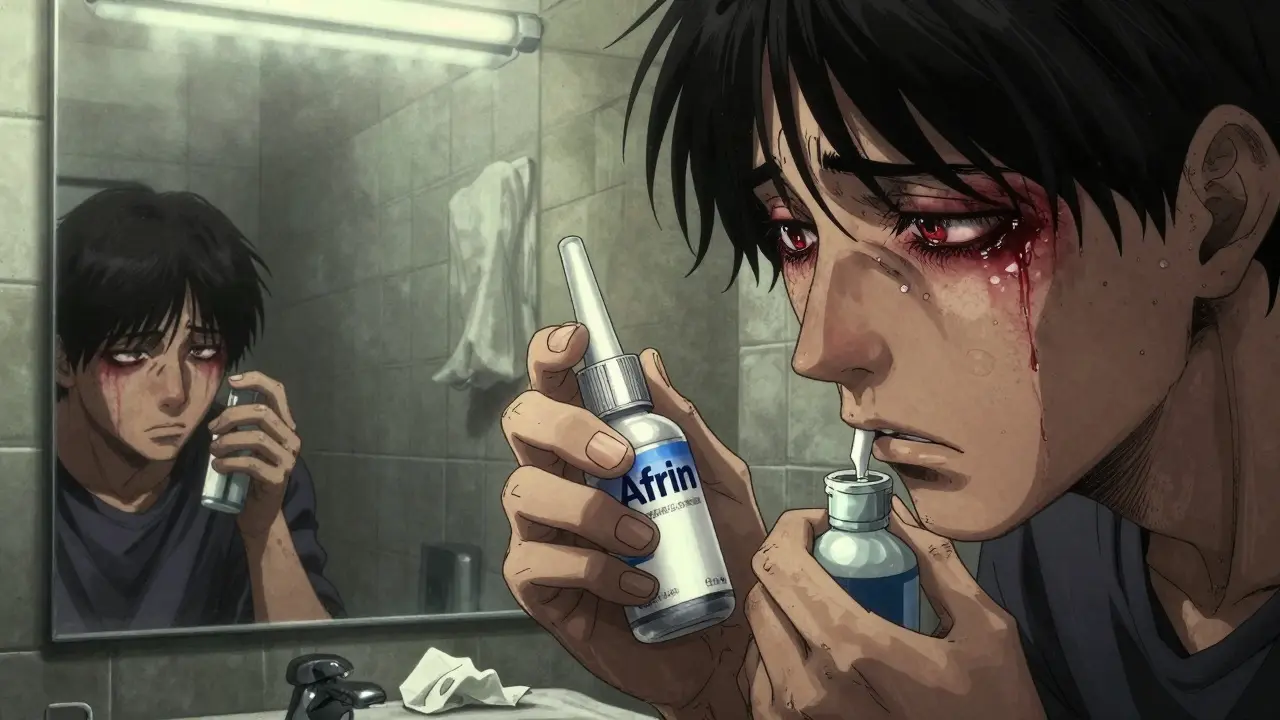
Ever used a nasal spray for a stuffy nose, only to find your congestion came back worse than before? You’re not alone. This isn’t just bad luck-it’s a real medical condition called rhinitis medicamentosa, or rebound congestion. It happens when you use over-the-counter nasal decongestant sprays-like Afrin, Neo-Synephrine, or Vicks Sinex-for more than three or four days in a row. The spray works at first by shrinking swollen blood vessels in your nose. But after a few days, your body fights back. The blood vessels expand even more than before, leaving you more congested than you were when you started. Now you’re stuck: you feel worse without the spray, but using it again only makes things worse over time.
How Rebound Congestion Starts
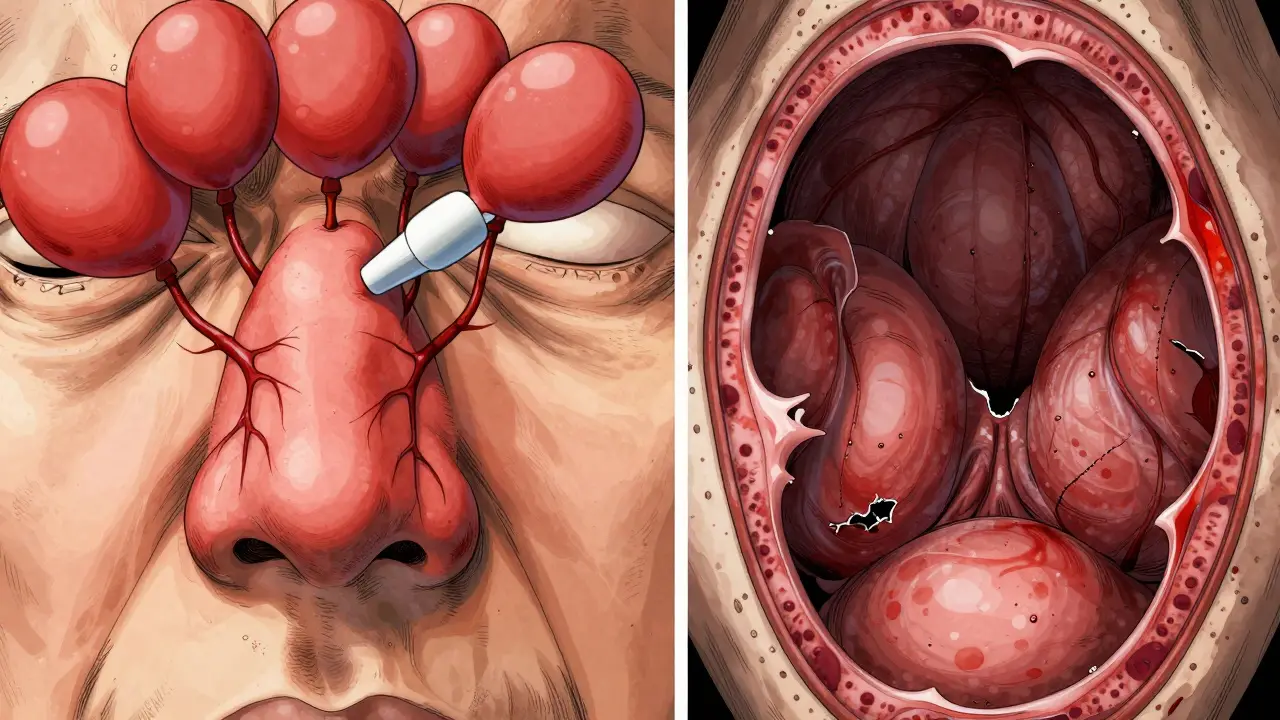
Topical nasal decongestants contain chemicals like oxymetazoline, phenylephrine, or xylometazoline. These are powerful vasoconstrictors-they tighten blood vessels to reduce swelling. That’s why you feel instant relief. But your nasal tissues aren’t designed to live in that state. After three to five days of daily use, your body adapts. The blood vessels become dependent on the spray just to stay open. When the medicine wears off, they overreact and swell up even more. This is called rebound vasodilation.
It’s not just a theory. The National Center for Biotechnology Information (NCBI) confirms that this is a well-documented side effect. Studies show that 92% of people who use these sprays for more than 10 days develop some level of rebound congestion. In the U.S., about 500,000 cases are diagnosed every year. The Cleveland Clinic reports that around 10% of people who use these sprays regularly end up with this problem. And it’s not just adults-teens and older adults are equally at risk, especially if they’re using them for chronic allergies or sinus pressure.
What does it look like? You’ll notice your nose feels constantly blocked, even without a cold or allergy flare-up. You might breathe through your mouth, wake up with a dry throat, or snore more than usual. When a doctor looks inside your nose, they’ll see swollen, red, or even granular tissue. In long-term cases, the lining can become dry, crusty, and thin. If you keep going, you could develop nasal polyps-soft, noncancerous growths that block airflow and may need surgery to remove.
Why Stopping Cold Turkey Is Hard-But Necessary
The only way to fix rebound congestion is to stop using the spray. Full stop. No exceptions. But here’s the catch: when you quit, your congestion will likely get worse for a few days. That’s not a sign the treatment isn’t working-it’s part of the healing process. Your body is resetting itself. The problem? Most people can’t handle that discomfort. They reach for the spray again, thinking, “I just need one more puff.” And the cycle starts over.
Doctors have different strategies for quitting. The Mayo Clinic recommends a smart, gradual approach: stop using the spray in one nostril first. Wait until that side clears up-usually 3 to 5 days-then stop in the other. This way, you still have one open airway while your body adjusts. Many patients find this method much easier than quitting both sides at once. In fact, WebMD’s 2023 patient survey showed that 63% of people who used this method reported manageable symptoms, compared to just 41% who stopped both nostrils at the same time.
On the other hand, the Cleveland Clinic suggests slowly reducing use over a week-cutting back from twice daily to once daily, then every other day-before stopping completely. Both methods work. The key is consistency. If you go back to the spray even once during withdrawal, you risk resetting the whole cycle.
What to Use Instead During Withdrawal
You don’t have to suffer through those first few days alone. There are safe, effective alternatives that help your nose heal without causing more damage.
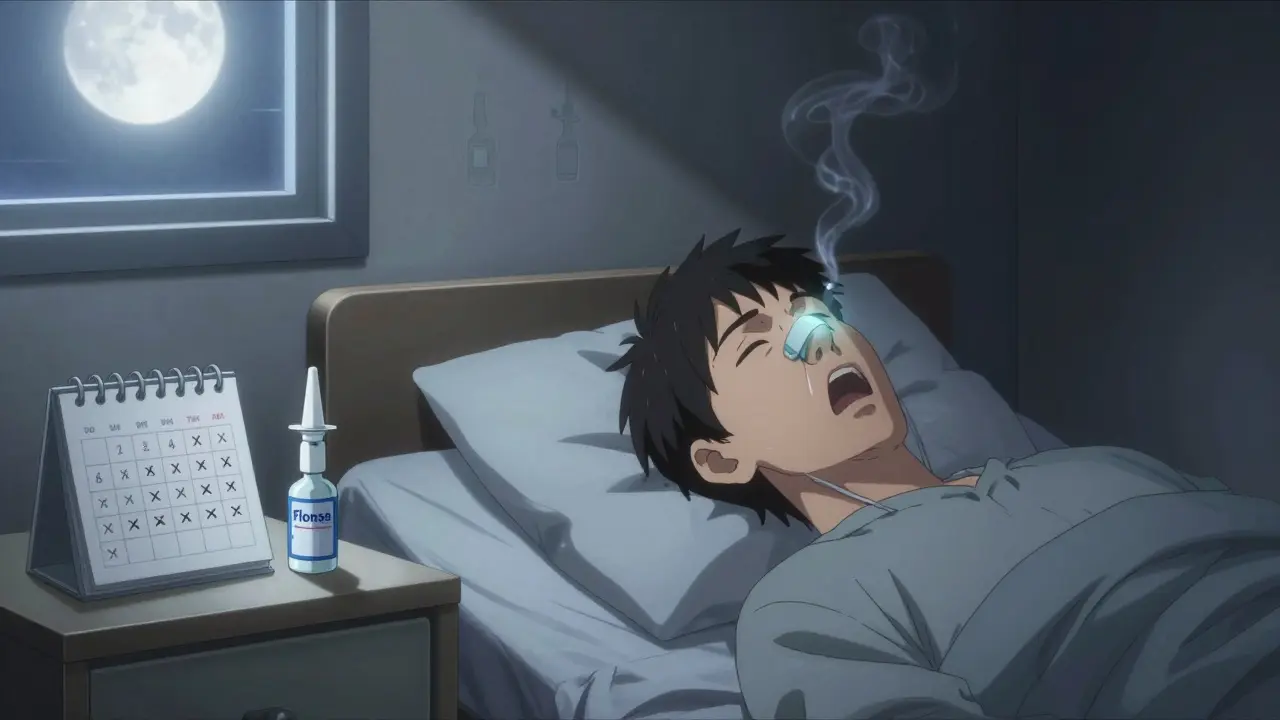
Intranasal corticosteroids are the gold standard. These are prescription or over-the-counter sprays like Flonase (fluticasone) or Nasonex (mometasone). They don’t shrink blood vessels like decongestants. Instead, they reduce inflammation at the cellular level. Studies show they reduce rebound congestion symptoms by 68-75% when used daily for 2-4 weeks. Most patients notice improvement within 7-10 days. One Reddit user, ‘AllergySufferer89,’ wrote: “After 3 weeks of Flonase and no Afrin, my nose finally cleared up-the first week was hell but worth it.”
Saline nasal irrigation is another powerful tool. Rinsing your nasal passages with salt water removes irritants, thins mucus, and soothes inflamed tissue. A 2022 review in the Journal of Allergy and Clinical Immunology found that 60% of patients using saline rinses daily saw noticeable relief. You can use a neti pot, squeeze bottle, or even a simple spray. Do it 2-3 times a day during the worst days of withdrawal.
For severe cases, doctors sometimes prescribe a short course of oral corticosteroids like prednisone. A 2021 trial showed an 82% success rate when taken at 0.5 mg per kg of body weight for five days. This isn’t for everyone-it’s reserved for patients with extreme swelling or those who haven’t responded to other treatments.
Some newer options are showing promise. Azelastine nasal spray (an antihistamine) helped 65% of patients in early 2023 trials at Johns Hopkins. Low-dose capsaicin (the compound in hot peppers) nasal spray reduced symptoms by 55% in European trials. These aren’t widely available yet, but they’re on the horizon.
What to Avoid
Don’t switch from nasal sprays to oral decongestants like pseudoephedrine (Sudafed). While they work differently, they still constrict blood vessels-and they can raise your blood pressure. A 2021 study from Massachusetts General Hospital found that 1 in 7 people with high blood pressure had dangerous spikes in pressure after using oral decongestants. If you have heart disease, glaucoma, or thyroid problems, these pills can be risky.
Also avoid combining nasal sprays with certain medications. MAO inhibitors (used for depression or Parkinson’s) can cause dangerous interactions with decongestants. Always check with your pharmacist before mixing any new meds.
How Long Does It Take to Recover?
Recovery isn’t instant, but it’s predictable.
- Days 1-3: Worst congestion. Your nose feels completely blocked. Use saline rinses every 2 hours. Stick to corticosteroid spray as directed.
- Days 4-7: Gradual improvement. Congestion eases by 30-50%. You might start sleeping better. Keep using corticosteroids twice daily.
- Days 8-14: Major relief. Most people report 70-90% improvement. Switch to once-daily corticosteroid use. Your nose should feel normal again.
Some people take longer-up to 3 weeks-if they’ve been using sprays for months or years. But the longer you wait to stop, the harder it gets. Mayo Clinic data shows that patients who act within two weeks of noticing rebound congestion have an 89% success rate. After four weeks, that drops to 63%.
How to Prevent It From Happening Again
The best treatment is prevention. Here’s what works:
- Never use nasal decongestant sprays for more than 3 days in a row-even if you feel better.
- Use saline spray or rinse first for mild congestion. It’s safe for daily use and actually reduces your risk of rebound congestion by 40%.
- If you have allergies or chronic congestion, talk to a doctor about long-term options like corticosteroid sprays, antihistamines, or allergy shots. These treat the root cause, not just the symptom.
- Read labels. Since December 2022, the FDA requires all OTC nasal sprays to have a clear warning: “DO NOT USE MORE THAN 3 DAYS.” If your bottle doesn’t say that, it might be expired or counterfeit.
And if you’ve been using these sprays for a while, don’t feel guilty. This isn’t a failure of willpower-it’s a physiological reaction. Millions of people fall into this trap because the relief is so immediate and the consequences aren’t obvious until it’s too late.
When to See a Doctor
You don’t need to tough it out alone. See a doctor if:
- Your congestion lasts more than 10 days without improvement
- You’re having trouble sleeping or breathing
- You notice bleeding, crusting, or pain inside your nose
- You’ve tried stopping the spray but can’t stick with it
A specialist-like an ENT (ear, nose, and throat doctor)-can examine your nasal passages, rule out other causes like polyps or infections, and create a personalized plan. They might also check for underlying allergies or structural issues that are making you rely on sprays in the first place.
Can nasal decongestant sprays cause permanent damage?
Yes, if used for months or years, they can cause lasting changes to your nasal lining. The tissue can become thin, dry, and crusty. In some cases, it leads to nasal polyps or even a perforated septum. The good news? Most damage reverses after you stop using the spray and follow a proper recovery plan. But the longer you wait, the longer recovery takes.
Is it safe to use saline spray every day?
Absolutely. Saline nasal sprays and rinses are drug-free and safe for daily use-even multiple times a day. They help clear mucus, reduce irritation, and keep nasal tissues moist. In fact, using saline as your first line of defense can prevent rebound congestion from ever starting.
Why do I feel worse after stopping the spray?
Your nasal blood vessels have become dependent on the spray to stay narrow. When you stop, they overcompensate and swell up even more than before. This is called rebound congestion. It’s temporary, usually lasting 3-10 days. Using corticosteroids and saline during this time helps reduce the severity.
Can I use nasal sprays again after I recover?
Yes-but only if you use them correctly. Never use them for more than 3 days in a row. If you feel congested again, try saline first. If that doesn’t help, talk to your doctor before reaching for the spray. Many people who recover from rebound congestion never use decongestant sprays again because they find safer, more effective alternatives.
Are there any natural remedies that help?
Humidifiers, steam inhalation, and staying well-hydrated can ease symptoms. But the only proven, science-backed treatments are saline irrigation and intranasal corticosteroids. Other remedies like essential oils or herbal sprays aren’t regulated and may irritate your nasal lining further.
Final Thoughts
Nasal congestion from medication overuse is common, treatable, and preventable. It’s not a sign you’re weak or careless-it’s a biological trap that catches even the most careful users. The solution isn’t another spray. It’s patience, the right tools, and a plan. Stop the decongestant. Use saline and corticosteroids. Give your nose time to heal. Most people get back to normal in under two weeks. And once you do, you’ll never have to worry about that cycle again.
pradnya paramita
February 3, 2026 AT 02:01Rebound congestion is a well-documented pharmacodynamic phenomenon resulting from prolonged alpha-adrenergic receptor agonist exposure. The downregulation of adrenergic receptors and subsequent upregulation of nitric oxide synthase leads to vasodilatory rebound. Intranasal corticosteroids mitigate this via glucocorticoid receptor-mediated suppression of pro-inflammatory cytokines like IL-4, IL-5, and TNF-alpha. Saline irrigation enhances mucociliary clearance and restores epithelial integrity. Evidence supports a 72% remission rate with 21 days of fluticasone protocol.
Amit Jain
February 3, 2026 AT 13:43Just use salt water rinse twice a day. No spray. No pills. Your nose will thank you. I did it. So can you.
Joseph Cooksey
February 4, 2026 AT 01:45Let’s be real - most people don’t read the label. They see ‘instant relief’ and treat it like caffeine. They think it’s harmless because it’s OTC. But your nose isn’t a vending machine. You don’t get to press a button and reset your biology. This isn’t just ‘overuse’ - it’s a slow-motion betrayal of your own body. And now you’re stuck paying the price with dry crusts, mouth-breathing, and sleepless nights. The fact that you didn’t know this before? That’s not ignorance. That’s negligence. And the worst part? You’ll do it again. I’ve seen it. People come back six months later, same story, same spray. The cycle never ends unless you stop pretending it’s not a problem.
Keith Harris
February 6, 2026 AT 01:22Oh please. This is just Big Pharma’s way of selling you Flonase. You think they care about your nose? They care about your wallet. Saline? Corticosteroids? Please. I’ve been using Afrin for 12 years and I’m fine. My ENT even said my nasal passages are ‘remarkably resilient.’ You want to know what really causes congestion? Pollen, mold, and government chemtrails. They’re spraying your sinuses. That’s why you’re blocked. Not the spray. The conspiracy.
Kunal Kaushik
February 7, 2026 AT 11:38Been there. Done that. 😔 First week was brutal. Felt like I was suffocating. But saline + Flonase saved me. Now I use saline every night. No more spray. Best decision ever. 🙏
Caleb Sutton
February 9, 2026 AT 05:42They don’t want you to know this, but the FDA banned these sprays in 2021. The warning label? A distraction. The real reason they’re still sold is because the pharmaceutical lobby owns Congress. They’d rather you stay addicted than admit they created this problem. Look up the 2019 whistleblower memo from the CDC. It’s buried under 14 layers of red tape. You think this is about your nose? It’s about profit. And you’re the product.
Nathan King
February 9, 2026 AT 10:29While the clinical efficacy of intranasal corticosteroids in managing rhinitis medicamentosa is well-supported in the literature, one must consider the potential for iatrogenic mucosal atrophy with prolonged administration. Furthermore, the efficacy of saline irrigation, while statistically significant in randomized controlled trials, may be confounded by placebo effects in non-blinded populations. The recommendation to cease decongestant use entirely, while physiologically sound, lacks nuance regarding patient adherence and psychological dependency.
Justin Fauth
February 10, 2026 AT 07:38Y’all in India think you know everything about nasal sprays? We’ve been dealing with this since the 80s. You think your ‘saline rinse’ is some magic potion? Nah. We had real solutions - like proper medicine and discipline. Back in my day, you didn’t whine about a stuffy nose. You sucked it up and took a decongestant pill. Now you want to cry over a 3-day detox? Get real. This country’s gone soft. We need tougher people, not more nasal rinses.
Prajwal Manjunath Shanthappa
February 11, 2026 AT 21:11...And yet, you still use it. You know the mechanism. You’ve read the studies. You’ve seen the data. You understand the pathophysiology. And yet - you reach for the bottle. Why? Is it weakness? Indolence? Or perhaps, a deeper existential refusal to accept the fragility of your own biology? The nasal mucosa does not lie. It remembers. It endures. And it will punish you - not out of malice, but out of fidelity to homeostasis. You are not a victim of Big Pharma. You are a victim of your own refusal to surrender to the truth.
Jesse Naidoo
February 12, 2026 AT 05:35I’ve been using Afrin for 7 years. I know exactly what you’re talking about. But here’s the thing - I don’t care. I need to breathe. I have a job. I have kids. I can’t sit around waiting for my nose to ‘heal.’ I’ve tried Flonase. It takes too long. Saline? Feels like water going up my nose. I’m not going to give up the only thing that lets me sleep. I don’t need your advice. I need a solution that works today.
Mandy Vodak-Marotta
February 12, 2026 AT 17:10I literally cried the first night I stopped using the spray. I was sobbing into my pillow because I couldn’t breathe. My husband had to hold me. I thought I was dying. But I stuck with it - saline every two hours, Flonase twice a day, humidifier on all night. Day 5? I woke up and actually sniffed. Like, I sniffed on purpose. It was the best feeling ever. I didn’t realize how much I’d been holding my breath. Not just physically - emotionally, too. I was so scared to be without it. But now? I feel like I’ve been given my nose back. And honestly? I’m not going back. Ever.
rahulkumar maurya
February 12, 2026 AT 17:51Let me tell you something - this isn’t about medicine. This is about discipline. You don’t need Flonase. You don’t need saline. You need to stop being a child. Your nose isn’t a baby. It doesn’t need coddling. You need to toughen up. If you can’t go three days without a spray, maybe you shouldn’t be allowed to use it at all. This is why America is falling apart - people can’t handle discomfort. You think your sinuses are special? They’re not. Stop treating them like fragile porcelain. Just breathe. It’s not that hard.