
Over 250 million people worldwide live with knee osteoarthritis pain, a condition where joint cartilage breaks down, causing stiffness, swelling, and discomfort during everyday activities. The good news? Non-surgical treatments like bracing, injections, and exercise can significantly reduce pain and improve mobility without surgery. Let’s break down how each option works, what research shows, and how to choose the right approach for your situation.
Knee Bracing: Targeted Support
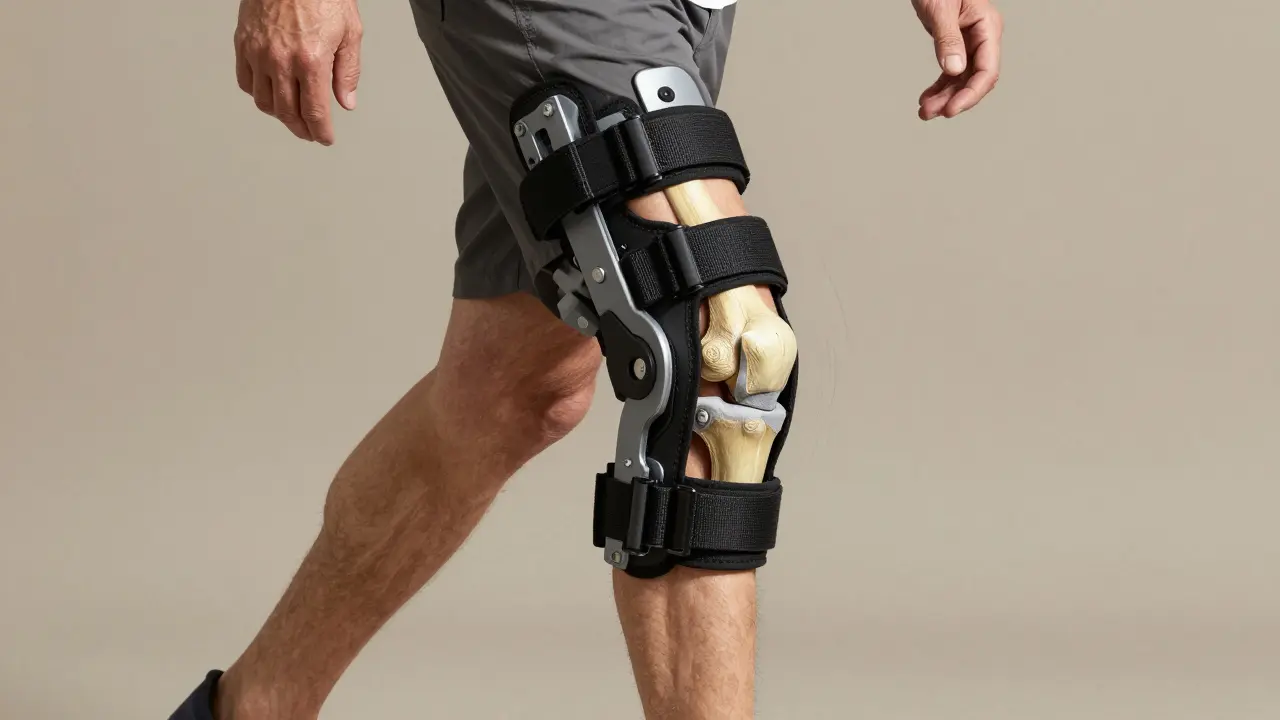
Knee bracing is a non-invasive treatment that uses custom-fitted devices to shift weight away from damaged areas of the knee joint, reducing pain and improving function.
Unloader braces, designed for medial compartment knee OA (the most common type), work by redirecting pressure off the worn-out side of the knee. A 2023 meta-analysis of 139 clinical trials found these braces reduce WOMAC pain scores by 30-45% when properly fitted. They typically cost $300-$1,200 and require fitting by a certified orthotist. Many users report immediate relief during walking or climbing stairs, though some mention discomfort from prolonged wear or skin irritation.
Insurance coverage varies-Medicare covers 80% of FDA-approved braces but requires prior authorization. A 2022 study in the Journal of Orthopaedic & Sports Physical Therapy noted most patients adjust within 2-3 weeks. For those with knee instability or early-stage OA, braces often outperform other non-surgical options for pain and function scores.
Joint Injections: Quick Relief Options
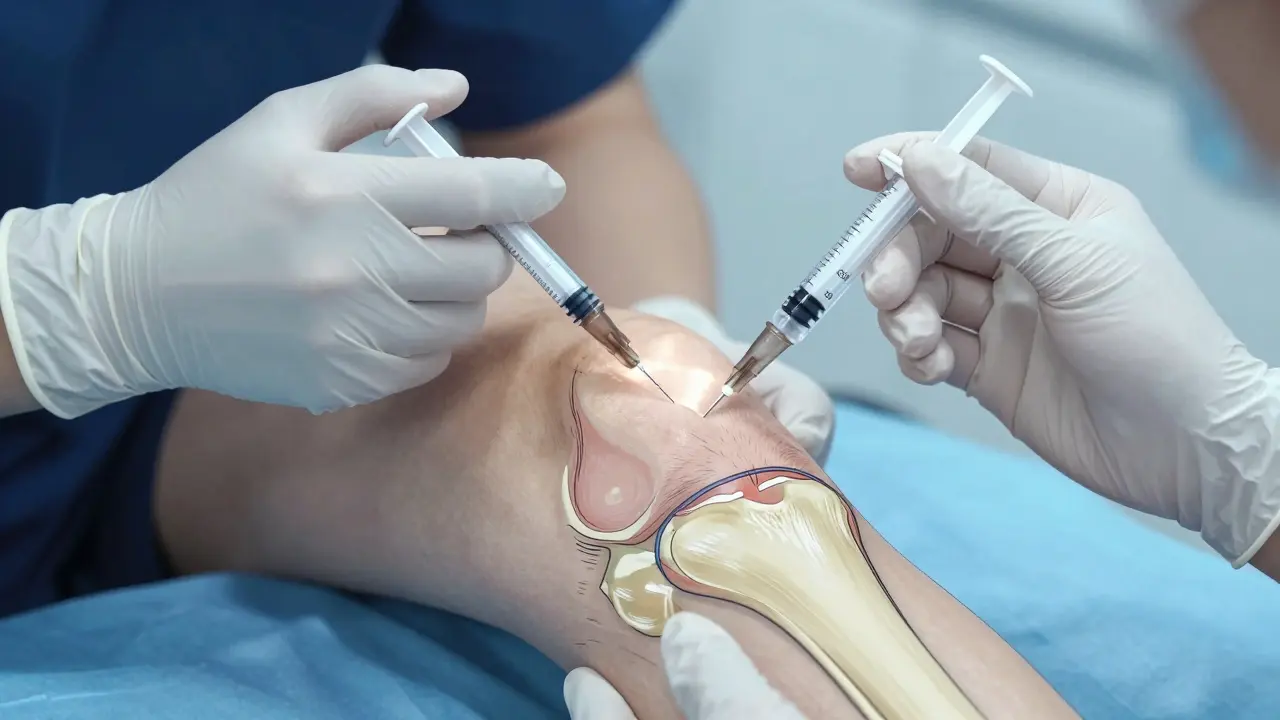
Joint injections deliver medication directly into the knee joint to reduce inflammation and lubricate the joint, providing rapid symptom relief.
Corticosteroid injections (costing $50-$150 per shot) reduce inflammation quickly, typically offering 4-12 weeks of pain relief. However, repeated use may accelerate cartilage damage, so doctors limit them to 3-4 times yearly. Hyaluronic acid injections ($500-$1,200 per series) act as joint lubricants, with FDA-approved Gel-Syn 3 now providing up to 22 weeks of relief. Platelet-rich plasma (PRP) injections ($500-$2,000) use your own blood components to promote healing, though evidence is still emerging.
A 2023 systematic review in PMC compared five studies with 552 participants: hyaluronic acid reduced VAS pain scores by 35.2mm at 4 weeks, while corticosteroids worked faster but wore off quicker. Patient reviews on Healthgrades show 65% satisfaction with corticosteroids but 32% report "rebound pain" after initial relief. Always ensure injections are administered by a specialist to avoid rare risks like septic arthritis (0.1-0.7% chance per series).
Exercise Therapy: Building Strength and Mobility
Exercise therapy uses targeted movements to strengthen muscles around the knee, improve flexibility, and reduce joint stress, offering long-term pain relief.
Water-based exercises (like swimming or aqua aerobics) reduce joint load while improving mobility. Studies show they cut pain by 28.7% on the VAS scale versus 22.3% for land-based exercises. Both require 2-3 sessions weekly for 45-60 minutes, with noticeable results in 6-8 weeks. The Arthritis Foundation’s exercise program-featuring seated leg lifts, hamstring stretches, and gentle squats-receives 4.7/5 stars for clarity in patient surveys.
Long-term adherence is key. While 67% of knee OA patients try exercise programs initially (per 2022 National Health Interview Survey), only 28% maintain them beyond six months. Physical therapists recommend starting with supervised sessions for 4-6 weeks to master proper form. Patients often praise exercise for improving strength in other joints too-63% of positive reviews mention "reduced pain in hips and back." The OARSI guidelines emphasize consistency: daily stretching and strengthening routines prevent further joint damage.

Comparing Your Options: What Works Best?
| Intervention | Pain Reduction | Duration | Cost | Risks | Best For |
|---|---|---|---|---|---|
| Unloader Braces | 30-45% WOMAC pain score reduction | Long-term with consistent use | $300-$1,200 | Skin irritation, fitting issues | Medial compartment OA, active individuals |
| Corticosteroid Injections | 24-30mm VAS reduction | 4-12 weeks | $50-$150 per injection | Cartilage damage with repeated use | Short-term flare-ups, severe pain |
| Hyaluronic Acid Injections | 35.2mm VAS reduction at 4 weeks | Up to 22 weeks | $500-$1,200 per series | Temporary swelling | Moderate OA, patients avoiding surgery |
| Water-Based Exercise | 28.7% VAS pain reduction | 6+ months with consistency | $0-$50 monthly pool fee | Low risk | Weight management, early-stage OA |
| Land-Based Exercise | 22.3% VAS pain reduction | 6+ months with consistency | $0-$20 monthly | Low risk | General strengthening, joint stability |
Putting It All Together: A Practical Approach
Experts agree knee osteoarthritis pain management works best when combining these treatments. Dr. Tuhina Neogi, co-author of the 2019 ACR/AF guidelines, states: "Combination therapy-exercise plus bracing plus periodic injections for flare-ups-represents the most comprehensive approach." For example, wear an unloader brace during daily activities, do water-based exercises three times weekly, and get corticosteroid injections only during severe pain episodes.
Insurance considerations matter. Medicare covers 80% of braces and injections but requires prior authorization. Many health systems now offer integrated programs-63% of major hospitals have combined bracing, injection, and physical therapy services (per 2023 MGMA survey). Start with low-risk options: physical therapy for exercise guidance, then add bracing if needed. Avoid over-reliance on injections; a 2022 Journal of Bone and Joint Surgery commentary warned that "overreliance on hyaluronic acid without exercise may accelerate functional decline."
Real-world data shows success. On PatientsLikeMe, 73% of users stick with exercise programs for 3 months, but adherence drops to 48% at 12 months. Pairing bracing (89% adherence) with exercise helps maintain consistency. For those with knee instability or medial compartment OA, unloader braces combined with daily stretching provide the best long-term outcomes according to AAOS guidelines.
How long do knee injections last?
Corticosteroid injections typically provide 4-12 weeks of relief, while hyaluronic acid injections (like Gel-Syn 3) can last up to 22 weeks based on FDA trials. PRP effects vary but often last 6-12 months. Always discuss timing with your doctor-repeated corticosteroid use may harm cartilage over time.
Are knee braces effective for all types of knee OA?
No. Unloader braces specifically target medial compartment OA (85% of cases), where the inner knee wears down. For lateral compartment OA or widespread damage, braces may not help. A 2023 gait analysis study showed unloader braces reduce knee adduction moment by 20-40% in medial OA but have minimal effect on lateral cases. Always get fitted by a specialist to ensure the right type for your condition.
Can exercise worsen knee OA pain?
Only if done incorrectly. High-impact exercises like running or jumping can aggravate symptoms. However, studies show water-based exercises reduce pain by 28.7% and land-based exercises by 22.3% when performed properly. Physical therapists recommend starting with low-intensity movements like seated leg extensions or swimming. Always stop if pain increases during exercise-this is a sign to adjust your routine.
What’s the difference between PRP and hyaluronic acid injections?
PRP (platelet-rich plasma) uses concentrated platelets from your own blood to stimulate healing, while hyaluronic acid acts as a lubricant to improve joint movement. PRP costs $500-$2,000 per injection and may take weeks to show effects, but studies suggest longer-lasting relief for moderate OA. Hyaluronic acid ($500-$1,200 per series) works faster but typically provides shorter-term relief. The AAOS currently gives "limited" evidence ratings to PRP, while hyaluronic acid is recommended for specific cases.
How do I know if I need surgery?
Surgery (like knee replacement) is usually considered only after non-surgical options fail. The American Academy of Orthopaedic Surgeons (AAOS) recommends exhausting bracing, injections, and exercise for at least 6 months before surgery. Signs you might need surgery include severe pain at rest, inability to walk without assistance, or X-rays showing bone-on-bone contact. Always get a second opinion-surgery is irreversible, while non-surgical treatments can be adjusted as needed.
Matthew Morales
February 6, 2026 AT 02:36Hey everyone! This article is super helpfull. I've been dealing with knee OA for years and bracing really helped me. Just a heads up: the brace needs to be fitted properly, otherwise it's uncomfortable. 😊 Also, the exercise part-water-based is way better for me. Try it out!
Dr. Sara Harowitz
February 6, 2026 AT 15:30This article is dangerously inaccurate! As a board-certified orthopedic specialist, I must point out that unloader braces are only effective for medial compartment OA-85% of cases-but this piece fails to mention that lateral OA requires different treatment. Also, corticosteroid injections should NEVER exceed two per year due to cartilage damage risks! This is amateurish misinformation!
Kate Gile
February 8, 2026 AT 04:04I appreciate the detailed breakdown. For me, combining exercise with a brace has made the biggest difference. Consistency is key-don't get discouraged if progress is slow. Small daily efforts add up over time. Keep going!
Gregory Rodriguez
February 9, 2026 AT 16:35Wow, another 'miracle cure' article. Because nothing says 'science' like throwing around percentages without context. Sure, '28.7% VAS reduction'-but it's probably not better than just taking a nap 😏 Seriously though, the exercise part is solid. Just don't let the fancy stats blind you to the basics.
Jenna Elliott
February 10, 2026 AT 21:23Surgery is the only solution.
Pamela Power
February 12, 2026 AT 08:05The claims in this article are misleading. Unloader braces only work for medial compartment OA, which is 85% of cases, but the article doesn't mention lateral OA. Corticosteroid injections should not exceed two per year due to cartilage damage. This is careless information.
anjar maike
February 13, 2026 AT 12:25Water-based exercise is great! 🌊 I tried it and it helped my knees. The exercises I do are simple leg lifts and swimming. Highly recommend!
Bella Cullen
February 14, 2026 AT 17:32Too much info. Just tell me what works best. I don't want to read all this.
Arjun Paul
February 15, 2026 AT 17:30The criticism is baseless. The studies cited in the article are valid. Hyaluronic acid injections do not work for everyone. Many patients experience no benefit. This is why surgery is often necessary.
Danielle Vila
February 16, 2026 AT 19:59Wait! The water exercises are part of a big pharma scheme. They want you to stay dependent on pool memberships! The real solution is to avoid all medical interventions and focus on natural remedies like turmeric and cold therapy. The government doesn't want you to know this!
Thorben Westerhuys
February 17, 2026 AT 05:03I've tried everything-braces, injections, exercise-and nothing really helps. I feel stuck in a cycle of pain and frustration. It's hard to find a solution that works.
Laissa Peixoto
February 19, 2026 AT 03:29The key to managing knee osteoarthritis isn't just the treatments listed here-it's about understanding the underlying causes. Pain is a signal, not the problem itself. We need to address the root causes rather than just masking symptoms. For instance, inflammation is often driven by diet, stress, and lifestyle factors. A holistic approach that includes anti-inflammatory nutrition, mindfulness practices, and targeted physical therapy can yield better long-term results than any single intervention. Moreover, the body's natural healing processes are often overlooked; by supporting these through proper rest and nutrient-dense foods, many patients find significant relief. It's crucial to remember that each person's journey is unique, and what works for one may not work for another. Therefore, personalized care plans, developed in collaboration with healthcare professionals, are essential. This means not just relying on braces or injections, but also addressing mental health, sleep quality, and overall wellness. Additionally, the psychological impact of chronic pain shouldn't be underestimated; depression and anxiety can exacerbate physical symptoms, so integrating mental health support is vital. Studies show that patients who engage in comprehensive care programs experience up to 40% better outcomes compared to those who only receive standard treatments. It's also important to consider the role of community and social support; connecting with others who have similar experiences can provide emotional resilience and practical advice. Ultimately, the goal isn't just pain relief, but improving quality of life holistically. This requires patience, consistency, and a willingness to explore multiple avenues of treatment. By taking a proactive, integrated approach, individuals with knee OA can achieve sustainable improvements in mobility and comfort. Remember, small changes consistently applied can lead to profound transformations over time. The path to healing is as much about mindset as it is about physical interventions.