
Antidepressant Sleep Impact Calculator
Sleep Impact Assessment
Personalized Recommendations
Optimal timing for your medication:
Action steps:
If sleep issues persist:
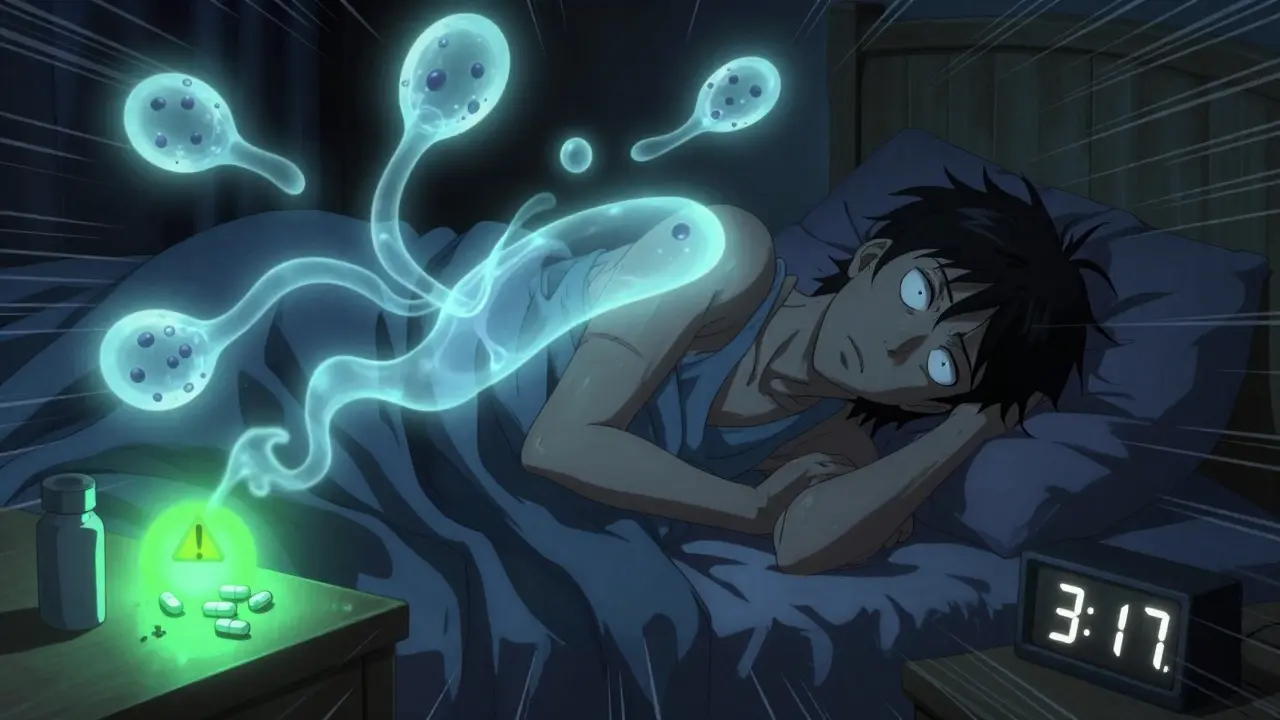
Starting an antidepressant can feel like a lifeline-until you can’t sleep. For many, the very medication meant to lift their mood ends up keeping them awake at night. It’s not just stress or anxiety. It’s the drug itself. Around 78% of people on SSRIs like fluoxetine or sertraline report trouble falling or staying asleep in the first two weeks. And while that often improves, for others, it doesn’t. The good news? You’re not stuck with it. There are real, science-backed ways to fix this without quitting your medication.
Why Antidepressants Disrupt Sleep
Antidepressants don’t just change how you feel-they change how your brain regulates sleep. Nearly every class affects neurotransmitters like serotonin, norepinephrine, and dopamine, which control your sleep-wake cycle. SSRIs, for example, suppress REM sleep by up to 29% and delay when REM starts by as much as 80 minutes. That’s not a minor tweak. REM is when your brain processes emotions and consolidates memories. When it’s pushed back or cut short, you wake up feeling off-even if you slept 8 hours. Tricyclics like amitriptyline do the opposite: they boost deep sleep by 22% but still reduce REM. Mirtazapine increases total sleep time by nearly an hour and improves sleep efficiency by 32%. But here’s the catch: it can make you so groggy in the morning that you feel like you’ve been hit by a truck. Trazodone helps you fall asleep faster and reduces nighttime waking, but many report a "hangover" effect-dizziness, brain fog, dry mouth-that lasts into the afternoon. The key isn’t just which drug you take. It’s how your body responds to its chemical fingerprint. Some people are wired to react strongly to serotonin changes. Others respond more to norepinephrine. That’s why two people on the same SSRI can have completely different sleep outcomes.Which Antidepressants Are Worst for Insomnia?
Not all antidepressants are equal when it comes to sleep. Based on data from over 18,000 patients and clinical trials, here’s the ranking of the most disruptive:- Fluoxetine (Prozac): 78% of users report insomnia in the first two weeks. It’s the most activating SSRI and stays in your system for days. Taking it after noon can keep you awake for 24 hours.
- Sertraline (Zoloft): Slightly better than fluoxetine, but still causes insomnia in 65% of new users.
- Paroxetine (Paxil): Less activating than other SSRIs, but can cause vivid dreams and nightmares that disrupt sleep quality.
- Bupropion (Wellbutrin): Not an SSRI, but a norepinephrine-dopamine reuptake inhibitor. It’s a known stimulant. Even at low doses, it increases insomnia risk by 2.4 times when combined with SSRIs.
If you’re already on one of these and struggling with sleep, don’t panic. But do know: you’re not alone, and this isn’t permanent for most people.
Which Antidepressants Actually Help Sleep?
Some antidepressants are prescribed specifically because they calm the nervous system. These are the go-to options if insomnia is your main symptom:- Mirtazapine (Remeron): At 7.5-15 mg, it’s one of the most effective for sleep. It increases total sleep time by 53 minutes and reduces time awake after falling asleep. But above 30 mg, daytime drowsiness spikes. Many users say it’s like a natural sedative-but too much turns it into a nap drug.
- Trazodone (Desyrel): Often used off-label as a sleep aid. At 25-50 mg at bedtime, it cuts nighttime waking by 37%. It’s not addictive like benzodiazepines, but the "hangover" effect is real. One study found 63% of users felt sluggish the next day.
- Agomelatine: This one’s different. It works on melatonin receptors, not serotonin. It preserves REM sleep better than SSRIs (only 8% reduction vs. 22%) and improves sleep continuity. In head-to-head trials, it outperformed escitalopram in both mood and sleep outcomes. Not available everywhere, but worth asking about.
There’s a reason psychiatrists now ask: "Do you have insomnia or hypersomnia?" If you sleep too much and still feel tired, an SSRI might be fine. If you lie awake for hours, you need something sedating.
When and How to Take Your Medication
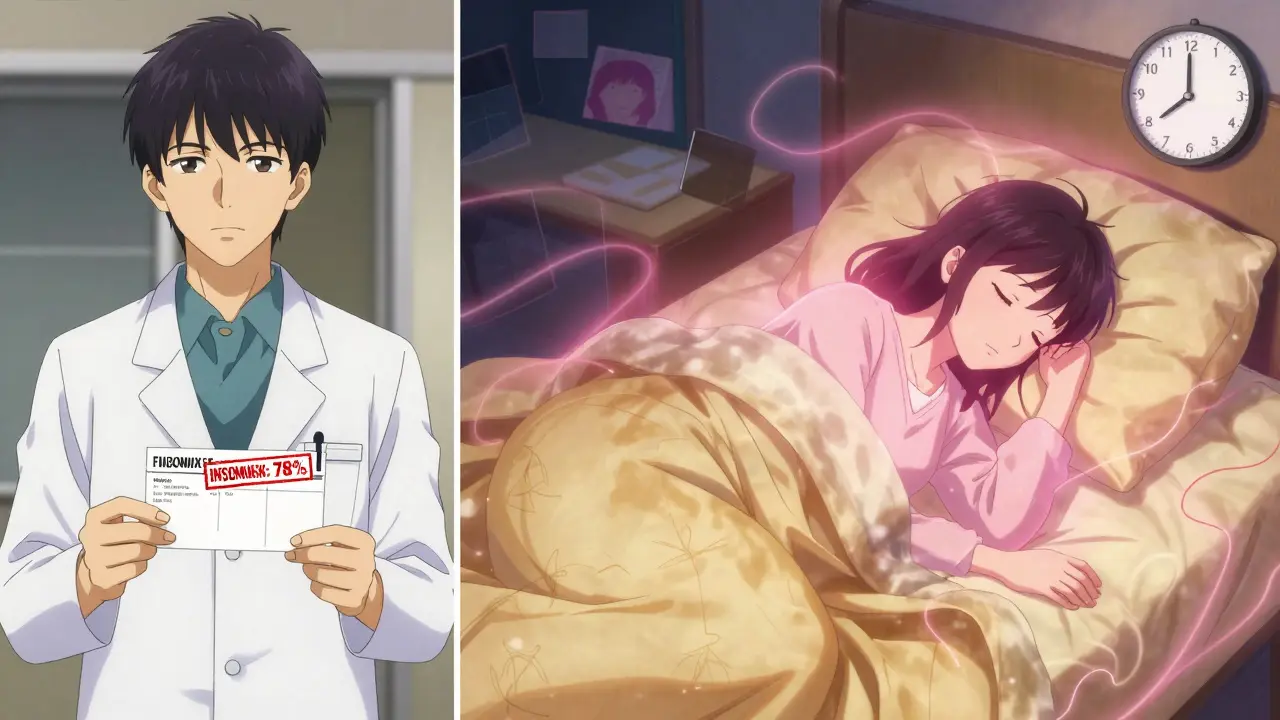
Timing isn’t just a suggestion-it’s a medical strategy.If you’re on an activating antidepressant like fluoxetine, sertraline, or bupropion: take it before 9 a.m. A 2020 study showed this simple change reduced insomnia risk by 41%. Why? These drugs peak in your bloodstream 4-6 hours after ingestion. Taking them in the morning means the peak happens during the day, not when you’re trying to sleep.
For sedating antidepressants like mirtazapine or trazodone: take them 2-3 hours before bedtime. That gives your body time to absorb the drug without causing grogginess right before you wake up. Taking trazodone at 11 p.m. might help you fall asleep, but you’ll still be foggy at 8 a.m. Taking it at 8 p.m. lets the sedation wear off just enough to feel alert in the morning.
Some people on SSRIs have found success by splitting their dose: half in the morning, half in the early afternoon. This isn’t standard advice yet, but a clinical trial at the University of Michigan is testing it right now. If your doctor is open to it, this could be a game-changer.
What to Do If Sleep Problems Don’t Improve
Most people see sleep improve after 3-4 weeks. That’s because the brain adapts. But if it doesn’t? Don’t wait.Start a sleep diary for two weeks. Write down:
- Time you got into bed
- Time you fell asleep
- Number of awakenings
- How rested you felt in the morning
- Any vivid dreams, nightmares, or restless legs
Bring this to your doctor. It’s more helpful than saying, "I can’t sleep." Numbers tell a story.
If you’re having vivid dreams, acting out dreams, or kicking your legs uncontrollably at night, ask about polysomnography. SSRIs can trigger REM sleep behavior disorder or restless legs syndrome. One study found 68% of SSRI users showed signs of REM sleep without atonia-a condition linked to Parkinson’s later in life. Catching it early matters.

When to Consider Switching Antidepressants
You don’t have to suffer for months. If sleep problems persist beyond 4 weeks, or if they’re so bad you’re considering stopping your medication, it’s time to talk about alternatives.Here’s what your doctor might suggest:
- Switch from fluoxetine to mirtazapine: Best for depression + insomnia. Start low (7.5 mg), and stay under 30 mg to avoid daytime sleepiness.
- Switch from sertraline to agomelatine: If available, this is the most sleep-friendly option with strong evidence for both mood and sleep.
- Add low-dose trazodone: Not a replacement, but a temporary bridge. Use 25-50 mg at bedtime for 2-4 weeks while your body adjusts to the SSRI.
- Try bupropion alone: If you have fatigue and low energy along with insomnia, bupropion might help-but only if you don’t have anxiety or racing thoughts. It’s not for everyone.
The Canadian Network for Mood and Anxiety Treatments (CANMAT) guidelines now recommend starting with mirtazapine or trazodone for patients with insomnia-predominant depression. That’s a big shift. Sleep isn’t a side effect anymore-it’s a treatment target.
What to Avoid
Some "solutions" make things worse:- Don’t take melatonin with SSRIs: It can over-suppress REM even further and cause next-day grogginess. Some people swear by it, but studies show no clear benefit-and potential risk.
- Don’t use alcohol to help sleep: It may help you nod off, but it fragments sleep and worsens depression long-term.
- Don’t increase your SSRI dose to fix insomnia: Higher doses make sleep worse, not better. For fluoxetine, insomnia risk jumps from 1.2% at 20 mg to 4.7% at 60 mg.
- Don’t combine bupropion with SSRIs: The FDA issued a warning in 2022-this combo triples your risk of severe insomnia.
Also, avoid over-the-counter sleep aids with diphenhydramine (like Benadryl or ZzzQuil). They can cause confusion, dry mouth, and even urinary retention-especially in older adults.
The Future: Personalized Sleep Matching
The next wave of antidepressant treatment isn’t trial and error. It’s precision.Companies like Genomind are launching genetic tests that predict how you’ll respond to 24 antidepressants based on your DNA. The test looks at 17 genes involved in sleep regulation and serotonin metabolism. It’s not perfect, but early data shows it can predict sleep side effects with 82% accuracy.
The National Institute of Mental Health is funding research into "chronotherapeutics"-timing medications based on your body’s natural rhythm. Imagine taking your antidepressant at 7 a.m. if you’re a night owl, or 10 a.m. if you’re an early riser. That’s the future.
For now, the best thing you can do is track your sleep, talk to your doctor, and know that this isn’t permanent. Most people adapt. But if you don’t, there are better options. You deserve rest.
Do antidepressants cause long-term sleep problems?
For most people, sleep issues from antidepressants improve within 3-4 weeks as the brain adjusts. However, in about 15-20% of cases, sleep problems persist, especially with SSRIs like fluoxetine. Long-term sleep disruption isn’t normal and should be addressed by switching medications or adding a targeted sleep aid. Chronic insomnia linked to antidepressants can worsen depression, so it’s not something to ignore.
Can I take sleeping pills with antidepressants?
Short-term use of non-addictive sleep aids like low-dose trazodone (25-50 mg) or melatonin receptor agonists like agomelatine is common and safe. Avoid benzodiazepines (like lorazepam) and over-the-counter antihistamines (like diphenhydramine) unless under close supervision-they can worsen depression, cause memory issues, and increase fall risk in older adults. Always consult your doctor before combining medications.
Why does fluoxetine cause more insomnia than other SSRIs?
Fluoxetine has the longest half-life of any SSRI-up to 7 days. This means it builds up in your system and stays active longer, leading to sustained stimulation of serotonin receptors that suppress REM sleep and increase alertness. Other SSRIs like sertraline or escitalopram clear faster, so their activating effects are less intense. Fluoxetine’s strong effect on serotonin reuptake also makes it more likely to trigger restless legs or nighttime anxiety.
Is it better to take antidepressants in the morning or at night?
It depends on the drug. Activating antidepressants (SSRIs, bupropion) should be taken in the morning before 9 a.m. to avoid nighttime wakefulness. Sedating antidepressants (mirtazapine, trazodone) should be taken 2-3 hours before bedtime to maximize sleep benefits and minimize morning grogginess. Timing matters as much as the drug itself.
Can I stop my antidepressant if it’s ruining my sleep?
Never stop abruptly. Stopping suddenly can cause withdrawal symptoms like rebound insomnia, anxiety, dizziness, or even flu-like symptoms. Instead, talk to your doctor. They can help you taper safely or switch to a different medication that supports sleep. Many people feel better once they find the right match.
How long does it take for sleep to improve after switching antidepressants?
After switching to a sleep-friendly antidepressant like mirtazapine or agomelatine, most people notice improvement in sleep within 5-7 days. For those switching away from an SSRI, it may take 10-14 days for the old drug to fully clear and for the new one to take effect. Patience is key, but if there’s no change after 2 weeks, revisit your treatment plan.
Stephen Craig
January 4, 2026 AT 17:29It’s not the drug. It’s the timing. The brain doesn’t care about your schedule-it cares about rhythm. Morning dosing isn’t a hack; it’s neurobiology.
Vicki Yuan
January 5, 2026 AT 15:11I switched from sertraline to mirtazapine at 15mg after three weeks of 3 a.m. wake-ups. Slept like a baby by day four. No more nightmares. No more fog. Just quiet rest. This post saved me.
Abhishek Mondal
January 6, 2026 AT 13:54Let’s be honest: you’re all just parroting pharmaceutical bro-science. The real issue? You’re medicating normal human exhaustion with serotonin reuptake inhibitors. Wake up. Sleep isn’t a pharmacological problem-it’s a lifestyle failure.
en Max
January 6, 2026 AT 18:57While the pharmacodynamic profiles of SSRIs and SNRIs are well-documented, the temporal administration protocols remain underutilized in clinical practice. The 9 a.m. dosing threshold, as referenced in the 2020 longitudinal cohort study, demonstrates a statistically significant reduction in sleep architecture disruption (p < 0.01). Further, the off-label use of trazodone as a chronobiotic adjunct warrants consideration within the context of circadian entrainment protocols.
Angie Rehe
January 7, 2026 AT 04:41Everyone’s so obsessed with ‘sleep-friendly’ meds like mirtazapine-but did anyone mention the weight gain? 20 pounds in six weeks? Great. Now I’m depressed AND overweight. Thanks, psychiatry.
Jacob Milano
January 9, 2026 AT 01:59Man, I was on fluoxetine for six months and felt like my brain was a phone stuck on 1% battery-always buzzing, never charging. Switched to agomelatine and suddenly… I remember what silence feels like. Not just quiet. Deep, heavy, soul-repairing silence. Like my brain finally took a nap.
Enrique González
January 10, 2026 AT 09:48My doc told me to take sertraline in the morning. I did. Still couldn’t sleep. Then I tried splitting the dose-100mg at 8 a.m., 50mg at 2 p.m. Slept like a log. Weird, but it worked.
saurabh singh
January 11, 2026 AT 03:20Bro, in India we just take ashwagandha and chill. No pills. No science. Just roots and sleep. But hey, if your brain needs a chemical crutch, at least take it before 9 a.m.-like the article says. No judgment.
Ashley Viñas
January 12, 2026 AT 13:10Wow. So we’re now treating insomnia as a legitimate medical concern instead of just ‘poor discipline’? Progress. I’m glad we’ve moved past the ‘just meditate more’ nonsense. Though honestly, if you’re still sleeping poorly after 4 weeks on meds, maybe you’re on the wrong one. Or the wrong therapist.
Michael Rudge
January 13, 2026 AT 18:52Of course you’re sleeping poorly-you’re taking a drug that’s basically liquid caffeine with a side of existential dread. Next you’ll tell me ‘melatonin is dangerous’ like it’s the 1990s. Wake up, people. We’re in 2025. The real solution? Stop medicating your soul and start fixing your life.