

DOAC Selection for Obesity
Select Patient Parameters
Enter the patient's BMI and clinical condition to determine the optimal DOAC selection
Recommendation
Enter patient parameters to see recommendation
Important Considerations
Prescription Guidance
When you’re managing blood thinners for someone with obesity, the old rules don’t always apply. Direct oral anticoagulants - or DOACs - were marketed as the easy, predictable replacement for warfarin. Fixed doses. No monthly INR checks. But what happens when the patient weighs over 120 kg or has a BMI above 40? That’s where things get messy. For years, these patients were left out of the big clinical trials. Now, we have real data - and it’s changing how we prescribe.
Why Obesity Makes DOAC Dosing Tricky
Obesity isn’t just about weight. It changes how drugs move through the body. More fat means more volume for the drug to spread into. Liver and kidney function can shift. Blood flow patterns change. All of this could mean a standard dose doesn’t work the same way in someone with morbid obesity as it does in someone who weighs 70 kg. The big question has always been: Does standard dosing keep obese patients protected from clots without turning them into bleeding risks? Early concerns were real. Dabigatran, for example, is cleared mostly by the kidneys - and obesity can alter kidney filtration. Rivaroxaban and apixaban are metabolized by the liver and gut, which also behave differently in larger bodies. But here’s what the data now shows: for most people with obesity, standard DOAC doses work just fine. A 2020 study of over 15,000 atrial fibrillation patients found no difference in stroke rates or major bleeding between those with BMI under 30 and those over 40. That’s huge. It means we can stop guessing and start prescribing with confidence.Which DOACs Are Safe in Obesity? The Clear Winners
Not all DOACs are created equal when it comes to obesity. Two stand out as the safest bets: apixaban and rivaroxaban. Apixaban (5 mg twice daily for AF, 10 mg twice daily for VTE) has been studied in hundreds of obese patients. In one registry of over 2,100 people with BMI ≥35, those on apixaban had a major bleeding rate of just 2.1% per year - the lowest of all DOACs. Even in patients with BMI over 50, there were no clotting events when they stayed on standard doses. The International Society on Thrombosis and Haemostasis (ISTH) says clearly: use standard apixaban doses in all obese patients, no exceptions. Rivaroxaban (20 mg once daily for AF, 15 mg twice daily for VTE) is nearly as solid. In the same 2020 meta-analysis, its efficacy in obese patients matched non-obese patients exactly. The hazard ratio was 0.92 - meaning it was just as effective, if not slightly better. The European Heart Rhythm Association and the Anticoagulation Forum both give it a strong recommendation for use at standard doses, even in patients over 120 kg. These two drugs are now the go-to for obesity. No dose adjustments needed. No extra monitoring. Just prescribe the same dose you’d give anyone else.The Problem Child: Dabigatran
Dabigatran is where things go wrong. It’s the only DOAC with a clear, consistent red flag in obese patients: gastrointestinal bleeding. A 2023 study found that patients with BMI over 40 had a 37% higher risk of GI bleeding on dabigatran compared to those with normal weight. Another study showed a 2.3-fold increase in major GI bleeds. Why? Dabigatran is a large molecule that’s poorly absorbed in the gut - and obesity changes gut motility and blood flow. The result? Higher concentrations in the stomach lining, more irritation, more bleeding. The European Heart Rhythm Association and the ISTH both say the same thing: use dabigatran with caution in obesity. Some clinicians avoid it entirely in patients with BMI >40. If you do use it, monitor closely for abdominal pain, black stools, or unexplained fatigue. It’s not banned - but it’s risky.
Edoxaban: The Gray Area
Edoxaban is the wildcard. Most data says standard dosing (60 mg once daily) works fine even in obese patients. Anti-Xa levels stay stable across BMI ranges from 18.5 to over 40. But here’s the catch: in patients with BMI over 50, a small but troubling pattern emerged. At Massachusetts General Hospital, researchers found that 18.2% of patients with BMI >50 on standard-dose edoxaban had subtherapeutic anti-Xa levels - meaning the drug wasn’t reaching the level needed to prevent clots. That’s not a small number. It’s a red flag for extreme obesity. The 2023 ACC/AHA/ACCP/HRS guidelines now suggest considering the reduced dose (30 mg) for patients with BMI >50. But that’s not a blanket recommendation - it’s a caution. We don’t yet know if lowering the dose increases clot risk. No one has done a trial on this group yet. So for now, if you’re prescribing edoxaban to someone with extreme obesity, consider checking anti-Xa levels - or switch to apixaban or rivaroxaban.What About Dose Escalation? Don’t Do It.
You might think: if standard doses are borderline, why not increase them? More drug = more protection, right? Wrong. There is zero evidence that higher-than-standard doses improve outcomes in obese patients. In fact, increasing apixaban to 10 mg twice daily outside the approved VTE regimen has been linked to higher bleeding without any added benefit. The ISTH 2021 guidelines are blunt: do not escalate DOAC doses in obesity. The body doesn’t respond to more drug the way you’d expect. You’re not making it stronger - you’re just making bleeding more likely. Stick to the label. If the standard dose isn’t working, it’s not because the patient is obese. It’s because something else is going on - maybe poor adherence, drug interactions, or an undiagnosed clotting disorder.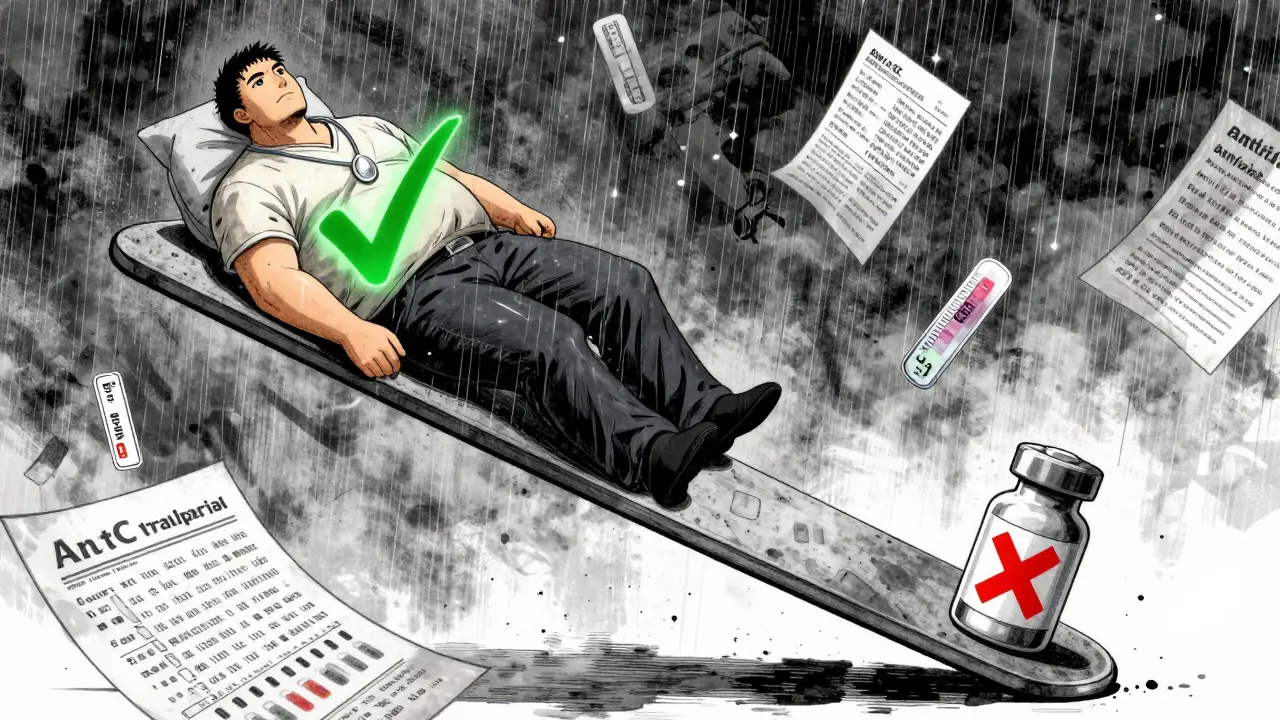
Real-World Practice: What Are Doctors Actually Doing?
Since 2016, DOACs have taken over from warfarin in obese patients. In 2014, only 32% of new anticoagulant prescriptions for obese AF patients were DOACs. By 2022, that number jumped to 78%. Why? Because doctors saw the data - and they saw the results. At clinics across the U.S., patients with BMI over 40 are now routinely started on apixaban or rivaroxaban. No weight-based adjustments. No special protocols. One dose fits all. The few who still use warfarin? They’re the ones with extreme obesity (BMI >50), kidney failure, or who’ve had prior bleeding on DOACs. Even then, many are being switched back to apixaban once their situation stabilizes. The biggest mistake we see? Overcomplicating things. A patient comes in weighing 140 kg, BMI 45. The nurse says, “Should we reduce the dose?” The answer: no. Prescribe the same dose you’d give to a 70 kg patient. It’s that simple.What’s Next? The DOAC-Obesity Trial
We still have gaps. The biggest? Patients with BMI over 50 or weight over 160 kg. We don’t have enough data. That’s why the DOAC-Obesity trial (NCT04588071) is underway. It’s enrolling 500 patients with BMI ≥40 and will track clotting and bleeding outcomes over two years. Results are expected in late 2024. There’s also talk of point-of-care testing - a quick blood test to check if the DOAC is working at the right level. Right now, those tests aren’t widely available or standardized. But if they become reliable, they could help guide dosing in the most extreme cases. Until then, the message is clear: apixaban and rivaroxaban are safe and effective at standard doses in obesity. Dabigatran carries higher bleeding risk. Edoxaban needs caution in extreme obesity. And never increase the dose.Bottom Line: Your Action Plan
If you’re managing anticoagulation in someone with obesity, here’s what to do:- First choice: Apixaban. 5 mg twice daily for AF. 10 mg twice daily for VTE (then 5 mg twice daily after 7 days). No adjustments needed.
- Second choice: Rivaroxaban. 20 mg once daily for AF. 15 mg twice daily for VTE (then 20 mg once daily after 21 days). No adjustments needed.
- Avoid dabigatran. Unless the patient has a strong reason (like intolerance to the others), skip it. The GI bleeding risk is too high.
- Use edoxaban with caution. Stick to 60 mg once daily unless BMI >50. Then consider 30 mg - or switch to apixaban.
- Never increase the dose. More drug doesn’t mean better protection. It means more bleeding.
- Monitor for bleeding. Especially with dabigatran. Look for abdominal pain, dark stools, unexplained bruising.
Obesity isn’t a barrier to safe anticoagulation. It’s just a reason to choose the right drug - and stick to the right dose.
McCarthy Halverson
January 9, 2026 AT 06:48Apixaban for obese patients? Absolutely. No tweaks needed. Just prescribe it and move on.
Paul Bear
January 10, 2026 AT 23:29Let’s be real - the data is solid, but you’re ignoring pharmacokinetic variability. Apixaban’s clearance isn’t linear across BMI extremes. That 2020 meta-analysis had a median BMI of 42 - not 55+. You can’t extrapolate to 160kg patients like they’re just big 70kg folks. The real risk is assuming population averages apply to outliers. That’s not medicine - that’s dogma.
Christine Milne
January 12, 2026 AT 04:28Of course apixaban works - it’s American-made. The FDA didn’t approve it for nothing. Meanwhile, dabigatran’s GI bleeding risk? That’s just what happens when you let Europeans design drugs. Their healthcare system doesn’t even have proper labs to monitor it. Stick to what works - and don’t confuse correlation with causation.
Jake Kelly
January 13, 2026 AT 06:28Just wanted to say thank you for this breakdown. I’ve been hesitant to prescribe DOACs to my obese patients because of all the noise out there. This gives me real clarity. Apixaban it is.
Ashlee Montgomery
January 13, 2026 AT 20:13What’s the biological mechanism behind why apixaban doesn’t accumulate in fat tissue? Is it the protein binding? The hepatic metabolism? Or is it just that the dose range is wide enough to absorb variability? I’m not arguing - I’m trying to understand the why behind the what.
neeraj maor
January 15, 2026 AT 07:08They’re hiding the real data. The DOAC trials excluded patients with BMI >50 because the bleeding rates were too high. The FDA didn’t want bad press. That’s why they say ‘no dose adjustment’ - because they don’t have the data to say otherwise. Don’t trust the ‘guidelines’ - trust the unpublished results.
Jake Nunez
January 16, 2026 AT 03:37Man, I’ve been giving apixaban to my obese patients for years. No issues. One guy weighed 180kg, still on 5mg BID. No clots, no bleeds. Just simple. Why do we make everything so complicated?
Michael Marchio
January 17, 2026 AT 18:24It’s funny how people treat obesity like it’s a medical condition that needs special handling. It’s not. It’s a lifestyle failure. And yet we treat these patients like fragile porcelain dolls - ‘oh no, we can’t use dabigatran, it might cause bleeding!’ Meanwhile, the same people who are scared of a 37% increased GI bleed risk are perfectly fine prescribing opioids for chronic pain to the same patients. Double standards are alive and well in medicine. The real issue isn’t the drug - it’s the systemic denial of responsibility.
Bradford Beardall
January 18, 2026 AT 23:00Just came back from a conference in Mumbai - we’re seeing the same trends here. Apixaban is becoming the default. One guy asked if we should reduce the dose for a 190kg patient. I said, ‘No, you’re not dosing by weight, you’re dosing by indication.’ The room nodded. Sometimes the simplest answer is the right one.
Ritwik Bose
January 20, 2026 AT 08:48Thank you for this thoughtful, evidence-based summary 🙏. As a clinician from India, I’ve seen how guidelines from the West are blindly adopted - but this? This is practical, balanced, and human. Apixaban for all. Dabigatran? Avoid. And never escalate. Simple. Clear. Life-saving.