

If you're taking warfarin, a common blood thinner, and you love cranberry juice or take cranberry supplements for urinary health, you might be at risk without even knowing it. This isn't just a rumor - it's a documented, life-threatening interaction that has sent patients to the emergency room with internal bleeding. The truth? cranberry and warfarin can mix dangerously, and even small amounts can throw your INR out of control.
What Happens When Cranberry Meets Warfarin
Warfarin works by slowing down your blood’s ability to clot. It’s prescribed for people with atrial fibrillation, deep vein thrombosis, or after heart valve surgery. But it’s a tightrope walk: too little, and you risk a clot; too much, and you risk bleeding. Your doctor monitors this with a blood test called INR (International Normalized Ratio). The safe range? Usually between 2.0 and 3.0. Go above 4.5? That’s dangerous. Above 6? You’re at high risk of internal bleeding. Cranberry products - juice, capsules, extracts, even flavored sodas - contain natural compounds like quercetin and other flavonoids. These substances block an enzyme in your liver called CYP2C9, which is responsible for breaking down the active form of warfarin (the S-enantiomer). When that enzyme is slowed down, warfarin builds up in your bloodstream. That means your blood thins more than intended. One documented case showed a 78-year-old man’s INR skyrocketing from 2.8 to 6.45 after drinking half a gallon of cranberry-apple juice every week. He nearly bled to death.Real Cases, Real Consequences
This isn’t theoretical. In 2022, New Zealand’s drug safety agency reported 33 cases of warfarin interacting with food or supplements - and cranberry was a major player. One 71-year-old woman developed stomach bleeding after drinking cranberry juice daily for two weeks. Her INR jumped from 2.5 to 8.3. Another patient, a Reddit user, saw his INR climb from 2.4 to 4.1 in just one week after starting cranberry juice for a UTI. His hematologist told him to stop immediately. But not everyone reacts the same. Some people take cranberry pills for years with no issues. Why? Because genetics matter. About 15-20% of people carry a genetic variant (CYP2C9*2 or CYP2C9*3) that makes them extra sensitive to this interaction. Their bodies clear warfarin slower to begin with, so cranberry pushes them over the edge. Even a small 150 mL (5 oz) glass of juice can be enough for these individuals.Not All Cranberry Products Are Created Equal
You might think, "I only have a splash in my smoothie - that’s harmless." But the problem isn’t just quantity. It’s concentration. Sweetened cranberry juice cocktails often contain more of the active compounds than pure juice because manufacturers add concentrated extracts for flavor. Capsules and tablets? Even worse. They’re standardized to deliver high doses of proanthocyanidins - the very compounds that interfere with warfarin metabolism. Even "cranberry-flavored" drinks, like cranberry soda or vitamin water, can contain enough extract to trigger a reaction. The FDA and Merck Manual both warn: all forms of cranberry products carry risk. There’s no "safe" amount if you’re on warfarin.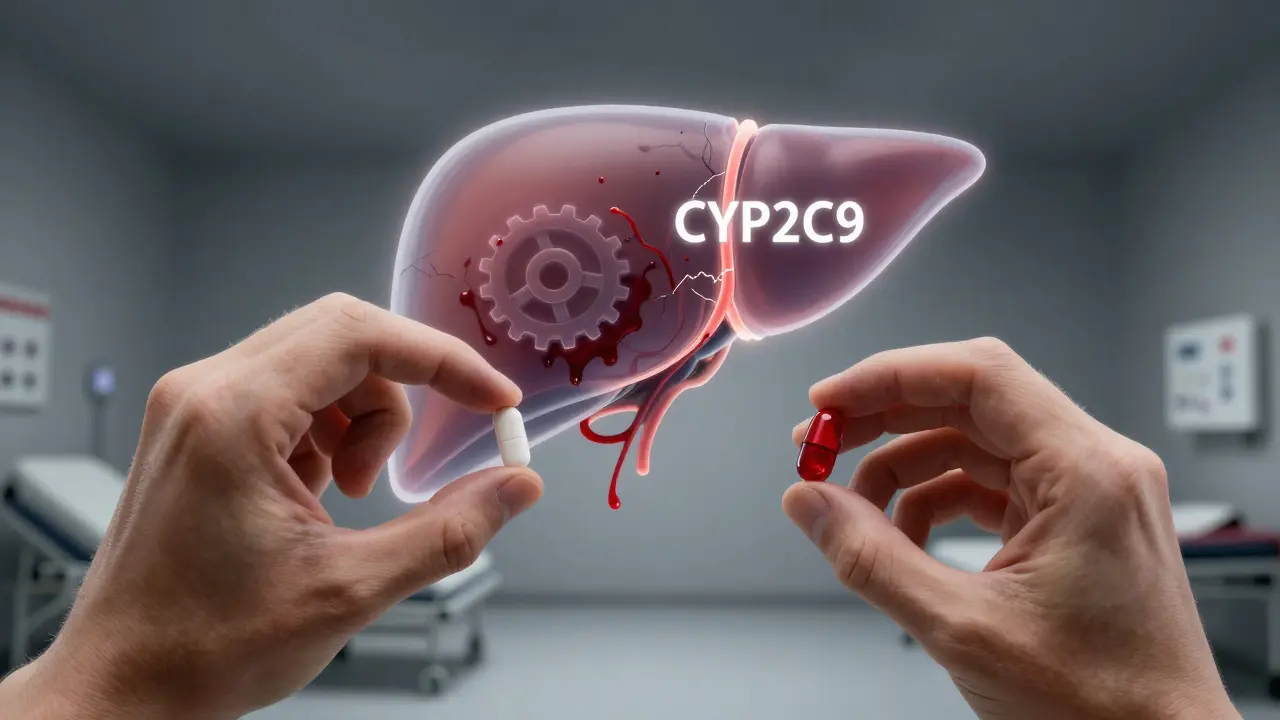
How Long Does It Take to Become a Problem?
This isn’t an instant reaction. It usually takes 3 to 7 days after starting cranberry products for your INR to rise. Some cases show spikes as late as 14 days. That’s why many patients don’t connect the dots. They think, "I’ve been drinking this juice for years. Why now?" The answer: your body’s metabolism changes. Maybe you started taking a new vitamin. Maybe you got sick. Maybe your liver slowed down a bit. That’s enough to turn a harmless habit into a medical emergency. Once you stop the cranberry product, your INR usually returns to normal within 5 to 7 days - as long as you don’t keep taking warfarin at the same dose. But during that window, you’re at risk. A single fall, a minor surgery, or even a nosebleed can turn serious.What Experts Say - And Why They’re Divided
You’ll find conflicting advice online. Some studies say the interaction is "inconsistent." That’s true - not every trial shows a spike in INR. Why? Because some studies used low doses, short durations, or didn’t account for genetic differences. The real-world data tells a different story. The FDA required cranberry warnings on warfarin labels back in 2005. Health Canada did the same in 2008. The European Medicines Agency added it to their caution list in 2015. And in 2022, New Zealand’s Medsafe agency explicitly said: "Avoid cranberry products." Dr. Paul Offit, a leading vaccine expert, calls this one of the most dangerous food-drug interactions he’s seen. Dr. Sarah Jones, a cardiologist at Massachusetts General Hospital, advises her patients: "Complete avoidance is the safest approach." The American College of Chest Physicians agrees: avoid cranberry products unless you’re willing to check your INR every few days.
What Should You Do?
If you’re on warfarin:- Avoid all cranberry products. That includes juice, capsules, dried cranberries, sauces, and flavored drinks.
- If you’ve been using them, stop immediately and call your doctor. Get your INR checked within 3-5 days.
- Don’t assume "a little bit" is safe. There’s no known threshold below which risk disappears.
- If you need to prevent urinary tract infections (a common reason people take cranberry), ask your doctor about alternatives like methenamine hippurate or low-dose antibiotics.
- Inform every new healthcare provider you see - including dentists and physical therapists - that you’re on warfarin and avoid cranberry.
What About New Blood Thinners?
You might be thinking: "I heard new drugs like Eliquis and Xarelto don’t have these interactions." That’s true. Direct oral anticoagulants (DOACs) don’t rely on the CYP2C9 enzyme. So, if you’re on one of these, cranberry is generally safe. But here’s the catch: about 2.5 million Americans still take warfarin. It’s cheaper, and for some conditions - like mechanical heart valves - it’s still the gold standard. So even though warfarin use is declining, this interaction isn’t going away anytime soon.Bottom Line
Cranberry is not a harmless health food when you’re on warfarin. It’s a hidden risk - one that’s caused real bleeding, hospitalizations, and deaths. The science is clear: the combination can be deadly. No amount of anecdotal "it’s fine for me" overrides the data from hospitals, regulators, and clinical trials. Your best move? Skip the cranberry juice. Your body will thank you.Can I drink cranberry juice if I take warfarin occasionally?
No. Even occasional use can cause unpredictable spikes in INR. The interaction depends on your genetics, liver function, and the concentration of active compounds in the product. There’s no safe frequency or amount established. Avoid all forms of cranberry products completely.
Do cranberry supplements pose the same risk as juice?
Yes - and often a greater risk. Supplements are concentrated and may contain higher levels of the compounds that inhibit the CYP2C9 enzyme. A single capsule can deliver more active ingredients than a glass of juice. The FDA and Merck Manual list supplements as high-risk alongside juice.
How do I know if cranberry affected my INR?
If your INR suddenly rises without changes to your warfarin dose or diet, and you’ve consumed cranberry products in the past week, it’s likely the cause. Symptoms of high INR include unusual bruising, nosebleeds, blood in urine or stool, or unexplained headaches. If your INR is above 4.5, contact your doctor immediately.
Are there any safe alternatives to cranberry for urinary health?
Yes. For people on warfarin, alternatives include methenamine hippurate (Hiprex), D-mannose supplements, or low-dose antibiotics like nitrofurantoin (taken daily or after intercourse). Always discuss options with your doctor - don’t self-prescribe. These alternatives don’t interfere with warfarin metabolism.
I’ve been drinking cranberry juice for years while on warfarin. Should I be worried?
Yes. Past use doesn’t guarantee future safety. Your body changes over time - liver function, other medications, even gut bacteria can affect how warfarin is processed. One study found that patients who had used cranberry for years still experienced dangerous INR spikes after continuing. Stop immediately and get your INR checked. Better safe than sorry.
John Smith
February 25, 2026 AT 19:19Shalini Gautam
February 26, 2026 AT 06:35Natanya Green
February 26, 2026 AT 16:03Steven Pam
February 28, 2026 AT 10:46Timothy Haroutunian
February 28, 2026 AT 18:25Erin Pinheiro
March 1, 2026 AT 05:57Michael FItzpatrick
March 2, 2026 AT 01:06Gwen Vincent
March 2, 2026 AT 17:41