
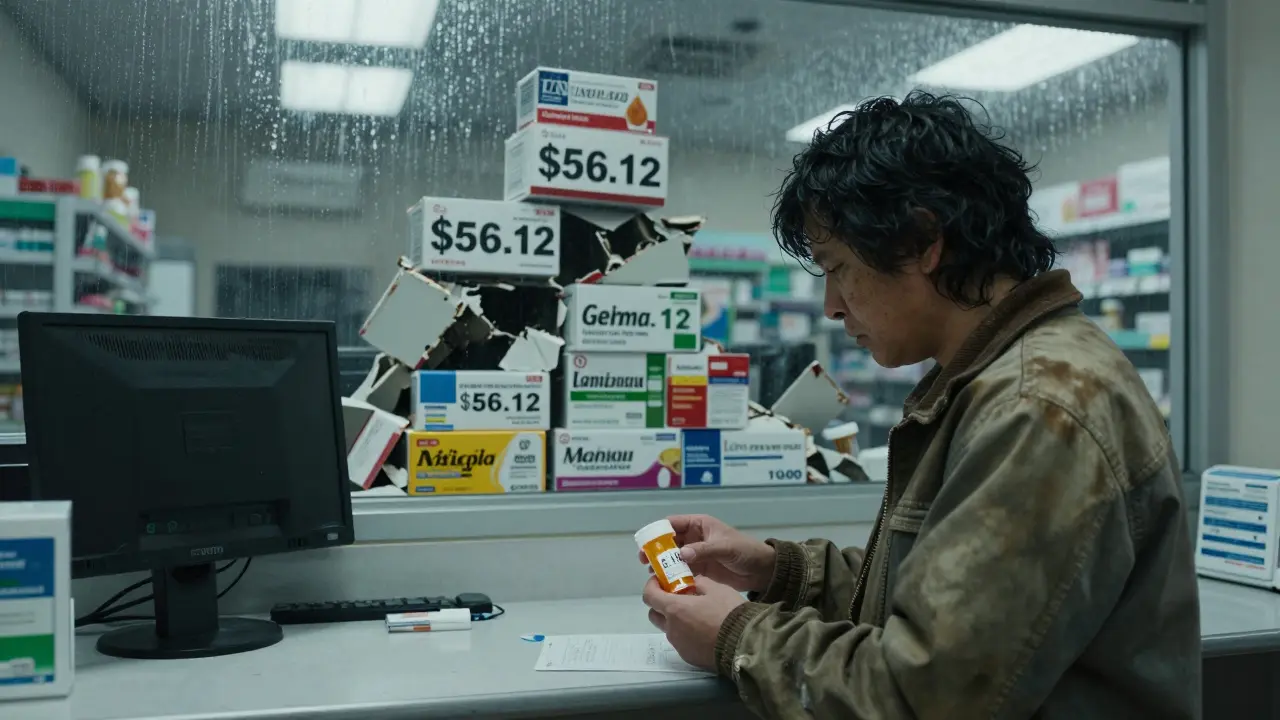
For millions of low-income Americans on Medicaid, the difference between a brand-name drug and its generic version isn’t just a label-it’s whether they can afford to take their medicine at all. In 2023, Medicaid filled over 1.2 billion prescriptions, and more than 90% of them were for generic drugs. That’s not a coincidence. It’s the system working as designed: generics keep costs down so people can actually get the pills they need.
Why Generics Are the Backbone of Medicaid
Medicaid doesn’t just cover generic drugs-it relies on them. In 2023, 90 to 91% of all prescriptions paid for by Medicaid were generics. Yet these same drugs made up only 17.5% of total drug spending. That’s because generics cost a fraction of their brand-name counterparts. The average copay for a generic drug under Medicaid? Just $6.16. For a brand-name drug? $56.12. That’s nearly nine times more. This isn’t magic. It’s the result of a powerful federal program called the Medicaid Drug Rebate Program (MDRP), created in 1990. Drug companies must give Medicaid huge discounts-often 86% off the retail price-for their generic drugs to be included in the program. That’s why Medicaid gets some of the lowest net prices in the entire U.S. healthcare system, even beating out the Department of Veterans Affairs.How Much Money Does This Save?
In fiscal year 2023, Medicaid rebates saved the program $53.7 billion. That’s more than half of what would’ve been spent if drugs were sold at full price. The savings aren’t just numbers on a spreadsheet-they translate directly to real people. A single asthma inhaler switched from brand to generic can drop a patient’s monthly copay from $25 to $3. That’s $270 a year back in someone’s pocket. The numbers get even more striking when you look at the big picture. From 2009 to 2019, generic drugs saved the U.S. healthcare system $2.2 trillion. In 2022 alone, generics and biosimilars saved $408 billion. For Medicaid enrollees, that means more consistent access to medications. Studies show that when out-of-pocket costs drop, people take their pills on time. That leads to fewer hospital visits, fewer emergency room trips, and better long-term health.Who’s Behind the Scenes? PBMs and the Hidden Fees
But not all the savings make it to the patient. Pharmacy Benefit Managers (PBMs)-middlemen between drug makers, pharmacies, and Medicaid-take a cut. In Ohio, a 2025 audit found that PBMs collected 31% in fees on $208 million worth of generic drugs in just one year. That’s $64 million in fees on drugs that were already discounted by 86%. These fees aren’t always transparent. Many Medicaid beneficiaries don’t know why their copay went up even though the drug’s wholesale price dropped. Some states have started pushing back. A few now require PBMs to pass along a larger share of rebates to the state or to patients directly. But nationally, this remains a major leak in the system.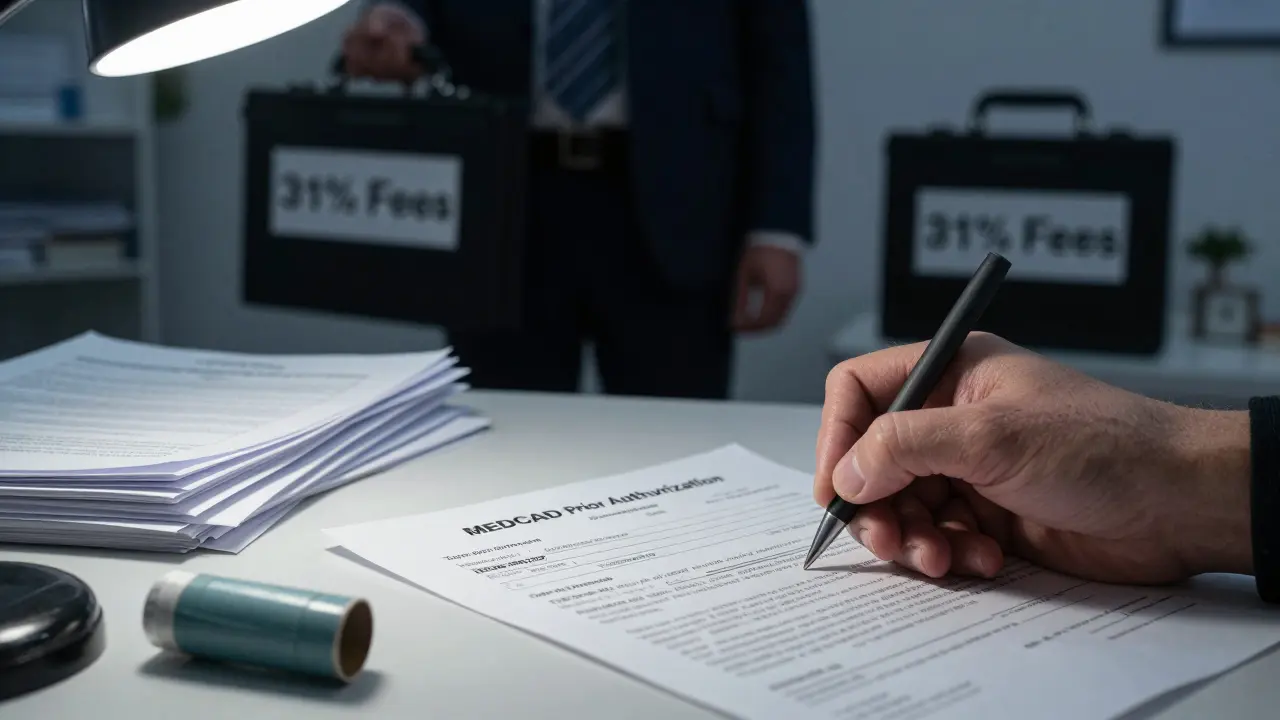
Generics vs. Brand Names: The Real Cost Difference
Here’s what the numbers look like in practice:| Drug Type | Average Copay | Percentage of Prescriptions | Share of Total Spending |
|---|---|---|---|
| Generic Drugs | $6.16 | 90-91% | 17.5% |
| Brand-Name Drugs | $56.12 | 9-10% | 82.5% |
Even though generics make up most of the prescriptions, they’re still the cheapest option. Over 93% of generic prescriptions cost less than $20 at the pharmacy counter. For brand-name drugs, that number drops to 59%. That means most Medicaid patients can walk out of the pharmacy with a month’s supply of their medication for the price of a coffee.
Where the System Falls Short
The problem isn’t the generics themselves-it’s the barriers around them. Many states require prior authorization before a generic can be dispensed, especially for drugs used to treat chronic conditions like asthma, diabetes, or high blood pressure. One Medicaid recipient in Texas reported waiting three weeks and making six phone calls to get approval for her daughter’s new generic inhaler. By then, her daughter had gone without treatment for over a month. Another issue: not all generics are created equal. While most are safe and effective, some patients report differences in how they feel on a generic version. This isn’t always due to the drug itself-it can be the filler ingredients or how it’s absorbed. When that happens, doctors can override the automatic substitution. But navigating that process can be confusing for patients who aren’t familiar with their rights.
The Real Threat: High-Cost Specialty Drugs
Here’s the catch: while generics are saving billions, a tiny fraction of drugs are eating up most of the budget. In 2021, less than 2% of Medicaid prescriptions were for drugs costing over $1,000 per claim. But those few drugs accounted for more than half of all Medicaid drug spending. These are often specialty medications for rare diseases, cancer, or autoimmune conditions-drugs like Humira or Enbrel. Even when generics exist for these drugs (called biosimilars), they’re still expensive. And Medicaid’s rebate system doesn’t work as well for them. While rebates on generic drugs average 86%, rebates on high-cost specialty drugs hover around 60%. That means the savings aren’t as deep, and the financial pressure on states keeps growing. In 2024, Medicaid’s net drug spending hit $60 billion-up $10 billion from just two years earlier. That’s why the Centers for Medicare & Medicaid Services (CMS) launched the GENEROUS Model, a new program aimed at cutting costs through smarter formularies and better use of generics.What Low-Income Patients Can Do
If you’re on Medicaid, here’s what you can do to maximize your savings:- Always ask if a generic version is available-even if your doctor prescribed a brand name.
- Check your state’s Medicaid formulary online. Most have searchable lists of covered drugs and their tiers.
- If your copay goes up unexpectedly, call your pharmacy and ask why. Sometimes it’s just a PBM fee change.
- If you’re denied a drug due to prior authorization, ask for a medical exception. Many are approved on appeal.
- Know your rights: Medicaid must cover all medically necessary drugs. If your state denies coverage without a valid reason, you can file a formal appeal.
Most states use managed care organizations (MCOs) to handle pharmacy benefits. That means rules can vary widely. In California, generics are automatically substituted. In Florida, some drugs require a prior authorization even for generics. Know your state’s rules.
What’s Next?
The future of Medicaid pharmacy spending hinges on two things: more biosimilars and better control over PBM fees. By 2027, experts predict biosimilars could save Medicaid another $100 billion a year as more biologic drugs lose patent protection. The Inflation Reduction Act’s drug price negotiation rules-currently only for Medicare-could eventually be extended to Medicaid. Stanford Medicine estimates that could save $15 to $20 billion over ten years. But until then, generics remain the single most powerful tool Medicaid has to keep low-income patients healthy and out of the hospital. The system isn’t perfect. PBMs take too much. Prior auth delays are frustrating. But the core truth hasn’t changed: generics work. They’re safe. And they’re saving millions of people from choosing between medicine and rent.Are generic drugs as effective as brand-name drugs?
Yes. The FDA requires generic drugs to have the same active ingredients, strength, dosage form, and route of administration as the brand-name version. They must also be absorbed into the body at the same rate and to the same extent. While some patients report feeling different on a generic, this is usually due to inactive ingredients, not the drug’s effectiveness. Over 90% of Medicaid prescriptions are generics-and they’ve been proven safe and effective for decades.
Why is my generic drug copay higher than last month?
It’s likely not the drug’s price that changed-it’s the Pharmacy Benefit Manager (PBM) fees. PBMs often adjust their charges to pharmacies, which can shift costs to patients even if the drug’s wholesale price drops. Call your pharmacy or Medicaid office to ask for a breakdown of your copay. You may be able to appeal or switch to a different pharmacy with lower fees.
Can I buy my Medicaid-covered generic drugs cheaper online?
Sometimes. A 2023 study found that for only 11.8% of generic drugs, buying directly from Mark Cuban Cost Plus Drug Company cost less than using Medicaid. But for most people, Medicaid’s negotiated prices-including rebates-are still the best deal. The exception is for uninsured people, who often pay far more. If you’re on Medicaid, stick with your pharmacy unless you have proof of a better price.
Why does Medicaid require prior authorization for some generics?
Prior authorization is used to prevent overuse or misuse of certain drugs, even generics. For example, if a drug has a history of being prescribed inappropriately, or if a newer, cheaper generic just became available, states may require approval to ensure the right drug is being used. It’s meant to control costs, but it can delay care. You have the right to appeal a denial, and many appeals are approved.
What happens if my state doesn’t cover a generic drug I need?
Medicaid must cover all medically necessary drugs. If your state refuses to cover a drug your doctor says you need, you can file a formal appeal. Many states have a quick process for this-often with a decision within 72 hours. You can also request a medical exception based on your specific health needs. Don’t assume you’re out of options-many denials are overturned.
Kathy Scaman
January 28, 2026 AT 10:03Just had to refill my mom’s blood pressure med last week - $4.25. She cried. Not from sadness. From relief. This system isn’t perfect, but it’s the only thing keeping her alive and out of the ER. Generics aren’t magic, but they’re the closest thing we got.
Anna Lou Chen
January 28, 2026 AT 18:58Let’s deconstruct the epistemological framework of pharmaceutical commodification, shall we? The Medicaid Drug Rebate Program functions as a neocolonial apparatus of pharmacoeconomic hegemony - the 86% rebate is a performative gesture masking the ontological violence of corporate rent-seeking. PBMs are not intermediaries; they’re parasitic nodes in a biocapitalist feedback loop where patient agency is algorithmically erased. The real crisis isn’t cost - it’s the epistemic erasure of lived experience in favor of actuarial logic.
Mindee Coulter
January 29, 2026 AT 15:02I work at a community pharmacy and this is 100% true. People show up with tears in their eyes because their copay dropped from $50 to $5. We don’t even need to explain it - they just know. And yeah, PBMs are sketchy but most pharmacists don’t even see the breakdown. We just see the final price on the screen. Keep pushing for transparency though. It matters.
Lexi Karuzis
January 29, 2026 AT 17:14WAIT-so you’re telling me the government is giving drug companies 86% OFF… and then PBMs take 31% of THAT… and NO ONE is asking WHY the FDA still approves generics with different fillers that make people feel ‘weird’??!! This is a psyop. Big Pharma owns the FDA, the PBMs, AND the Medicaid formularies. They want you dependent on the system so you’ll vote for the same politicians who keep the loophole alive. Your ‘$6.16’ copay? It’s a trap. They’re conditioning you to accept less. Wake up.
Phil Davis
January 30, 2026 AT 08:35So… we’re celebrating a system that saves billions… while the people who run it make billions? The irony is thick enough to spread on toast. I mean, good job, I guess. At least we’re not paying $200 for albuterol. But someone’s getting rich off this ‘savings.’ Who? And why do we keep pretending this isn’t a rigged game?
Irebami Soyinka
January 31, 2026 AT 06:05USA thinks it’s so advanced… but look at this mess! A whole nation crying over $6 pills while Nigerian pharmacies sell same generics for $1.50 with no PBM middlemen! You have Medicaid? Good. Now go fight your state’s bureaucracy. We in Lagos just walk in, pay, leave. No forms. No calls. No 3-week waits for asthma inhalers. Your system is broken. Not the drugs - the politics. 🇳🇬💪
Mel MJPS
February 1, 2026 AT 01:40My cousin was on Medicaid for years after her accident. She never missed a dose. Never. Even when she lost her job, even when she was sleeping in her car - she’d walk 3 miles to the pharmacy because she knew that $4 generic kept her alive. This isn’t policy. This is dignity. Thank you for writing this.
Jess Bevis
February 2, 2026 AT 05:09Generics work. PBMs suck. Prior auth is a nightmare. That’s it.
Sue Latham
February 2, 2026 AT 21:24Oh honey, you really think $6.16 is ‘saving’ people? That’s barely enough to cover the Uber ride to the pharmacy. And don’t get me started on how some generics taste like chalk and make you nauseous for three days. My aunt switched from brand to generic and started hallucinating. Not kidding. The FDA says it’s ‘bioequivalent’ - but your body doesn’t read clinical trials, sweetheart. It feels the fillers. And no, you can’t just ‘appeal’ when you’re too tired to make a phone call.
Mark Alan
February 4, 2026 AT 19:26THIS IS WHY WE CAN’T HAVE NICE THINGS 😭💔 I just got my daughter’s new generic ADHD med and she cried for 3 hours because ‘it doesn’t feel right.’ I had to call 7 people, wait 11 days, and finally beg the doctor to override. Meanwhile, my PBM raised my copay from $8 to $15 because… ‘market adjustments.’ I’m not mad. I’m just… done. 💀
Linda O'neil
February 4, 2026 AT 20:56If you're on Medicaid and reading this - you have power. Ask for the generic. Ask for the formulary. Ask for the exception. Ask again. You'd be surprised how many approvals come from just one more phone call. I help people navigate this stuff for free at my clinic. You're not alone. And yes, your life matters enough to fight for.
Robert Cardoso
February 5, 2026 AT 10:40Let’s analyze the data: 90% of prescriptions are generics, yet they account for only 17.5% of spending. That’s a 5.14x efficiency ratio. But the real outlier is the 2% of high-cost drugs consuming 50% of the budget - that’s a 25x cost concentration index. PBMs are a red herring. The real problem is the lack of price elasticity in biologics. The Medicaid Drug Rebate Program was designed for small-molecule generics, not monoclonal antibodies. The GENEROUS Model is a band-aid. What we need is a structural overhaul of the entire drug pricing paradigm - one that treats pharmaceuticals as public goods, not profit centers. Until then, we’re just rearranging deck chairs on the Titanic.