
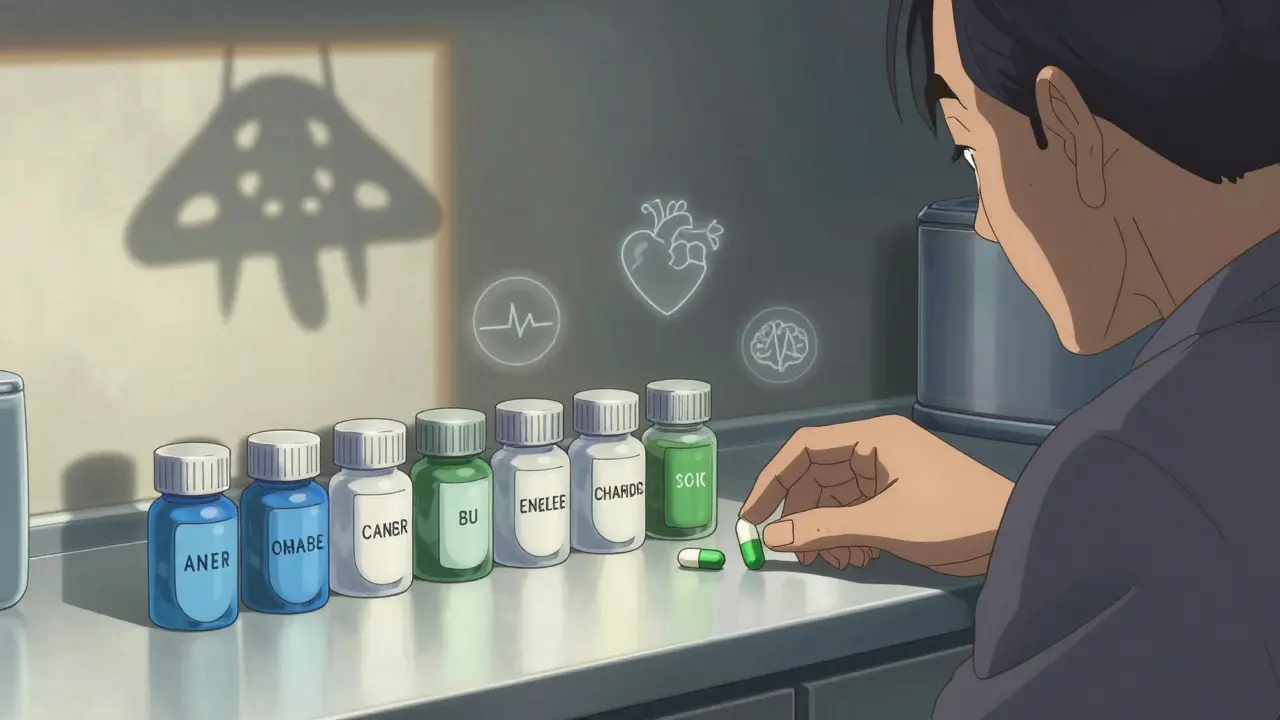
Switching from brand-name drugs to generics seems like a no-brainer-cheaper, same active ingredient, right? But what happens after six months? Or two years? Or ten? For millions of people managing chronic conditions like high blood pressure, diabetes, or epilepsy, this isn’t just a cost-saving move. It’s a daily decision that can quietly affect their health for years. And the truth? It’s more complicated than most doctors or pharmacies let on.
Why Switching to Generics Feels Safe (But Might Not Be)
The FDA says generics are bioequivalent. That means, in a lab, they release the same amount of active drug into your bloodstream within a narrow range-80% to 125% of the brand-name version. On paper, that’s close enough. But bioequivalence tests last days, not decades. They don’t measure how your body reacts after five years of taking the same generic pill every morning. They don’t track whether you forget doses because the pill looks different. They don’t catch contaminants that build up over time. A 2017 Canadian study followed patients switched to generic blood pressure meds. In the first month, adverse events like dizziness or irregular heartbeat jumped by 8-14%. Those higher rates didn’t fade. They stuck around for the full year. Meanwhile, a 2021 study in JAMA Internal Medicine found that generics made in India had 27% more severe adverse events-including hospitalizations and deaths-than those made in the U.S. Same drug. Same label. Different factory. Different risk.When Appearance Changes Break Your Routine
Think about your morning pill. You know it by color, shape, size, even the little imprint on it. That’s not just habit-it’s a safety cue. When your pharmacy switches you from one generic to another, the pill changes. Maybe it’s now blue instead of white. Maybe it’s round instead of oval. That’s not a glitch-it’s standard practice. But for people with chronic illness, it’s disruptive. A 2020 University of Pittsburgh survey found that 61% of patients felt confused or anxious when their pill changed. One in five reduced how often they took it. For someone with epilepsy, that’s dangerous. A 2013 study showed that switching generic brands for seizure meds cut patient persistence-how long they kept taking the drug-by 35% over a year. That’s not a small drop. That’s a spike in seizure risk. One patient on PatientsLikeMe, ‘HeartWarrior42,’ spent 18 months struggling with heart rhythm problems after switching to generic metoprolol. His heart rate became erratic. He ended up in the hospital twice. When he switched back to the brand-name version, his symptoms vanished. His doctors couldn’t explain why-the generic met the FDA’s bioequivalence rules. But his body knew the difference.Generics Aren’t All the Same-Even Within the Same Brand
Not all generics are created equal. And that’s the biggest blind spot in the system. Two pills with the same name-say, generic atorvastatin-can come from three different manufacturers. Each uses different inactive ingredients: fillers, dyes, coatings. These don’t affect the drug’s strength, but they can change how it dissolves in your gut. For some people, that’s enough to throw off absorption. The problem gets worse when pharmacies or insurers force you to switch manufacturers every few months. A 2022 AHRQ report found that patients switched three or more times in a year had a 40% higher chance of adverse events. That’s not random. It’s systemic. Pharmacy benefit managers (PBMs)-the middlemen that control drug formularies-change preferred generics annually to chase lower prices. They don’t care if you’ve been stable on one version for five years. They care about the contract.
Who Benefits? Who Pays the Price?
The math looks great on paper. From 2008 to 2017, generics saved the U.S. healthcare system $1.67 trillion. That’s real money. But that number doesn’t include the hidden costs: extra doctor visits, ER trips, hospital stays caused by poorly managed conditions after switching. A 2015 review in PharmacoEconomics found that 64% of studies showed higher total healthcare costs after switching to generics-not lower. Why? Because when patients stop taking their meds or have bad reactions, the real cost explodes. Statin drugs are the exception. For cholesterol, generics boosted adherence from 71% to 77%. That led to an 8% drop in heart attacks, strokes, and deaths. That’s a win. But for narrow therapeutic index drugs-those where tiny changes in dosage can cause big problems-the story flips. Warfarin, levothyroxine, phenytoin, lithium: these are the drugs where switching generics can be risky. And yet, 63% of patients on warfarin still get generics, according to IQVIA data.How to Protect Your Health When Switching
You don’t have to avoid generics. But you need to be smart about it. Here’s how:- Ask for consistency. If you’re stable on a generic, ask your pharmacist to keep you on the same manufacturer. Write it down. Say: “I’ve been doing well on this version. Can you keep me on this one?”
- Track your pills. Keep a small note in your wallet or phone: “My generic lisinopril is white, round, with ‘10’ on one side, made by Teva.” If it changes, call your doctor.
- Don’t let automatic switches happen. Many insurers auto-switch you to cheaper generics. Opt out. Ask for a “dispense as written” prescription. It’s legal. Your doctor can write it.
- Monitor your symptoms. If you feel worse-more fatigue, dizziness, irregular heartbeat, mood swings-after a switch, don’t ignore it. Track it for two weeks. Then bring it to your doctor with your pill log.
- Know your drug class. If you’re on a drug for epilepsy, thyroid disease, heart rhythm, or blood thinning, be extra cautious. These are the ones where small differences matter most.
What’s Changing-And What’s Still Broken
The FDA is finally starting to listen. In 2023, they launched a new initiative requiring 36 months of stability data for generics used in chronic conditions. That’s a big step. Previously, most data only covered 24 months. The European Union already requires 24-month safety studies for generics used long-term. Germany and France restrict automatic switching for high-risk drugs. But U.S. systems haven’t caught up. Only 35% of electronic health records track which generic manufacturer you’re on. Most doctors don’t know. Most pharmacists don’t track it. And most patients don’t realize it matters. A 2023 Commonwealth Fund report summed it up: “Generics are essential for affordability, but their long-term safety needs more than just bioequivalence. It needs consistency, monitoring, and respect for individual variation.”
Real Stories, Real Outcomes
On Reddit, a pharmacist with 12 years of experience wrote: “I’ve seen multiple patients with well-controlled epilepsy crash after 3-4 years on a generic-only to stabilize when switched back to the original brand. Both met FDA standards. But their bodies didn’t respond the same.” Another patient, ‘SeniorHealth456,’ a Medicare beneficiary, says: “My brand-name statin cost $400 a month. Now it’s $4. My cholesterol is stable. Five years and counting.” Both are true. Both matter. The problem isn’t generics. It’s treating them like interchangeable commodities. Your body isn’t a lab. It’s a person. And people don’t respond the same way to every version of the same pill.Bottom Line: Stay Informed, Stay Involved
Generics saved billions. They’re not the enemy. But assuming they’re all the same? That’s where the risk lies. If you’re on a chronic medication, don’t just accept the switch. Ask questions. Track changes. Advocate for consistency. Your health over the next decade depends on it.Are generic medications always safe for long-term use?
Most generics are safe and effective. But for certain drugs-especially those with a narrow therapeutic index like epilepsy, thyroid, or blood thinner medications-small differences in inactive ingredients or manufacturing can affect how your body responds over time. Long-term studies are limited, and some patients report worsening symptoms after switching, even when bioequivalence standards are met.
Why do my generic pills look different every time I refill?
Pharmacies and insurers often switch between different generic manufacturers to get the lowest price. Each company makes the same drug with different colors, shapes, or markings. While the active ingredient is the same, these changes can confuse patients and reduce adherence-especially in people with chronic conditions who rely on visual cues to remember their meds.
Can switching generics cause serious side effects?
Yes, especially with drugs where small changes in blood levels matter. Studies show increased hospitalizations, seizures, and arrhythmias after switching generics for epilepsy, heart conditions, and blood thinners. One 2021 study found generics made in India had 27% more severe adverse events than those made in the U.S. Even if the drug is approved, the manufacturer matters.
How can I avoid being switched to a different generic without my knowledge?
Ask your doctor to write a prescription with “dispense as written” or “do not substitute.” You can also ask your pharmacist which manufacturer your generic comes from and request to stay on the same one. Keep a note of the pill’s appearance-color, shape, imprint-so you notice changes.
Should I stick with brand-name drugs instead of generics?
Not necessarily. For many drugs-like statins for cholesterol-generics work just as well and improve adherence because they’re cheaper. But for high-risk medications, staying on one consistent generic manufacturer can be safer than switching. Talk to your doctor about your specific condition and whether brand-name or a consistent generic is better for you.
Is there a list of generic drugs that are riskier to switch?
Yes. These are called narrow therapeutic index (NTI) drugs: warfarin, levothyroxine, phenytoin, carbamazepine, lithium, cyclosporine, and tacrolimus. Even small changes in blood levels can cause serious problems. The American College of Physicians and the Institute for Safe Medication Practices recommend avoiding multiple switches and maintaining consistency with one manufacturer for these drugs.
Do generic drugs contain harmful contaminants?
Some studies have found trace contaminants in certain generics-like NDMA (a possible carcinogen) or DNA-damaging agents-that weren’t in the brand-name versions. These aren’t common, but they’ve been detected in pills from some overseas manufacturers. The long-term effects of low-dose exposure over 10+ years are still unknown, which is why experts call for better post-market monitoring.
What to Do Next
If you’re on a chronic medication and have switched to a generic recently:- Check your pill. Take a photo of it and note the imprint and color.
- Call your pharmacy and ask: “Which manufacturer made this batch?”
- Write down any new symptoms-fatigue, dizziness, mood changes, irregular heartbeat.
- Bring this info to your next appointment. Ask: “Is this the same generic I’ve been on? Should I stay on it?”
Jocelyn Lachapelle
December 16, 2025 AT 10:47Melissa Taylor
December 16, 2025 AT 21:58Christina Bischof
December 17, 2025 AT 04:00RONALD Randolph
December 18, 2025 AT 06:02Raj Kumar
December 19, 2025 AT 15:08Jake Sinatra
December 19, 2025 AT 23:17John Brown
December 20, 2025 AT 12:43John Samuel
December 20, 2025 AT 20:35Cassie Henriques
December 20, 2025 AT 22:19