

You’ve been eating clean, hitting the gym, tracking every calorie-and then it stops. The scale doesn’t budge. Not for weeks. Not for months. You’re not lazy. You’re not failing. Your body is just doing what evolution designed it to do: defend your weight.
Why Your Weight Loss Stops (It’s Not Your Fault)
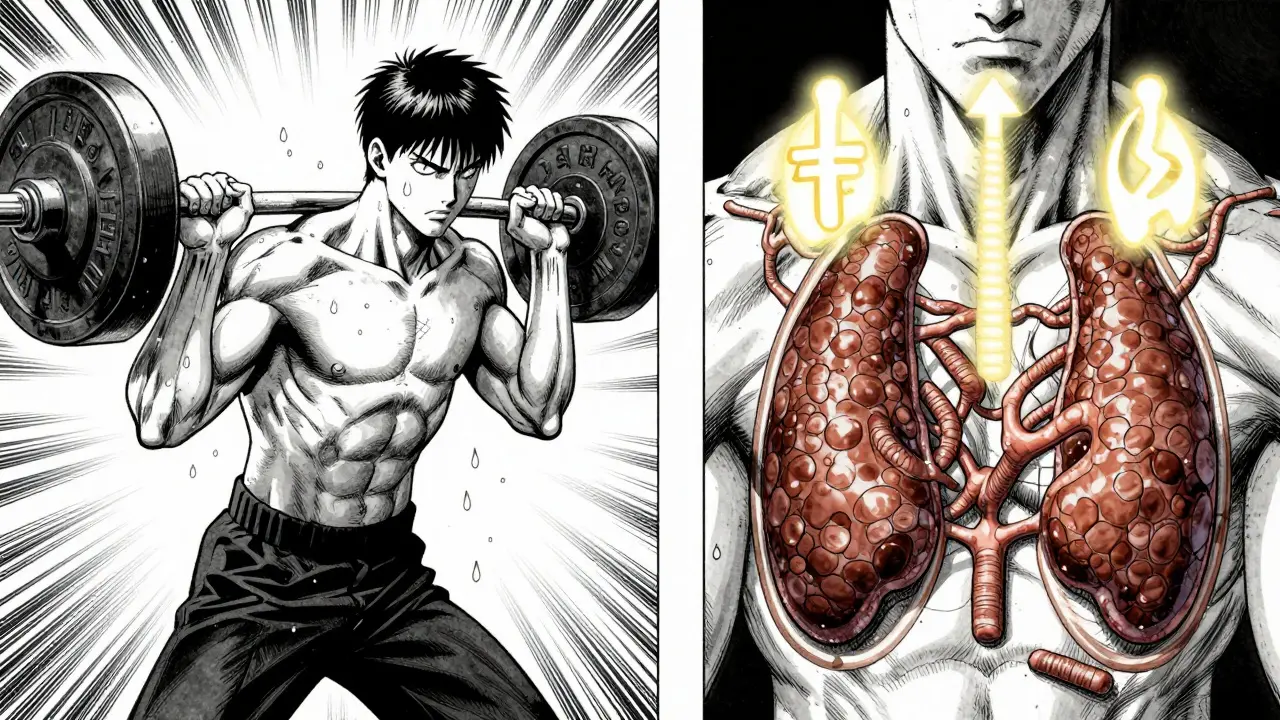
When you lose weight, your body doesn’t just adjust-it fights back. This isn’t a glitch. It’s biology. After losing even 10% of your body weight, your metabolism slows down more than it should. Researchers call this adaptive thermogenesis. In simple terms, your body burns fewer calories than it should based on your new size. You’re not imagining it. Your energy expenditure drops by 15-20% below what calculations predict. That’s not laziness. That’s your brain and hormones working overtime to bring you back to your old weight.
This was first proven in the 1940s Minnesota Starvation Experiment. Volunteers who lost massive amounts of weight saw their metabolism plunge by nearly 40% beyond what their new body size should have required. Decades later, studies at the University of Alabama at Birmingham confirmed it: after weight loss, people burned 92 extra calories per day less than expected-enough to stall progress for months.
And here’s the kicker: this slowdown doesn’t go away after a few weeks. Studies show it persists for over a year-even after you’ve stabilized at your new weight. Your body isn’t just trying to stop further loss. It’s trying to reverse it.
What’s Actually Changing Inside You
Your metabolism isn’t just slowing down randomly. Specific systems are turning down the dial:
- Leptin plummets: This hormone tells your brain you’re full. After weight loss, levels can drop by up to 70%. Result? You feel hungrier, even when you’ve eaten enough.
- Thyroid activity drops: Your thyroid slows down, reducing the rate at which your body burns energy at rest.
- Cortisol rises: Stress hormone levels increase, which can promote fat storage, especially around the belly.
- Brown fat gets quieter: Brown adipose tissue (BAT) burns calories to make heat. After weight loss, BAT becomes less active-especially in women, who naturally have more of it.
- Proton leak decreases: At the cellular level, your mitochondria become more efficient, meaning they waste less energy as heat. Less heat = fewer calories burned.
These aren’t side effects. They’re survival mechanisms. Your body thinks it’s starving. So it conserves energy, increases hunger, and reduces movement-even if you’re still working out.
Why Calorie Counting Fails After the First Few Weeks
Most people start with a calorie target based on their old weight. They cut 500 calories a day and lose 1 pound a week. Great. Then, after 4-6 weeks, the weight stops falling. They cut another 200 calories. Then another. They’re eating 1,200 a day and still not losing. They feel guilty. They think they’re not trying hard enough.
But here’s the truth: your body isn’t responding to your diet anymore. It’s responding to your metabolic adaptation. You’re not eating too much-you’re just not accounting for the fact that your body now needs 200-400 fewer calories than it did before.
And here’s what the research says: if you don’t adjust for this, you’ll keep hitting plateaus. A 2022 study showed that for every 10 extra calories per day your metabolism adapts, it adds one full day to your weight loss timeline. That means a 100-calorie drop in metabolism? That’s 10 extra weeks of no progress.
What Works: Proven Strategies to Break Through
There’s no magic pill. But there are proven, science-backed methods that actually work.
1. Take a Diet Break
Instead of pushing harder, take a step back. For 1-2 weeks, eat at your maintenance calories-no deficit. This isn’t cheating. It’s resetting. Research shows this reduces metabolic adaptation by up to 50%. Your leptin levels rise. Your thyroid wakes up. Your energy returns. When you go back to cutting, your body responds again.
Do this every 8-12 weeks of dieting. If you’ve been in a deficit for 16 weeks straight, take 2 weeks off. Eat normally. Enjoy your food. Then resume.
2. Lift Weights (Not Just Cardio)
Cardio burns calories while you’re doing it. But muscle burns calories 24/7. When you lose weight, you lose muscle too-unless you fight for it. Resistance training 3-4 times a week helps preserve lean mass. Studies show people who lift weights lose 8-10% less of their resting metabolism compared to those who only do cardio.
You don’t need to be a bodybuilder. Squats, push-ups, rows, and lunges three times a week are enough.
3. Eat More Protein
Protein isn’t just for building muscle. It’s the most satiating macronutrient. It also takes more energy to digest than carbs or fat. Aim for 1.6-2.2 grams of protein per kilogram of body weight. For a 70kg person, that’s 112-154 grams a day.
Research shows higher protein intake leads to 3.2kg more fat loss and 1.3kg less muscle loss during dieting. That’s huge.
4. Try Reverse Dieting
If you’ve been eating too low for too long, your metabolism may be stuck. Reverse dieting means slowly adding calories-50-100 per week-until you reach maintenance. This doesn’t mean gaining weight. It means giving your body time to readjust so it can handle more food without storing fat. Once you’re at maintenance, you can start cutting again-with better results.
What Doesn’t Work (And Why)
There are a lot of quick fixes out there. None of them fix metabolic adaptation.
- Extreme calorie cuts (under 1,200/day) make adaptation worse. Your body goes into full survival mode.
- Detox teas and fat-burning supplements don’t touch the core issue. They’re marketing, not science.
- More cardio without strength training just burns muscle. You end up smaller but slower.
- Skipping meals spikes cortisol and drops leptin further. You end up hungrier and more tired.
The worst myth? That plateaus mean you’re not trying hard enough. That’s not true. It means your strategy doesn’t match your biology.

What’s New in Weight Loss Science
Research is moving fast. In 2023, pharmaceutical companies invested $1.2 billion into drugs targeting metabolic adaptation. GLP-1 agonists like semaglutide (Wegovy) help by reducing hunger and slowing digestion. They don’t fix metabolism-but they help you stick to a lower calorie intake by reducing the urge to eat.
Even more exciting: cold exposure. Studies show that spending 2 hours a day in 16°C (61°F) temperatures can activate brown fat and boost calorie burn by 5-7%. It’s not practical for everyone-but it’s proof that we can re-awaken our body’s natural heat-burning systems.
And the future? By 2025, 85% of evidence-based weight loss programs will include metabolic adaptation protocols. No more guessing. No more blame. Just science.
Real People, Real Results
On Reddit’s r/loseit, users who hit plateaus and then took diet breaks reported 37% higher success rates. One user, FitJourney2023, lost 30 pounds on 1,500 calories a day-then stalled for 12 weeks. She cut to 1,200. Still nothing. She took a 2-week break at maintenance. Came back. Lost another 15 pounds in 8 weeks.
It’s not about willpower. It’s about timing. Your body needs rest. Your metabolism needs recovery. You don’t have to be perfect. You just have to be consistent-and smart.
What to Do Next
If you’re stuck:
- Calculate your current maintenance calories (use an online TDEE calculator).
- Take a 1-2 week break at that number. Eat normally. Don’t track. Enjoy.
- After the break, recalculate your new maintenance. It’s probably higher than before.
- Start cutting again-but now, use your updated numbers.
- Add 3 strength sessions per week. Prioritize protein. Sleep 7+ hours.
This isn’t a shortcut. It’s a smarter path. You’re not fighting your body. You’re working with it.
Why am I not losing weight even though I’m eating less?
Your body has adapted to the lower calorie intake by slowing your metabolism. This is called adaptive thermogenesis. You’re burning fewer calories than before-even if you’re eating the same amount. Your hormones, like leptin and thyroid, have changed to conserve energy. The solution isn’t to eat less. It’s to reset your metabolism with a diet break and adjust your calorie target based on your new body weight.
How long does a weight loss plateau last?
Most plateaus last 4-8 weeks, but they can stretch longer if you keep cutting calories. The key isn’t waiting it out-it’s changing your strategy. Taking a 1-2 week diet break at maintenance calories can reset your metabolism and break the plateau in as little as 10 days. If you don’t adjust your approach, the plateau can last months.
Does intermittent fasting help break plateaus?
Intermittent fasting doesn’t fix metabolic adaptation. It may help with adherence, but it doesn’t reverse the drop in resting metabolism. If you’re fasting and still stuck, you’re likely still in a calorie deficit that your body has adapted to. The real fix is a diet break or increasing protein and strength training-not changing your eating window.
Should I increase my calories to break a plateau?
Yes-but not randomly. Increase calories gradually (50-100 per week) until you reach maintenance. This is called reverse dieting. It tells your body you’re not starving, which helps restore leptin, thyroid function, and metabolic rate. Once you’re at maintenance, you can start cutting again with better results. Don’t jump back to your old intake-that can cause fat gain.
Is metabolic adaptation permanent?
No. Metabolic adaptation isn’t permanent, but it can last over a year after weight loss. The good news? It’s reversible. Diet breaks, strength training, higher protein intake, and adequate sleep can all help restore your metabolism. The longer you stay at your new weight, the more your body adjusts-so patience and consistency matter more than quick fixes.
Do weight loss supplements help with metabolic adaptation?
No. Supplements like fat burners, thermogenics, or detox teas don’t reverse the hormonal and metabolic changes behind plateaus. They might give you a temporary energy boost, but they don’t raise your resting metabolism or restore leptin. The only proven tools are diet breaks, resistance training, protein intake, and sleep. Skip the pills. Focus on the fundamentals.
Stacy Thomes
January 22, 2026 AT 00:57This hit me right in the soul. I hit a plateau for 11 months and thought I was broken. Turns out my body was just being a stubborn dinosaur trying to survive the apocalypse. Took a 2-week break, ate pizza like it was my job, and came back stronger. I lost 12 pounds in 5 weeks after that. Your body isn't your enemy-it's your ally, just confused.
Laura Rice
January 23, 2026 AT 01:32omg yes!!! i was eating 1100 calories and crying into my kale salad and wondering why i was so tired all the time. then i took a break and ate normal-like, actual food, not just chicken and broccoli-and my energy came back like magic. i didn’t gain weight, i just felt human again. thank you for saying this out loud.
Kerry Evans
January 24, 2026 AT 03:00Scientifically inaccurate. Adaptive thermogenesis is real, but the magnitude is exaggerated. Most people who hit plateaus aren’t adapting-they’re just lying to themselves about their intake. Calorie tracking apps are notoriously unreliable. You don’t need a ‘diet break’-you need better data. And no, reverse dieting isn’t magic. It’s just refeeding.
Sue Stone
January 24, 2026 AT 10:20Been there. Did the 1200-calorie thing. Got tired, irritable, stopped sleeping. Took a break. Ate tacos. Didn’t gain weight. Came back and lost 8 more lbs. Sometimes the answer isn’t harder-it’s softer.
Kerry Moore
January 25, 2026 AT 05:36Your analysis of adaptive thermogenesis is rigorously aligned with peer-reviewed literature. The persistence of metabolic adaptation beyond one year is corroborated by longitudinal studies from the NIH and the American Journal of Clinical Nutrition. I would only add that circadian rhythm alignment and sleep hygiene significantly modulate leptin sensitivity, thereby enhancing the efficacy of diet breaks.
Oladeji Omobolaji
January 26, 2026 AT 12:15in Nigeria we don’t have gym equipment but we do have stairs. climb them. carry water buckets. dance. eat yam with beans. don’t stress. body knows what to do if you stop fighting it.
Janet King
January 27, 2026 AT 13:37Protein intake recommendations are accurate. For a 70kg individual, 1.6–2.2g/kg is optimal. Studies by Paddon-Jones et al. (2008) and the International Society of Sports Nutrition confirm that higher protein intake preserves lean mass during caloric restriction. Additionally, protein’s thermic effect is approximately 20–30%, compared to 5–10% for carbohydrates and 0–3% for fats.
dana torgersen
January 28, 2026 AT 07:43so... like... i just... ughhh... i think my body is like... a stubborn cat? that sits on the keyboard when you’re trying to work? and now i’m like... okay... maybe i need to give it a nap? and some tuna? and then... maybe... it’ll let me type again? i don’t know. but this made me cry. in a good way? maybe?
Dawson Taylor
January 29, 2026 AT 19:47Evolution prioritizes survival over aesthetics. The body’s resistance to weight loss is not failure-it’s fidelity to a deeper purpose. To fight it is to misunderstand the design. To work with it is wisdom.
Sallie Jane Barnes
January 31, 2026 AT 04:50I used to think taking a break meant I was weak. Now I know it’s the opposite. Rest isn’t quitting. It’s recalibrating. I’m so grateful for this post. I finally feel like I’m not failing-I’m learning.
Andrew Smirnykh
January 31, 2026 AT 15:22In my culture, food is community, not calculation. I used to feel guilty eating with my family. Now I eat with them, then walk after. No tracking. Just presence. My weight stabilized. My joy returned. Maybe the answer isn’t in the scale, but in the silence between bites.
charley lopez
February 1, 2026 AT 16:39Metabolic adaptation is a homeostatic response mediated by hypothalamic-pituitary-thyroid axis suppression and reduced sympathetic nervous system tone. The efficacy of diet breaks is supported by energy flux models, but the magnitude of leptin rebound varies by adipose distribution and genetic polymorphisms in LEPR and FTO genes.
Susannah Green
February 2, 2026 AT 06:52Just wanted to say: I did the 2-week break. Ate pasta. Ate ice cream. Ate bread. Didn’t weigh myself. Felt amazing. Came back and lost 10 lbs in 3 weeks. No supplements. No magic. Just listening. Thank you for this.