

When a life-saving drug runs out, who gets it? This isn’t science fiction. It’s happening right now in hospitals across the U.S., Australia, and beyond. In 2023, the FDA listed 319 active drug shortages, many of them critical cancer drugs like carboplatin and cisplatin. Oncology centers reported that 70% of patients faced delays or denied treatment during peak shortage months. These aren’t just logistical problems-they’re ethical crises. When there’s not enough to go around, decisions made in silence, behind closed doors, or at the bedside can mean the difference between life and death. And too often, those decisions are made without clear rules, without transparency, and without input from the people affected.
Why Rationing Happens-And Why It’s Not Optional
Drug shortages don’t happen because of bad luck. They’re the result of fragile supply chains, consolidation in generic drug manufacturing, and regulatory gaps. Three companies produce 80% of generic injectable medications in the U.S. If one factory shuts down for quality issues-like what happened with a plant in Puerto Rico in 2022-hundreds of hospitals suddenly lose access to drugs like vancomycin, insulin, or chemotherapy agents. The FDA requires manufacturers to report shortages six months in advance, but only 68% comply. That leaves hospitals scrambling.
When demand outstrips supply, rationing becomes unavoidable. It’s not about choosing who lives or dies-it’s about making sure every patient has a fair shot. Without a system, doctors are left to make split-second calls under pressure. One oncologist in Minnesota told a reporter she had to choose between two stage IV ovarian cancer patients for a single vial of carboplatin. She didn’t have guidelines. She didn’t have time. She had only her conscience-and it broke her.
The Four Rules of Ethical Rationing
There’s a proven framework for making these decisions fairly. It’s called the Accountability for Reasonableness model, developed by Dan Daniels and James Sabin in 2002 and later adopted by the American Society of Health-System Pharmacists. It’s not complicated, but it’s rarely followed. Here’s what it requires:
- Publicity: The rules must be clear and shared with everyone-staff, patients, families. No secret lists.
- Relevance: Decisions must be based on medical evidence, not personal bias, hospital politics, or who shouts the loudest.
- Appeals: If a patient or family disagrees, there must be a way to challenge the decision without fear of retaliation.
- Enforcement: Someone has to make sure these rules are followed. Not just written on paper-enforced.
These aren’t suggestions. They’re the bare minimum for ethical practice. Skip one, and you risk injustice.
Who Decides? The Committee Model That Works
Bedside rationing-where a single doctor or nurse makes the call-is the most common approach, but it’s also the most dangerous. A 2022 study in JAMA Internal Medicine found that 51.8% of rationing decisions were made by individual clinicians without oversight. That leads to inconsistency, burnout, and moral injury. Nurses reported crying after denying treatment. Doctors said they couldn’t sleep.
The alternative? A multidisciplinary committee. The ASHP recommends a team that includes:
- Pharmacists (2)
- Nurses (2)
- Physicians (2)
- Social workers (1)
- A patient advocate (1)
- An ethicist (1)
These committees don’t need to be huge. But they must be representative. And they must meet before a shortage hits-not after. A hospital in Rochester, NY, set up its committee in 2021. When cisplatin ran out in early 2023, they had a pre-approved protocol: prioritize patients with curative intent, no alternatives, and a high likelihood of survival. They informed every patient. They documented every decision. Clinician distress dropped by 41% that year.

What Criteria Should Be Used? The Five Key Factors
Not all patients are the same. But fairness doesn’t mean treating everyone identically-it means using clear, objective criteria. The American Journal of Bioethics outlines five evidence-based priorities:
- Urgency of need: Who will die without this drug today?
- likelihood of benefit: What’s the chance this drug will actually help?
- Duration of benefit: Will the effect last, or is it temporary?
- Saving the most years of life: Who has the most life ahead?
- Instrumental value: Should healthcare workers get priority to keep the system running?
Some hospitals use these. Others don’t. A 2023 Minnesota Health Department guideline for carboplatin rationing made it simple: Tier 1 = curative intent, no alternatives. Tier 2 = palliative care with no other options. Tier 3 = everything else. No guesswork. No bias.
The Hidden Injustice: Who Gets Left Behind
Here’s the uncomfortable truth: rationing doesn’t just happen because of scarcity. It happens because of inequality. A 2021 report from the Hastings Center found that 78% of hospital rationing protocols don’t include any metrics for equity. That means patients in rural areas, low-income neighborhoods, or minority communities are more likely to be overlooked.
Why? Because academic hospitals with ethics committees are more likely to have resources. Community clinics? Often they’re on their own. A 2022 ASHP survey showed that 68% of rural hospitals had no formal rationing plan. Meanwhile, 87% of community oncology centers reported severe shortages-compared to 63% of academic centers. That’s not a coincidence. It’s a system failure.
When a patient in a small town can’t get carboplatin because their hospital doesn’t have a committee, but a patient in a big city does-because they have a policy, a lawyer, and a bioethicist-that’s not just bad luck. It’s injustice.
What Patients Need to Know-And Don’t
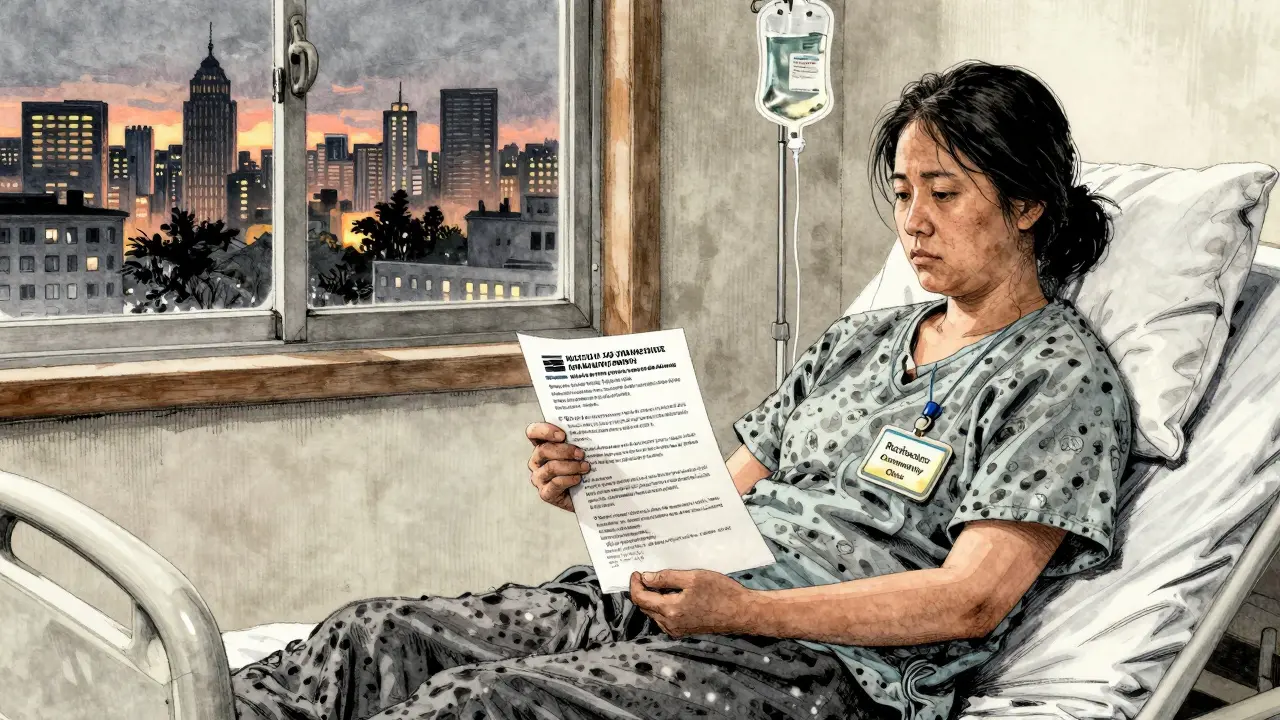
One of the most shocking findings? Only 36% of patients are told when their treatment is being rationed. That’s not just unethical-it’s a violation of basic trust. Patients have the right to know why they’re not getting the drug they were promised. They have the right to ask: “Was this decision based on my condition-or my insurance?”
Some hospitals are changing. ASCO’s 2023 guidance now requires clear communication protocols. That means: explaining the shortage, sharing the criteria used, and offering alternatives-even if they’re less effective. One cancer center in Chicago started handing out printed one-pagers to every patient facing rationing. They included contact info for the ethics committee. Complaints dropped by 70% in six months.
What’s Being Done-and What’s Coming
There’s hope. The FDA’s new Drug Shortage Task Force is building an AI-powered early warning system to predict shortages 6-12 months ahead. That’s huge. If they can flag a potential carboplatin shortage before it hits, hospitals can prepare.
The National Academy of Medicine is developing standardized metrics for rationing by mid-2024. And in January 2024, 15 states launched pilot programs to certify hospital ethics committees. These aren’t just paperwork-they’re training, audits, and accountability.
But none of this matters if hospitals wait until the last minute. The ASHP says you need at least 90 days to build a working committee. That means starting now. Training staff. Writing policies. Talking to patients. Practicing scenarios.
What You Can Do
If you’re a patient or family member: Ask your doctor or pharmacist: “Do you have a plan if this drug runs out?” If they don’t know, push for answers.
If you’re a clinician: Advocate for a committee. Bring your ethics department into the conversation. Don’t wait for permission. Start with one meeting. One policy. One patient at a time.
If you’re a hospital leader: Stop treating shortages as a pharmacy problem. They’re an ethical, legal, and operational crisis. Invest in training. Build your committee. Document everything. Because when the next shortage hits-and it will-you won’t have time to make it up.
Medication rationing isn’t about choosing who lives. It’s about making sure no one is chosen by accident.
Rachidi Toupé GAGNON
February 11, 2026 AT 19:38Sophia Nelson
February 12, 2026 AT 05:18Ojus Save
February 13, 2026 AT 15:27Jack Havard
February 14, 2026 AT 13:30Reggie McIntyre
February 15, 2026 AT 14:20Carla McKinney
February 16, 2026 AT 05:34Gabriella Adams
February 16, 2026 AT 12:52Neha Motiwala
February 18, 2026 AT 10:58Alyssa Williams
February 18, 2026 AT 22:35Rob Turner
February 20, 2026 AT 04:23Vamsi Krishna
February 20, 2026 AT 20:37Brad Ralph
February 21, 2026 AT 23:14christian jon
February 23, 2026 AT 01:56Autumn Frankart
February 24, 2026 AT 19:25