

Probiotic & Antibiotics Calculator
Guide to Taking Probiotics with Antibiotics
This tool helps you determine the best probiotic approach for your specific antibiotic treatment. Based on your answers, we'll recommend the right strain, timing, and duration to protect your gut health.
Your Situation
Enter your information above to see personalized recommendations.
When you’re on antibiotics, you know what’s coming: stomach upset, bloating, or worse-diarrhea that lasts days. It’s not just inconvenient. For some, it’s dangerous. Antibiotics don’t just kill bad bacteria. They wipe out the good ones too, leaving your gut defenseless. That’s where probiotics come in. But not all probiotics work the same. And not everyone should take them. Here’s what actually helps-and what could hurt.
Why Antibiotics Mess With Your Gut
Antibiotics are powerful. They’re designed to kill bacteria, and they don’t pick and choose. Whether it’s the infection-causing strain in your throat or the helpful ones living in your intestines, they’re all in the crosshairs. That’s why up to 30% of people on antibiotics get diarrhea. In high-risk cases-like after hospital stays or with strong antibiotics like clindamycin-this can lead to Clostridioides difficile (C. diff), a serious infection that causes severe diarrhea, fever, and even colon damage. The problem isn’t just the diarrhea. It’s what happens after. Your gut microbiome, the trillions of bacteria that help with digestion, immunity, and even mood, can take months to recover. Some never fully bounce back. That’s why doctors and researchers are turning to probiotics-not to replace antibiotics, but to protect what’s left.Which Probiotics Actually Work?
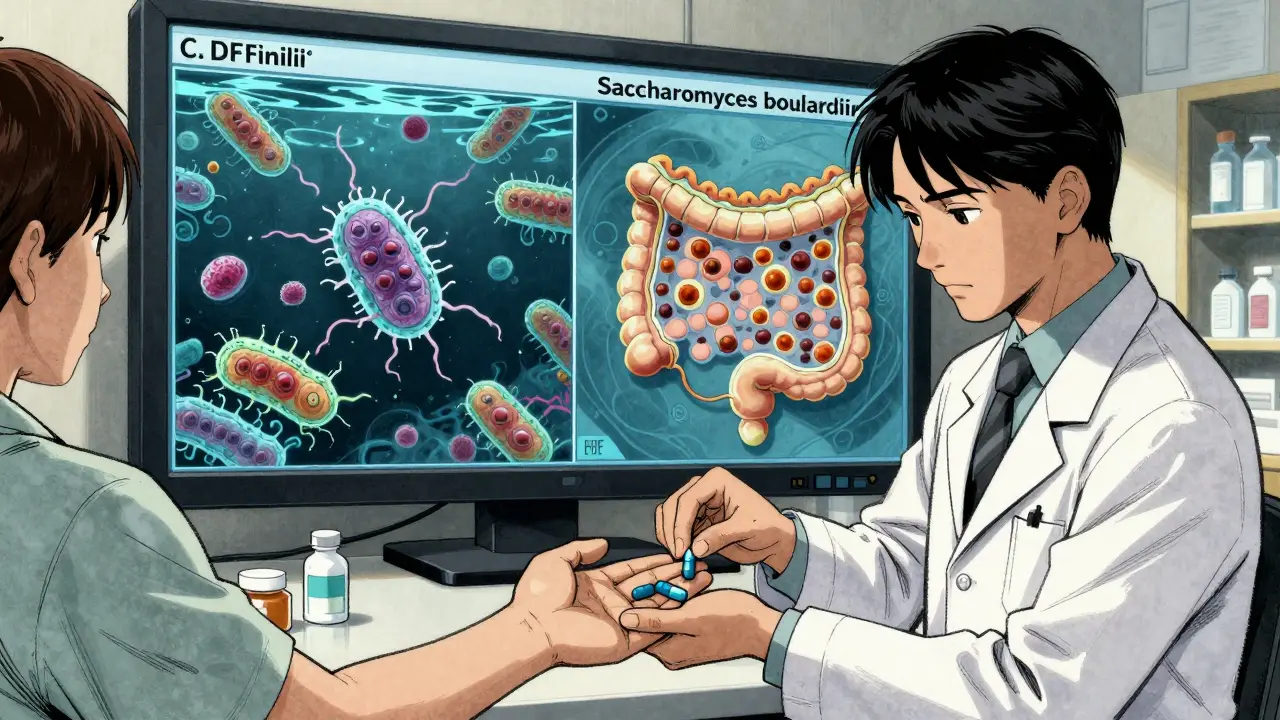
Not all probiotics are created equal. Thousands of products sit on pharmacy shelves, but only a handful have solid science backing them. Two strains stand out:- Lactobacillus rhamnosus GG-This one’s been studied in over 50 clinical trials. It’s the strain in Culturelle and many other popular supplements. It reduces antibiotic-associated diarrhea by about 50% in adults and kids.
- Saccharomyces boulardii CNCM I-745-This isn’t a bacteria. It’s a yeast. And it’s especially good at preventing C. diff. Studies show it cuts C. diff risk by up to 66% when taken with antibiotics.
How to Take Them (Timing Matters)
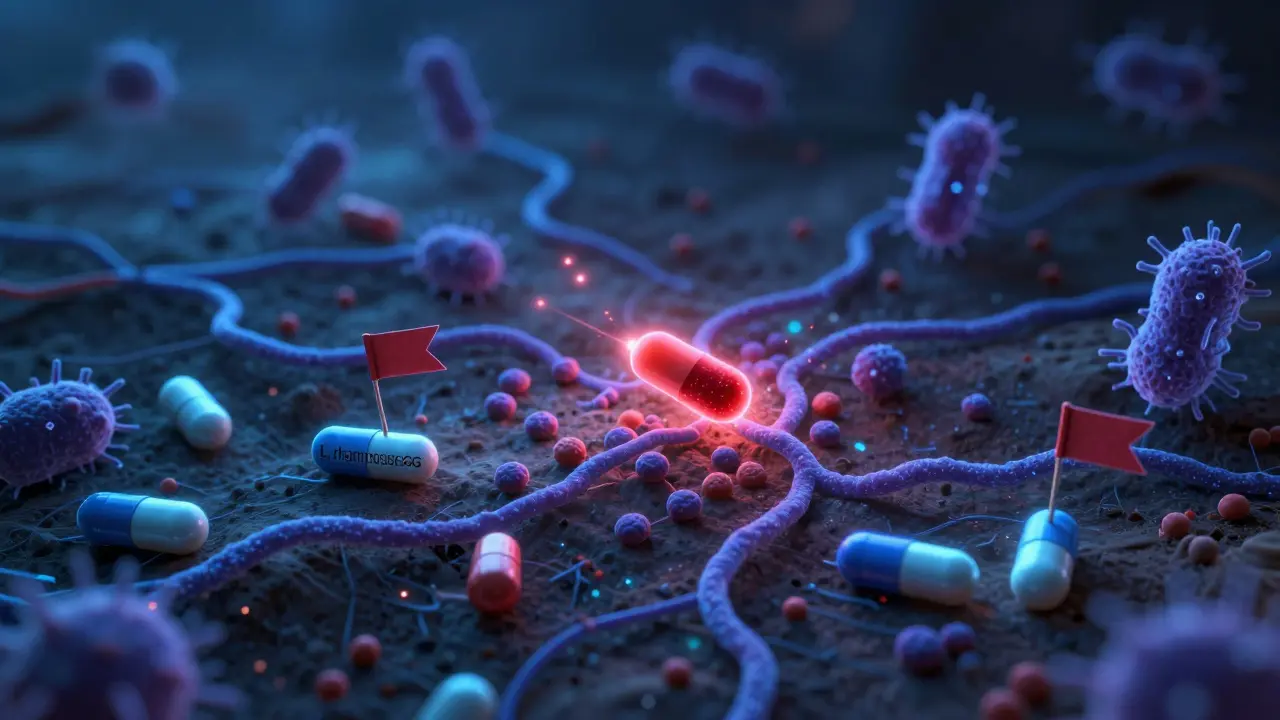
Taking a probiotic at the same time as your antibiotic won’t help. The antibiotic will kill the probiotic before it even gets a chance to work. The fix? Space them out.- Take your probiotic 1 to 2 hours after your antibiotic dose.
- Don’t wait too long-some studies suggest taking it within 4 hours is still effective.
- Keep taking it for 1 to 2 weeks after you finish your antibiotic course. This gives your gut time to rebuild.
What About the Risks?
Probiotics are generally safe for healthy people. The most common side effect? A little bloating or gas for the first few days. That usually fades. But there are serious risks for certain groups:- If you’re immunocompromised-due to chemotherapy, organ transplants, or advanced HIV-you’re at risk of probiotic-associated infections. There are documented cases of people developing bloodstream infections from probiotic bacteria.
- If you have a central venous catheter or severe pancreatitis, probiotics are not recommended.
- Some probiotics carry antibiotic resistance genes. A 2025 study found that 38% of commercial probiotics contained genes that could transfer resistance to tetracycline, macrolides, and other common antibiotics. That’s a hidden risk. The FDA is now requiring new products to be screened for these genes.
Do They Really Work? The Evidence
Let’s cut through the noise. What do the big studies say?- A 2013 analysis of nearly 9,000 patients found probiotics reduced antibiotic-associated diarrhea by 42%.
- A 2022 review of 29 studies showed a 66% drop in C. diff infections when Saccharomyces boulardii was used.
- Compared to fecal transplants (the gold standard for recurrent C. diff), probiotics are less effective-but much safer. Fecal transplants carry a 12% risk of serious side effects; probiotics are under 0.5%.
What to Look for When Buying
The probiotic market is a wild west. Labels lie. Products sit on shelves for months losing potency. Here’s how to avoid getting ripped off:- Choose products with CFU counts between 10 billion and 50 billion per dose. Lower doses often don’t work.
- Look for USP Verified or ConsumerLab Approved on the label. These mean the product was independently tested for what’s inside.
- Check the expiration date. Probiotics die over time. Refrigerated products usually have higher viability.
- Avoid products with fillers like maltodextrin or artificial colors. They add nothing.
Who Should Skip Probiotics?
Not everyone needs them. If you’re taking antibiotics for a simple infection-like strep throat or a urinary tract infection-and you’ve never had diarrhea before, you might not need probiotics. They’re most useful for:- People who’ve had antibiotic-associated diarrhea before
- Those on broad-spectrum antibiotics like clindamycin, ciprofloxacin, or piperacillin-tazobactam
- Patients in hospitals or long-term care
- Anyone over 65 or with a history of C. diff
What’s Next for Probiotics?
The future isn’t just about adding more bacteria. Scientists are developing precision probiotics-formulas designed to match specific antibiotics and restore targeted strains. One product, VE303, a mix of 8 carefully selected bacteria, reduced C. diff by 76% in early trials. It’s not on the market yet, but it’s coming. Regulators are also stepping in. The FDA’s new draft rules will force manufacturers to test for antibiotic resistance genes. That’s a big win for safety. In 5 years, you’ll likely see fewer random blends and more targeted, science-backed products.Final Takeaway
Probiotics aren’t a cure-all. But when used right-with the right strain, at the right time, and in the right person-they can make antibiotics much easier to tolerate. For most people, the benefits far outweigh the risks. Take L. rhamnosus GG or S. boulardii, 1-2 hours after your antibiotic, and keep going for a week after you finish. It’s simple. It’s cheap. And for many, it’s the difference between a rough few days and a full recovery.If you’re unsure, ask your pharmacist. They know which brands are reliable. And if you’re immunocompromised? Talk to your doctor before you open that bottle. Your gut health matters-and so does your safety.
Can I take probiotics at the same time as antibiotics?
No. Taking them together means the antibiotic will kill the probiotic before it can help. Wait at least 1 to 2 hours after your antibiotic dose before taking your probiotic. This gives the probiotic time to survive and reach your gut.
Which probiotic strain is best for antibiotic side effects?
Lactobacillus rhamnosus GG and Saccharomyces boulardii CNCM I-745 are the two best-studied strains for preventing diarrhea and C. diff when taken with antibiotics. Look for these names on the label-generic "gut health" blends won’t cut it.
How long should I take probiotics after antibiotics?
Continue taking probiotics for 1 to 2 weeks after you finish your antibiotic course. This helps your gut microbiome recover more fully. Stopping too soon can leave you vulnerable to lingering side effects or infection.
Are probiotics safe for everyone?
Most healthy people can take probiotics safely. But if you’re immunocompromised-due to chemotherapy, organ transplants, or severe illness-you’re at risk of serious infection. Also avoid them if you have a central line or severe pancreatitis. Always check with your doctor first if you’re unsure.
Do probiotics really prevent C. diff?
Yes, especially Saccharomyces boulardii. Multiple studies show it cuts the risk of C. diff infection by up to 66% when taken during antibiotic treatment. It’s not 100% effective, but it’s one of the best non-prescription tools available.
Can probiotics make antibiotic side effects worse?
In rare cases, yes. One small 2018 study found that some people who took probiotics after antibiotics had slower gut recovery than those who didn’t. But this hasn’t been confirmed in larger studies. For most, the benefits outweigh this risk. The bigger issue is poor-quality products-choose verified brands to minimize uncertainty.
Are refrigerated probiotics better?
Generally, yes. Refrigerated strains tend to have higher viability-up to 78% compared to 62% for shelf-stable ones, according to ConsumerLab testing. But some shelf-stable products use advanced packaging to protect live cultures. Look for USP Verified or ConsumerLab Approved labels to be sure.
How much do probiotics cost?
Effective probiotics cost between $20 and $45 per month, depending on the brand and dosage. You don’t need to spend $60+ on fancy labels. Focus on the strain and CFU count, not the packaging. Some pharmacy brands offer the same strains as premium ones at half the price.
innocent massawe
January 2, 2026 AT 16:02Been on antibiotics twice this year-both times I took Culturelle. No drama. No diarrhea. Just quiet gut peace. 🙏
Trust me, if you’ve ever had that awful post-antibiotic belly, this is the easiest win.
veronica guillen giles
January 3, 2026 AT 12:47Oh wow. So the $40 bottle with the glittery label and ‘GUT GODDESS’ on it? Just a fancy placebo with a side of capitalism.
Meanwhile, the $18 bottle from Walmart with L. rhamnosus GG on the back? That’s the real MVP. Thanks for the reality check.
Tru Vista
January 4, 2026 AT 03:09Study cited 2025 but FDA hasn’t even finalized draft rules yet. Also, CFU counts are meaningless without viability data. And why no mention of spore-forming strains like Bacillus coagulans? Lazy content.
Joy F
January 4, 2026 AT 22:49Let’s be real-probiotics are just the pharmaceutical-industrial complex’s way of monetizing your fear of your own microbiome.
You think your gut needs saving? Nah. It’s been surviving since you were a toddler eating dirt and licking playground equipment.
Antibiotics are a sledgehammer. Probiotics are a Band-Aid on a broken leg.
And now we’re selling yeast as a miracle cure while Big Pharma laughs all the way to the bank.
Meanwhile, your microbiome? It’s just chilling in there, doing its job, waiting for you to stop buying supplements and start eating fermented food.
Kimchi. Sauerkraut. Kefir. Real food. Not lab-grown powders in plastic bottles.
But hey, if you want to feel like you’re ‘doing something’ while your body naturally heals? Go ahead. Spend your money.
I’ll be over here, fermenting cabbage and ignoring the noise.
Ian Detrick
January 5, 2026 AT 04:03There’s something beautiful about how our bodies are designed to heal themselves-if we just stop interfering with fancy pills.
But I get it. We live in a world where ‘solution’ means ‘buy this.’
Still… the fact that a simple yeast can cut C. diff risk by two-thirds? That’s science doing its quiet, miraculous work.
Maybe we don’t need to fix everything.
Maybe we just need to stop breaking it so hard.
Angela Fisher
January 6, 2026 AT 12:38Okay but what if the probiotics are actually part of the plot? What if the antibiotic resistance genes in them are intentional? Who benefits from us being dependent on more pills after we take the first pill? Big Pharma. The FDA? They’re bought. Look at the funding. Look at the lobbying. Look at the ‘USP Verified’ seal-do you think they test for *all* resistance genes? Or just the ones they’re allowed to? I’ve read studies where probiotics were linked to chronic inflammation in people who thought they were ‘healing.’ They’re not helping. They’re programming us. The gut is the second brain, and they’re hacking it. I’ve been off probiotics for 2 years. My digestion is better than ever. Don’t be a lab rat. 🧪💔
Neela Sharma
January 7, 2026 AT 18:32My grandma used to say if your gut is quiet you’re doing fine
She never took pills
She ate yogurt with honey and turmeric
And lived to 97
Maybe the real probiotic was her silence
Her patience
Her trust in the slow magic of food
Not the bottle
Not the label
Not the science
Just the earth
and time
and a little faith
Lori Jackson
January 8, 2026 AT 20:05Let’s be clear: recommending Saccharomyces boulardii without addressing its potential for fungal translocation in immunocompromised hosts is irresponsible medical advice. You’re normalizing a Class II medical device as an OTC supplement. This is regulatory arbitrage dressed as wellness. And the 2023 user review meta-analysis? That’s anecdotal noise masquerading as evidence. Real science requires RCTs, not Reddit polls. This post is dangerously oversimplified.
Wren Hamley
January 10, 2026 AT 14:28Wait-so the 2018 Cell study showed slower recovery in some people, but it was small. But the 2022 meta-analysis on S. boulardii? Solid. So why are we treating this like a binary? It’s not ‘probiotics good’ or ‘probiotics bad.’ It’s ‘probiotics *contextual*.’
Like, if you’re a 72-year-old on clindamycin after hip surgery? Take the yeast.
If you’re a 24-year-old with strep throat and zero history of GI issues? Maybe skip it.
It’s not about the pill. It’s about the person.
And the timing? That’s the real hack.
1-2 hours after antibiotics? That’s the golden window.
Do that, and you’re already ahead of 80% of people.